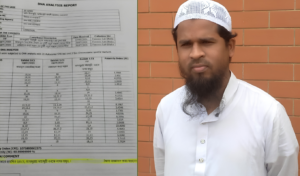
Dhaka, Bangladesh – The member-secretary of the Amjonota Party, Md. Tarek Rahman, has claimed that nearly three million people have been pushed into poverty since Dr. Yunus assumed office. In a recent interview with a local media outlet, he described the situation as a “growing social and economic crisis” that demands urgent attention.
Tarek Rahman urged citizens and journalists alike to consider the broader context of government actions, noting that before scrutinising the current administration, the public should also be informed about the policies and financial decisions of previous governments. “While it is important to monitor the new administration,” he said, “we must also assess how earlier policies have shaped today’s challenges.”
He alleged that the financial losses leading to this increase in poverty are unprecedented in recent years, raising questions about transparency and governance. “Who has consumed or misallocated the funds that could have prevented this mass impoverishment?” Rahman asked.
According to his claims, the newly impoverished population spans multiple sectors, including urban labourers, rural farmers, and households that have recently fallen out of the middle-income bracket. He stressed that the economic fallout is not merely statistical; it carries serious social and psychological consequences, such as reduced access to education, healthcare, and basic necessities.
Estimated Distribution of Newly Impoverished Population
| Category | Estimated Population | Remarks |
|---|---|---|
| Rural Farmers | 1,000,000 | Affected by falling crop prices and rising debt |
| Urban Labourers | 500,000 | Job losses and reduced wages |
| Middle-Class Households | 1,500,000 | Decline in income and savings leading to poverty |
| Total | 3,000,000 | Newly impoverished since Dr. Yunus took office |
Rahman further warned that if the current policies continue without immediate intervention, the number of impoverished people could rise further, exacerbating inequality and social instability. He called on the government to implement targeted economic support measures, enhance transparency, and urgently address the needs of the most vulnerable groups.
Economic analysts have echoed these concerns, highlighting indicators such as rising inflation, stagnant wage growth, and declining employment opportunities as factors contributing to the deepening crisis. They have stressed that while government policies play a significant role, broader macroeconomic challenges must also be addressed to prevent further social hardship.
In conclusion, Tarek Rahman urged policymakers, journalists, and citizens to maintain close scrutiny of government expenditure and social programmes, emphasising that accountability and timely action are essential to reverse the trend of growing poverty in the country.