“I shall face the noose with a smiling face,
The world shall witness—
Grant me farewell, mother, as I return.”
In Remembrance: Mukund Das
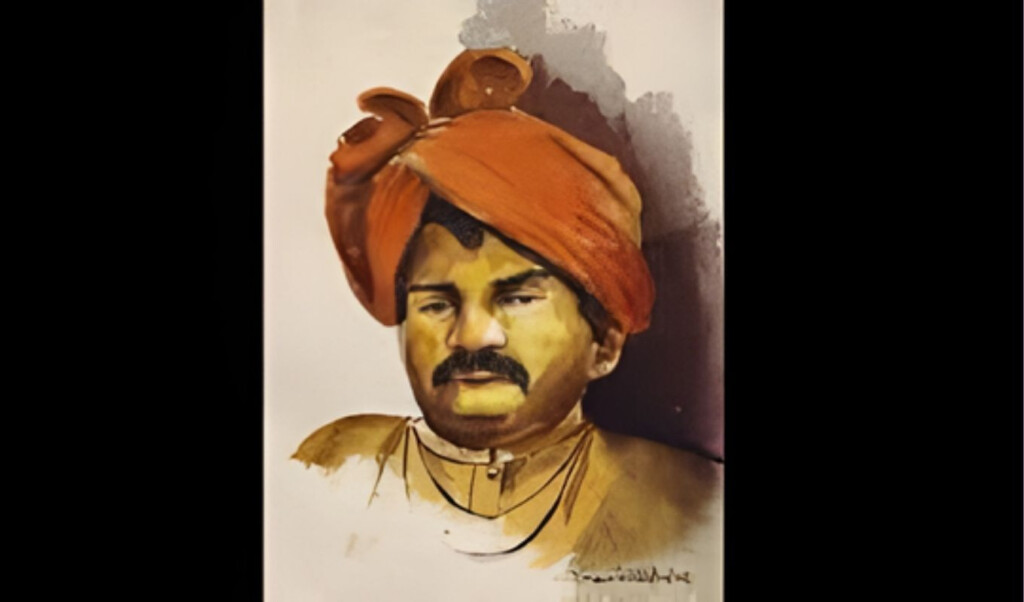
Mukund Das, a blazing voice of Bengali patriotism, was not merely a poet—he was a revolutionary bard, a composer of jatra plays, a songwriter, and an inspirational figure for generations. Born as Yajneshwar De on 22 February 1878, in Banri village of Bikrampur, Munshiganj, his parents, Gurudayal De and Shyamasundari Devi, nurtured his early curiosity for the arts. Later, under the tutelage of Vaishnav ascetic Ramananda Avadhut, he adopted the name Mukund Das, and in history, he is immortalised as the Charan Kabi, or “wandering bard.”
His childhood was marked by adversity when the Padma River flooded, displacing his family and forcing them to seek refuge in Barishal. It was here that his artistic identity flourished. Joining a kirtan group, he quickly gained renown for his melodious voice. By the age of nineteen, he had compiled Sadhansangeet, a remarkable collection of 100 songs, showcasing his extraordinary talent.
Mukund Das’s works became a rallying cry during the Bengal Partition movement (1905) and subsequent Swadeshi and Non-Cooperation campaigns. Through compositions and jatra performances such as Matripuja, Samaj, Path, Pallisheba, and Karmakshetra, he imbued the Bengali populace with patriotism, courage, and a vision of freedom. His outspoken anti-British messages led to his arrest and a rigorous two-and-a-half-year imprisonment in Delhi; his Matripuja play was also confiscated.
Invited by Chittaranjan Das, he performed jatra in Kolkata, earning praise at the Jorasanko Thakur Bari and the residence of scientist Acharya Jagadish Chandra Bose. Even Kazi Nazrul Islam met him, paying homage to the bard’s indomitable spirit. Mukund Das travelled from village to village, singing and performing, lighting the lamp of freedom in every heart. He was, therefore, not merely a poet, but the voice of the people and a source of inspiration for struggle.
Mukund Das passed away on 18 May 1934, yet his songs continue to echo the message that life itself is trivial when offered for one’s motherland. Today, we remember the Charan Kabi with deep reverence and gratitude.
Key Milestones of Mukund Das
| Year | Event | Significance |
|---|---|---|
| 1878 | Birth in Banri, Bikrampur | Began life as Yajneshwar De |
| 1897 | Publication of Sadhansangeet | Compiled 100 songs at age 19 |
| 1905 | Bengal Partition Movement | Songs & jatra inspired Swadeshi sentiment |
| 1910s | Imprisonment in Delhi | Anti-British activism led to 2.5 years in jail |
| 1920s | Kolkata jatra performances | Praised by Chittaranjan Das & Jagadish Chandra Bose |
| 1934 | Death on 18 May | Left a legacy of patriotic music and poetry |
Mukund Das’s life remains a luminous beacon in the history of Bengali culture—a testament to the power of art in service of freedom and social conscience.