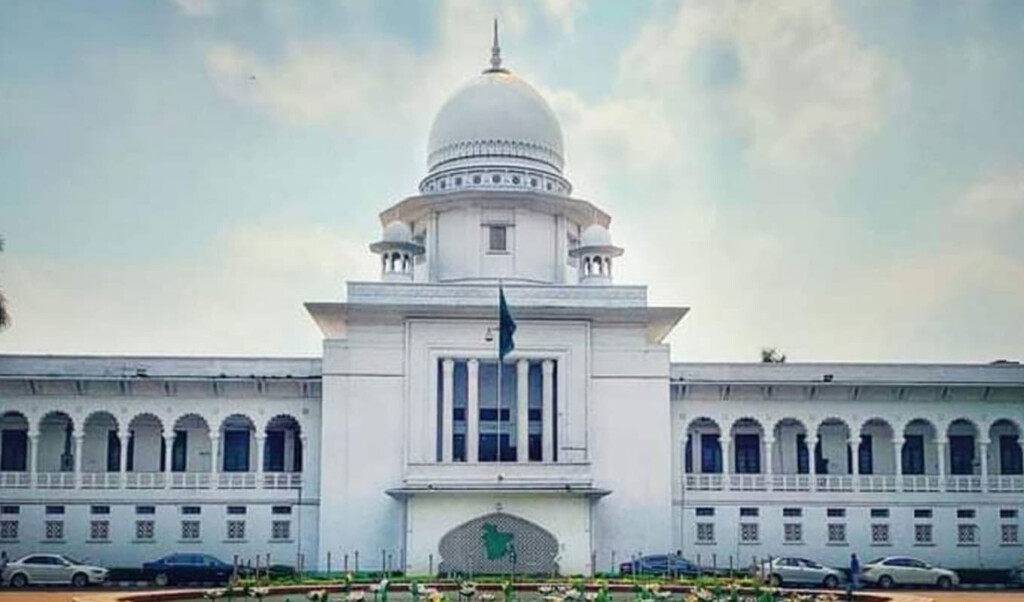
The High Court is scheduled to hear a public interest writ petition seeking the annulment of the July National Charter and the prevention of any declarations deemed inconsistent with the Constitution on Sunday, 1 March. The petition aims to safeguard the public interest and ensure the Constitution’s principles are upheld.
On Wednesday, 25 February, a High Court bench comprising Justice Khizir Ahmed Chowdhury and Justice Md. Ziaul Haque fixed the hearing date. Supreme Court lawyer Advocate Yunus Ali Akand will represent the petitioners during the proceedings.
The petition argues that the July National Charter has been implemented in a manner that conflicts with the Constitution and may adversely affect public interest. Through this writ, the petitioners have requested that the court suspend the Charter’s effect and declare any unconstitutional provisions null and void.
The petition names several key officials and institutions as respondents, as summarised below:
| Respondent | Position / Institution | Notes |
|---|---|---|
| Cabinet Secretary | Government Official | Included as respondent in the petition |
| Law Secretary | Government Official | Included as respondent in the petition |
| National Consensus Commission | Government Agency | Included as respondent in the petition |
| Chief Election Commissioner | Election Commission | Included as respondent in the petition |
This writ follows an earlier public interest petition filed on 18 February concerning the same issue. Advocate Yunus Ali Akand, acting as a Supreme Court lawyer, filed the petition, requesting that the High Court suspend the Charter’s operation and annul any conflicting declarations.
Notably, separate public interest writs were filed in February challenging the legality of the 12 February referendum and seeking annulment of its results on 13 February. These petitions were submitted by Supreme Court lawyer ABM Ataul Majid Touhid, with the Chief Election Commissioner, the Cabinet Secretary, and the Law Secretary named as respondents.
The High Court’s ruling, following the upcoming hearing, will have far-reaching implications for national policy and the interpretation of constitutional provisions. Legal observers note that the case could set significant precedents regarding the transparency of the country’s electoral processes, enforcement of constitutional mandates, and protection of citizens’ rights.
The outcome of this hearing is expected to reinforce public accountability and may influence future legislation to ensure alignment with the Constitution.