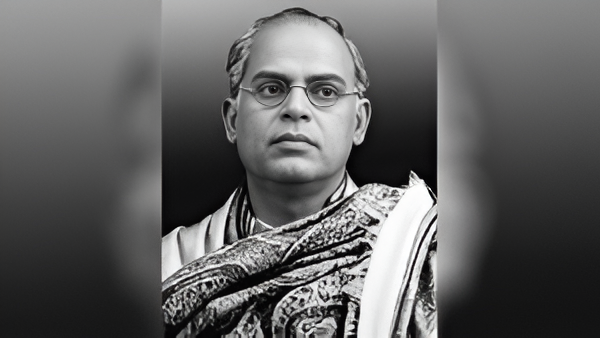
Dwijendralal Ray remains a monumental figure in the history of Bengali literature, drama, and music. Passing away on 17 May 1913, his literary and musical contributions have long been recognised as a significant cornerstone of Bengali cultural heritage. His work continues to be celebrated for its depth, innovation, and enduring relevance.
Early Life and Education
Dwijendralal Ray was born on 19 July 1863 in Krishnanagar, Nadia. His father, Kartikeychandra Ray, served as the Dewan of the Krishnanagar Royal Family. From his early childhood, Ray demonstrated a profound interest in literature and music. Recognised as a highly meritorious student throughout his academic life, he eventually travelled to England to pursue higher education.
In England, Ray studied agricultural science. Alongside his formal academic pursuits, his time abroad introduced him to Western literature, music, and drama. This exposure profoundly influenced his subsequent creative outlook and literary philosophies, allowing him to blend Eastern traditions with Western structural elements.
Career and Literary Contributions
Upon returning to his homeland, Ray joined the British civil service, taking up an administrative post. Despite the demanding nature of his bureaucratic responsibilities, he dedicated his spare time to literary creation. His extensive body of work spans poetry, songs, plays, and essays.
Ray achieved particular renown for his historical plays. In these works, history was not merely presented as a sequence of chronological events but was utilised as a powerful medium to evoke national consciousness and self-respect among the populace during the colonial era.
Major Works and Classifications
The following table outlines the prominent plays and songs composed by Dwijendralal Ray, detailing their core thematic characteristics:
| Category | Title | Core Characteristics |
| Drama | Mewar Patan | Focuses on historical context and intense patriotism. |
| Drama | Shah Jahan | Combines historical events with deep human emotions. |
| Drama | Chandragupta | Explores political and historical themes of ancient India. |
| Drama | Noor Jahan | Provides a character-centric historical portrayal. |
| Song | Dhana Dhanya Pushpa Bhara | A celebrated patriotic song dedicated to the motherland. |
| Song | Bango Amar! Janoni Amar! | Expresses deep emotions centred around the homeland. |
| Song | Ore O Bhai, Phagun Legechhe Bone Bone | A nature-centric composition focusing on the spring season. |
Dwijendrageeti and Cultural Impact
The songs composed by Dwijendralal Ray are collectively known as “Dwijendrageeti” and are recognised as a distinct genre within Bengali music. His compositions seamlessly integrate themes of patriotism, nature, satire, devotion, and universal human emotions. Characterised by accessible language and a unique variety of melodies, his songs gained widespread popularity among the general public.
Literary critics note that his plays and songs played a pivotal role in awakening nationalism among Bengalis during the British Raj. The themes presented in his historical dramas had a profound socio-cultural impact on contemporary society, fostering unity and political awareness.
Legacy and Commemoration
More than a century after his demise, Ray’s compositions are regularly performed at various cultural programmes, national days, and educational institutions. Researchers and historians consider his literature and music essential components for comprehending the historical evolution of Bengali culture.
Every year on 17 May, various cultural organisations and literary institutions arrange discussion meetings, musical events, and tributes to mark his death anniversary. These gatherings serve to perform his songs, analyze his literary texts, and ensure that his prominent position in the history of Bengali literature and music remains preserved for future generations.