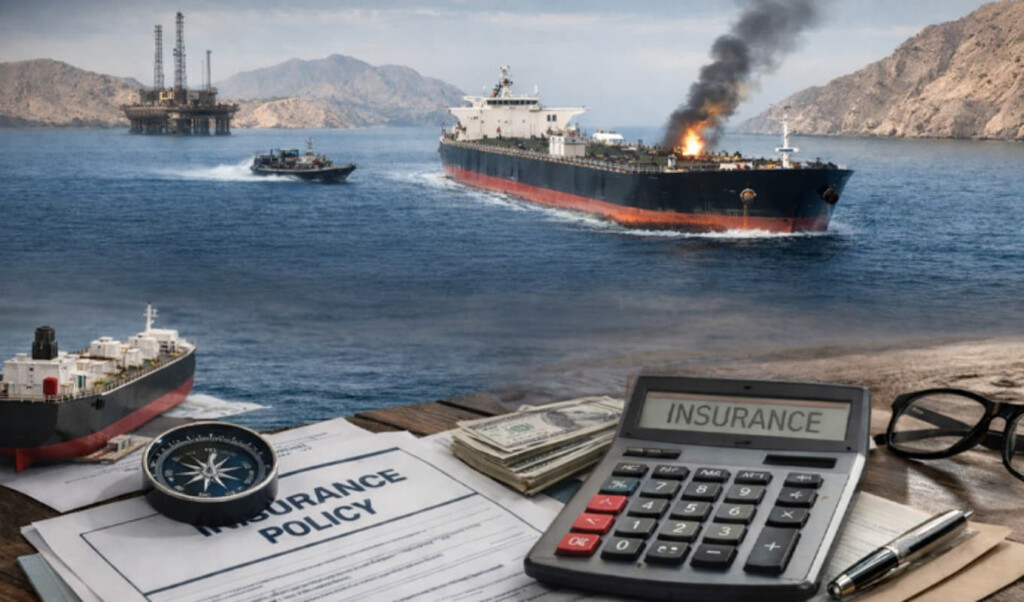
Rising geopolitical tensions centred on the Strait of Hormuz are exerting significant pressure on global energy and insurance markets. The escalation is not only affecting crude oil and natural gas prices but is also reshaping maritime logistics, energy-related risk policies, and the reinsurance sector. Analysts suggest that insurers are now entering a critical period for risk reassessment, where strategic recalibration has become essential.
The Strait of Hormuz serves as a pivotal artery for international energy supply. Every day, millions of barrels of crude oil and liquefied natural gas (LNG) transit through this narrow waterway en route to global markets. Any disruption—or even the threat of disruption—introduces substantial uncertainty into shipping operations. In response, insurers are compelled to re-evaluate policy terms, often resulting in premium increases, stricter policy conditions, and enhanced scrutiny of high-risk shipping routes.
Maritime and cargo insurance sectors are bearing the brunt of these developments. Shipowners are facing sharply higher insurance costs, while cargo insurers are implementing more stringent underwriting requirements. Delays, route diversions, and heightened risk exposure are increasing claims pressure. LNG transport is particularly sensitive, given the high value of vessels and the specialised nature of cargo, which complicates risk assessment and coverage decisions.
The reinsurance sector is similarly affected. Firms dependent on reinsurance for large exposures now encounter higher premiums and tighter terms. Supply-chain uncertainties also ripple into industrial production and commercial operations, driving up demand for trade credit insurance. Rising import-export costs place additional strain on corporate cash flow, amplifying credit risk.
Financial market volatility further compounds challenges for insurers. Fluctuations in energy and shipping equities impact investment portfolios, prompting underwriters and risk managers to adopt more cautious strategies.
In response, insurance companies are actively strengthening risk evaluation frameworks, leveraging real-time data analytics, and enhancing claims management procedures. Adjustments to coverage limits, deductibles, and policy conditions in high-risk zones are increasingly common. Firms are also promoting customer awareness and exploring alternative shipping routes to mitigate potential losses.
The following table summarises the key impacts across major insurance sectors:
| Insurance Sector | Key Impact | Industry Response | Potential Outcome |
|---|---|---|---|
| Marine Insurance | Shipping route uncertainty | Premium hikes, coverage review | Higher transport costs |
| Cargo Insurance | Increased delays and loss risks | Stricter terms, intensive underwriting | Elevated claims pressure |
| LNG Transport | High-value vessel exposure | Complex risk assessment | Supply disruption and shipment delays |
| Reinsurance | Large-risk exposure | Premium increases, tighter conditions | Higher reinsurance costs |
| Trade Credit Insurance | Business and cash flow pressures | Risk reassessment | Greater trade and credit risk |
This crisis illustrates how political instability can rapidly restructure global insurance frameworks. Shifts in premiums, coverage structures, and reliance on reinsurance signal strategic transformation within the industry. Over the long term, structural changes in maritime and energy-related insurance markets appear inevitable. For insurers, adopting robust and forward-looking risk management strategies remains the cornerstone of sustained operational resilience.