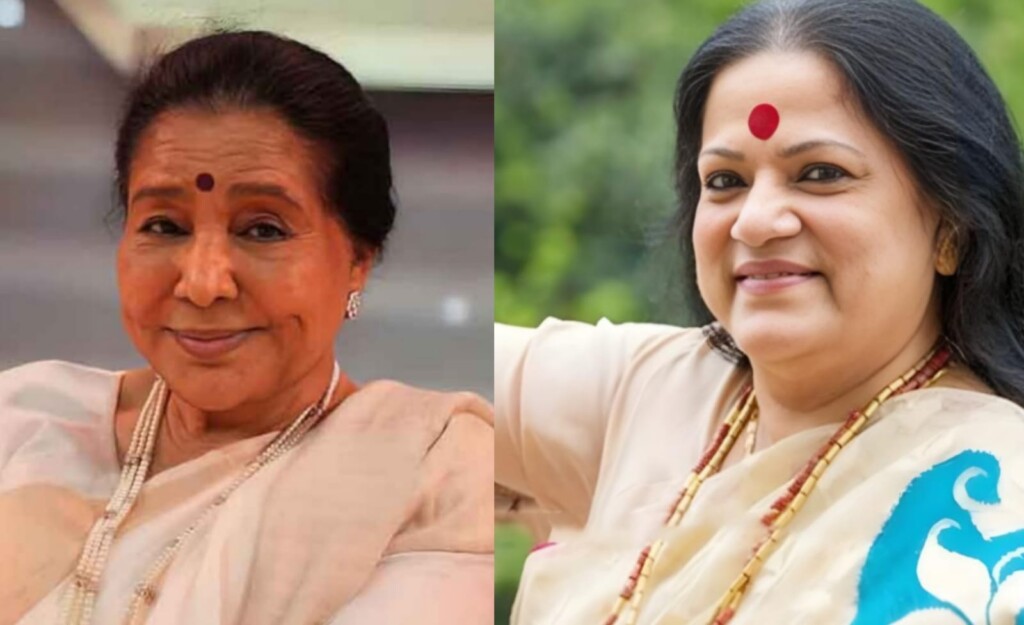
Indian subcontinent’s legendary playback singer Asha Bhosle has reportedly passed away at the age of 92, marking the end of a remarkable era in South Asian music history. According to reports from Mumbai’s Breach Candy Hospital, she breathed her last on Sunday (12 April) while undergoing treatment. Medical sources indicated that she had suffered a cardiac arrest on Saturday prior to her passing.
Her death is being described by the music fraternity as the closing chapter of a golden age, particularly following the earlier loss of her elder sister, Lata Mangeshkar. Together, the Mangeshkar sisters shaped the very foundation of modern Indian film music, leaving behind an unparalleled legacy that spans generations.
Tributes have poured in from across India and beyond, with veteran Bengali singer Haimanti Shukla expressing deep sorrow at the news. Visibly emotional, she reflected on how Asha Bhosle had remained a pillar of strength for the music world following Lata Mangeshkar’s demise. She remarked that it is difficult to accept the reality of Bhosle’s passing, recalling her continued international performances and active engagement with music despite her age. Shukla further added that with Asha Bhosle’s departure, it feels as though a protective “umbrella” over the musical community has been taken away.
Over a career spanning more than seven decades, Asha Bhosle recorded thousands of songs in over 20 languages, demonstrating extraordinary versatility across genres including classical, pop, cabaret, ghazals, and film music. Her ability to adapt to changing musical styles made her one of the most influential voices in Indian cinema.
She was widely honoured for her contribution to music, receiving several prestigious accolades including the National Film Award, the Dadasaheb Phalke Award, and the Padma Vibhushan—one of India’s highest civilian honours.
Major Awards and Recognition
| Award | Category | Significance |
|---|---|---|
| Padma Vibhushan | Civilian Honour | Second-highest civilian award in India |
| Dadasaheb Phalke Award | Lifetime Achievement | Highest recognition in Indian cinema |
| National Film Award | Best Female Playback Singer | Government of India film award |
| Multiple Filmfare Awards | Playback Singing | Recognition across decades |
Some of her most iconic songs, such as “Dum Maro Dum” and “Chura Liya Hai Tumne Jo Dil Ko”, remain evergreen classics in Indian popular culture. Her Bengali rendition “Aaj Ei Dintake” also continues to enjoy enduring popularity among music lovers.
With her passing, the world of music loses not just a voice, but an era defined by innovation, emotional depth, and extraordinary artistic range.