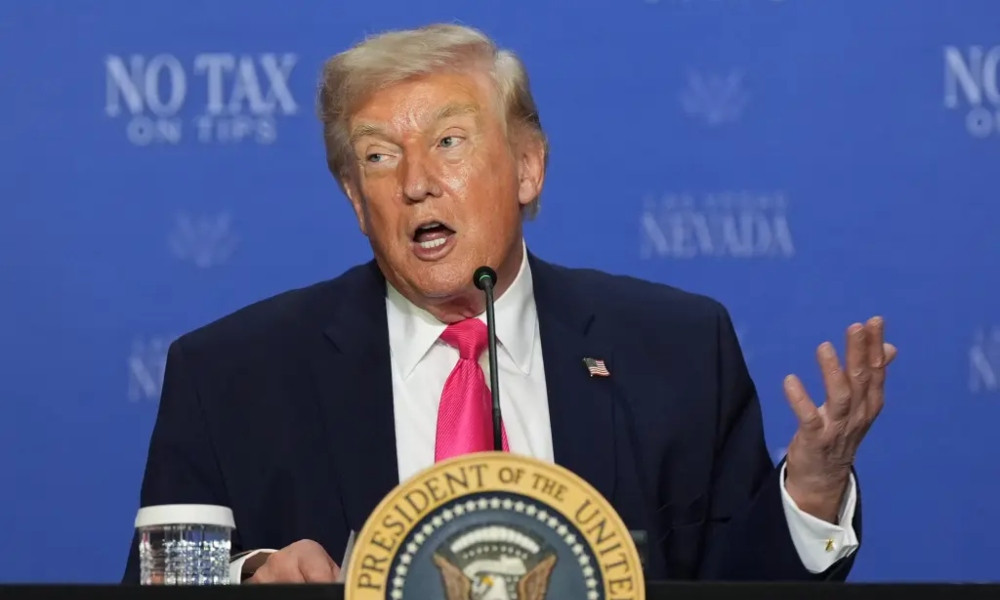
U.S. President Donald Trump has issued a definitive warning to Israel, demanding an immediate cessation of all military strikes on Lebanon. In a strongly worded statement posted on his Truth Social platform last Friday, the President asserted that Israel is prohibited from launching further air strikes during the current U.S.-mediated ceasefire. Emphasising a shift in diplomatic pressure, Trump stated, “Not one more bomb. Enough is enough.”
U.S. Leadership in Regional Diplomacy
The President confirmed that the United States remains the primary architect and overseer of the ten-day ceasefire agreement between Israel and Lebanon. This diplomatic framework is designed to halt the escalation of hostilities that have displaced thousands on both sides of the border. Trump clarified that the maintenance of the agreement is not solely contingent upon the Lebanese government; instead, the United States intends to work independently with Lebanon to ensure regional stability and the effective containment of Hezbollah’s activities.
Proposed De-escalation Terms with Iran
Parallel to the Lebanese conflict, reports from the news outlet Axios indicate a significant shift in U.S. policy regarding Iran. According to these reports, the Trump administration is considering the release of approximately $20 billion in frozen Iranian assets. However, this consideration is strictly conditional: Iran must agree to cease and hand over its uranium enrichment activities.
President Trump has maintained a firm stance on the mechanics of this potential deal, vowing that there will be no direct cash transfers. The objective remains to ensure that any released funds are strictly monitored and linked to verifiable nuclear de-escalation.
Summary of Key Diplomatic Developments
| Category | Policy Details and Directives |
| Military Directive | Immediate prohibition of Israeli bombing in Lebanon. |
| Ceasefire Status | Ten-day duration; U.S. positioned in the “driver’s seat.” |
| Hezbollah Policy | Commitment to directly confront and manage Hezbollah’s influence. |
| Iranian Condition | Total surrender of uranium enrichment programmes. |
| Financial Asset Proposal | Consideration of releasing $20 billion in frozen Iranian funds. |
| Transaction Safeguard | Categorical refusal of any cash-in-hand transfers. |
Context and Implementation
The President’s recent directives mark an assertive phase in U.S. foreign policy, focusing on rapid de-escalation through direct mandates rather than prolonged negotiations. By taking a unilateral lead in the ceasefire monitoring process, the U.S. administration aims to prevent a resurgence of conflict between the Israel Defense Forces (IDF) and Hezbollah militants.
Furthermore, the linking of Iranian assets to uranium enrichment signifies a “maximum pressure” approach combined with an economic incentive. This strategy seeks to dismantle Iran’s nuclear capabilities without providing the liquidity that the administration fears could be redirected to regional proxies. As the ten-day ceasefire window progresses, the focus remains on whether these stern warnings and conditional offers will translate into a sustainable reduction of violence in the Middle East.