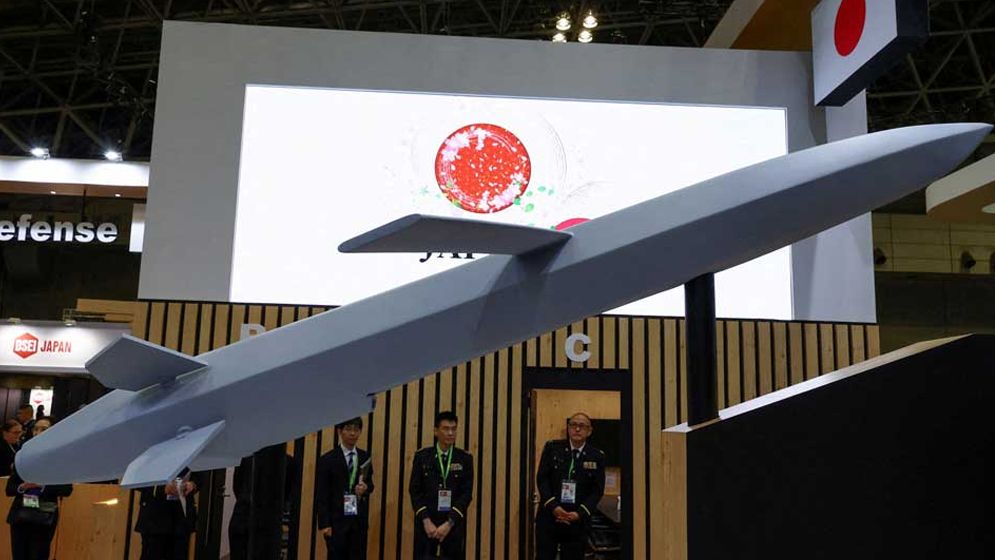
Japan has moved decisively away from its long-standing post-war pacifist export stance by easing restrictions on the overseas sale of lethal weapons, marking one of the most significant shifts in its defence policy in decades.
The decision, approved by the cabinet under Prime Minister Sanae Takaichi, allows Japan to broaden its arms export capabilities to include advanced military equipment such as fighter jets, missiles, and warships. The announcement signals a notable departure from the restrictive principles that have governed Japanese defence exports since the Second World War.
In a statement shared on social media on Tuesday, Prime Minister Takaichi said that, under the revised framework, the transfer of defence equipment would now be “fundamentally possible”. However, she did not specify which categories of weapons would be prioritised for export. According to reporting by international media, including Al Jazeera, the policy remains intentionally broad at this stage.
Japanese media outlets suggest that the new framework could encompass a wide range of sophisticated military systems, including next-generation fighter aircraft, guided missile systems, and naval vessels. Importing countries will reportedly be required to provide assurances that the equipment will be used in accordance with the United Nations Charter.
Government sources indicate that at least 17 countries may initially qualify to purchase Japanese-made defence equipment, with the potential for further expansion as bilateral agreements develop over time.
Although the updated policy relaxes earlier constraints, certain limitations remain in place. Exports to active conflict zones are still generally restricted, although exceptions may be granted in cases deemed necessary for Japan’s national security interests.
Japan’s previous export regime, based on principles adopted in 1967, effectively limited overseas sales to non-lethal military equipment. The revised policy therefore represents a structural transformation in Japan’s defence industrial approach.
One of the most prominent existing deals under this evolving framework involves Australia. Japanese conglomerate Mitsubishi Heavy Industries is currently engaged in a contract worth approximately 7 billion US dollars to construct warships for the Australian navy, underscoring the growing international demand for Japanese defence technology.
At the same time, Prime Minister Takaichi continues to face regional diplomatic scrutiny over her visits and ritual offerings to the Yasukuni Shrine in Tokyo. The shrine honours Japan’s war dead but also enshrines individuals convicted of war crimes after the Second World War, making it a long-standing source of tension with countries such as China and South Korea.
Comparison of Japan’s Defence Export Policy
| Aspect | Previous Policy (Post-1967) | Revised Policy |
|---|---|---|
| Export of lethal weapons | Prohibited | Permitted under conditions |
| Eligible equipment | Non-lethal defence items only | Fighter jets, missiles, warships, advanced systems |
| Export destinations | Highly restricted | At least 17 approved countries initially |
| Conflict zone exports | Not allowed | Restricted, with limited exceptions |
| Legal framework | Strict pacifist interpretation | Flexible, security-oriented interpretation |
| End-use conditions | Minimal requirements | Must comply with UN Charter assurances |
The policy shift reflects Japan’s growing willingness to align its defence industry more closely with global security demands, while still attempting to balance constitutional pacifism with strategic realities in an increasingly volatile geopolitical environment.