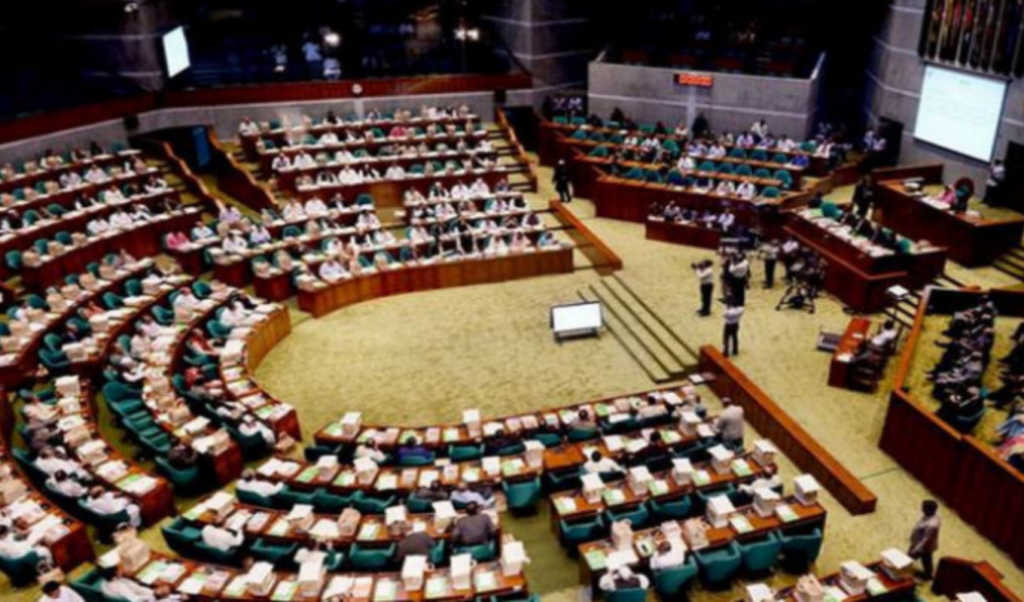
In a significant departure from long-standing legislative privileges, the Chief Whip, Nūrul Islām, has announced a landmark decision regarding the entitlement of Members of Parliament (MPs). Speaking after a parliamentary session on Tuesday, 21 April 2026, the Chief Whip confirmed that both the government and the opposition have reached a rare consensus to discontinue the provision of tax-free vehicles and government-allocated residential plots for lawmakers.
This decision comes at a time of heightened fiscal consciousness and follows a directive from the Prime Minister and Leader of the House, Tarique Rahman, who has consistently advocated against unnecessary luxury and excessive state-funded benefits for public representatives.
The Catalyst: A Request for Logistics
The debate was initially ignited by Hasnat Abdullah, an MP from the National Citizens’ Party (NCP). During the session, whilst expressing gratitude for the establishment of parliamentary offices at the sub-district (Upazila) level, Mr Abdullah raised concerns regarding the logistical hardships faced by lawmakers.
He pointed out a perceived disparity in state resources, noting that whilst Upazila Nirbahi Officers (UNOs) and Upazila Chairmen are provided with official vehicles, MPs often find themselves without designated transport. He admitted that many lawmakers are forced to hire private vehicles to visit their constituencies—a situation he described as a matter of “public embarrassment” that hinders their ability to connect with the electorate.
Government Response and Economic Context
Responding to Mr Abdullah’s plea, the Home Minister, Salahuddin Ahmed, intervened with the Speaker’s permission to reiterate the government’s stance on austerity. He revealed that the administration is currently drafting amendments to existing laws to formally abolish the tax-free car facility for MPs.
Minister Ahmed highlighted that the nation is currently navigating a period of economic recalibration, necessitating several cost-cutting measures across the civil service and legislative branches.
| Measure | Target Group | Impact / Reduction |
| Fuel Allocation | Government Officials | 30% reduction in monthly allowance |
| Loan Facilities | Civil Servants | Significantly limited / capped |
| Tax-Free Vehicles | Members of Parliament | Proposed total abolition |
| Residential Plots | Members of Parliament | Discontinuation of new allocations |
Opposition Sentiment and Bipartisan Agreement
Whilst the Chief Whip noted that the opposition is in broad agreement regarding the withdrawal of these luxuries, the Leader of the Opposition, Dr Shafiqur Rahman, offered a more nuanced perspective. He suggested that the government should handle the aspirations of younger, first-time lawmakers with greater empathy.
Referring to Mr Abdullah’s request, Dr Rahman remarked that “one should not always say ‘no’ to the requests of the juniors,” suggesting that a more considered assurance might have been more encouraging than an immediate rebuttal. Nevertheless, he affirmed the opposition’s commitment to the broader principle of fiscal responsibility.
A New Era of Legislative Austerity
The Speaker of the House later clarified that these matters are currently undergoing high-level policy discussions. The government’s intent appears twofold: to bridge the gap between the ruling class and the common citizen, and to ensure that state funds are prioritised for development rather than personal emoluments.
The proposed abolition of the tax-free car facility is particularly symbolic. For decades, this privilege allowed MPs to import high-end luxury vehicles without paying the substantial duties usually imposed on the general public—a practice that often drew criticism from civil society. By voluntarily surrendering these perks, the current Parliament aims to set a precedent for transparent and modest governance.
As the session concluded, the Chief Whip reiterated that the era of “parliamentary luxury” is being phased out in favour of a more grounded approach to public service. The Prime Minister’s “Anushashan” (ruling/discipline) on this matter is expected to be codified into law shortly, ensuring that future legislative sessions are defined by their service to the people rather than the benefits afforded to the representatives.