A large-scale insurance fraud scheme has been uncovered in Nepal’s Everest trekking region, involving alleged manipulation of emergency evacuations and medical billing for foreign tourists. Reports cited from international media, including The New York Times, state that the operation has resulted in estimated losses of around USD 20 million, equivalent to approximately BDT 220 crore, claimed from international insurance companies.
According to investigations reported by The Kathmandu Post, the alleged network included trekking guides, helicopter operators, and staff connected to private hospitals. Authorities claim that these parties worked in coordination to generate fraudulent insurance claims linked to emergency rescue and medical treatment of tourists in remote mountainous areas.
Alleged modus operandi
Investigators state that tourists trekking near Mount Everest and surrounding high-altitude regions were subjected to situations that led to unnecessary medical emergencies. It is alleged that some visitors were made ill through contaminated food, after which emergency helicopter evacuations were arranged.
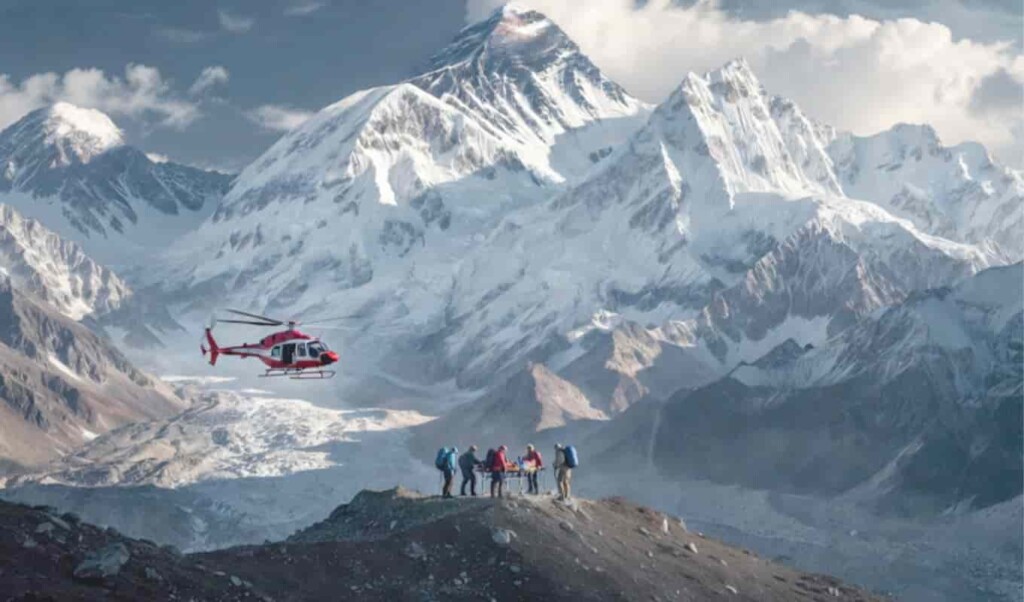
Once tourists became ill, helicopter rescues were organised from remote locations to medical facilities in lower-altitude areas. The cost of such evacuations, normally between USD 2,000 and USD 3,000, was reportedly inflated significantly in insurance claims, with bills ranging from USD 10,000 to USD 15,000 per flight.
In addition to evacuation costs, affected tourists were reportedly directed to specific private hospitals, where further inflated charges were applied. These combined expenses were then submitted to international insurance providers for reimbursement.
Financial overview of reported discrepancies
| Category | Typical Cost (USD) | Alleged Claim Amount (USD) |
|---|---|---|
| Helicopter evacuation | 2,000 – 3,000 | 10,000 – 15,000 |
| Hospital treatment | Standard regulated rates | Inflated billing reported |
| Total estimated fraud value | — | ~20 million |
Investigation and arrests
Nepal Police have filed charges against 33 individuals in connection with the case. Those accused reportedly include owners of helicopter companies and officials associated with private healthcare facilities. The Central Investigation Bureau (CIB) is leading the investigation, and authorities have confirmed that 33 individuals have been arrested.
Following the revelations, Nepalese authorities have introduced revised Standard Operating Procedures (SOPs) for high-altitude rescue operations. These measures aim to regulate emergency evacuations more strictly and improve oversight of coordination between tourism operators, medical institutions, and insurance claims processing.
Impact on tourism and insurance sector
The case has raised concerns within the international insurance industry regarding the reliability of claims emerging from Nepal’s Everest trekking routes. Insurers are reportedly reviewing risk exposure and operational guidelines for coverage in high-altitude tourism zones.
The incident also highlights regulatory challenges in managing emergency rescue services in remote regions. Authorities are expected to strengthen monitoring systems for helicopter evacuations and hospital billing practices to prevent misuse of insurance mechanisms and ensure greater transparency in the tourism rescue framework.