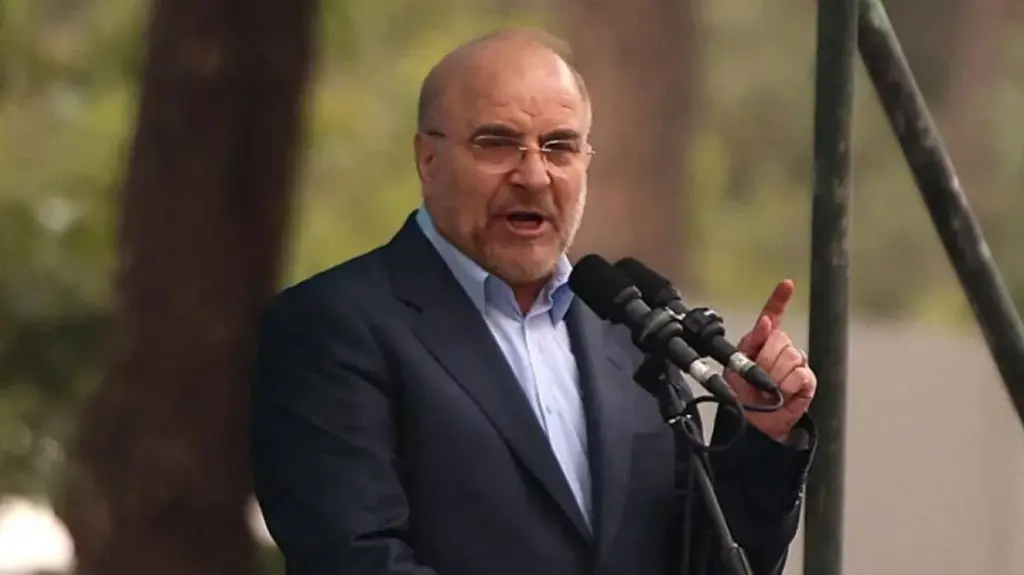
The Speaker of the Iranian Parliament, Mohammad Bagher Ghalibaf, has initiated a fresh discourse regarding the balance of economic power between Tehran and Washington. In a detailed analysis shared via social media on Sunday evening, Ghalibaf challenged the narrative of American economic hegemony, asserting that Iran maintains significant “unplayed cards” that could disrupt global energy markets.
The Equation of Supply versus Demand
Ghalibaf’s analysis frames the ongoing geopolitical tension as a mathematical equation of economic strategies. He categorises Iran’s strength as being fundamentally supply-based, while identifying the United States’ strategy as demand-based. According to the Speaker, Iran’s primary leverage resides in its geographic and infrastructural control over critical energy transit routes.
Tehran’s strategic assets include the Strait of Hormuz, the Bab el-Mandeb Strait, and an extensive network of oil pipelines. In contrast, the United States relies on reactionary measures to manage the market, such as the release of crude oil from the Strategic Petroleum Reserve (SPR), the implementation of demand-side controls, and potential price adjustments.
Unused Strategic Options
A central theme of Ghalibaf’s statement is the exhaustion of American economic tools compared to Iranian reserves. He noted that while Washington has already deployed or partially exhausted its primary economic levers, Tehran has deliberately withheld several high-impact options.
Regarding the specific application of these strategies, Ghalibaf highlighted that while the Strait of Hormuz has been utilised “partially” in terms of strategic signalling, the Bab el-Mandeb Strait and various pipeline-related alternatives remain entirely unapplied. Addressing the United States directly, he remarked, “They are bragging about their cards—let us see: the supply card versus the demand card.”
Economic Constraints and Seasonal Pressures
The Speaker further highlighted the vulnerabilities within the American economy, specifically pointing to the upcoming summer holiday season. During this period, domestic fuel demand in the United States typically surges, placing additional pressure on the Biden administration to maintain low pump prices. Ghalibaf suggested that this seasonal demand spike limits Washington’s flexibility, as any further depletion of the Strategic Petroleum Reserve could leave the country vulnerable to future shocks.
Comparison of Strategic Economic “Cards”
Based on the assertions made by the Iranian Parliament Speaker, the following table outlines the current status of the strategic tools held by both nations:
| Strategic Category | Iranian Leverage (Supply-Side) | Status | U.S. Leverage (Demand-Side) | Status |
| Maritime Transit | Strait of Hormuz | Partially Utilised | SPR Oil Releases | Extensively Used |
| Regional Choke-points | Bab el-Mandeb Strait | Unused | Demand Control Measures | Partially Applied |
| Infrastructural | Pipeline Network Options | Unused | Price Adjustments | Potential/Future |
| Market Pressure | Supply Limitation | Potential | Seasonal Demand (Summer) | Immediate Constraint |
Contextual Significance
The Strait of Hormuz remains the world’s most important oil transit chokepoint, with approximately one-fifth of the world’s total oil consumption passing through it daily. Similarly, the Bab el-Mandeb, located between Yemen on the Arabian Peninsula and Djibouti and Eritrea in the Horn of Africa, is a vital link for oil and natural gas shipments heading to Europe. By referencing these specific locations, Ghalibaf underscores Iran’s ability to influence global energy security.
The Speaker’s comments reflect a hardening stance in Tehran, suggesting that the Iranian government views its position not merely as defensive, but as one capable of exerting proactive pressure on Western economies. As the global energy market remains sensitive to geopolitical shifts, the “supply versus demand” contest described by Ghalibaf remains a focal point of international concern.