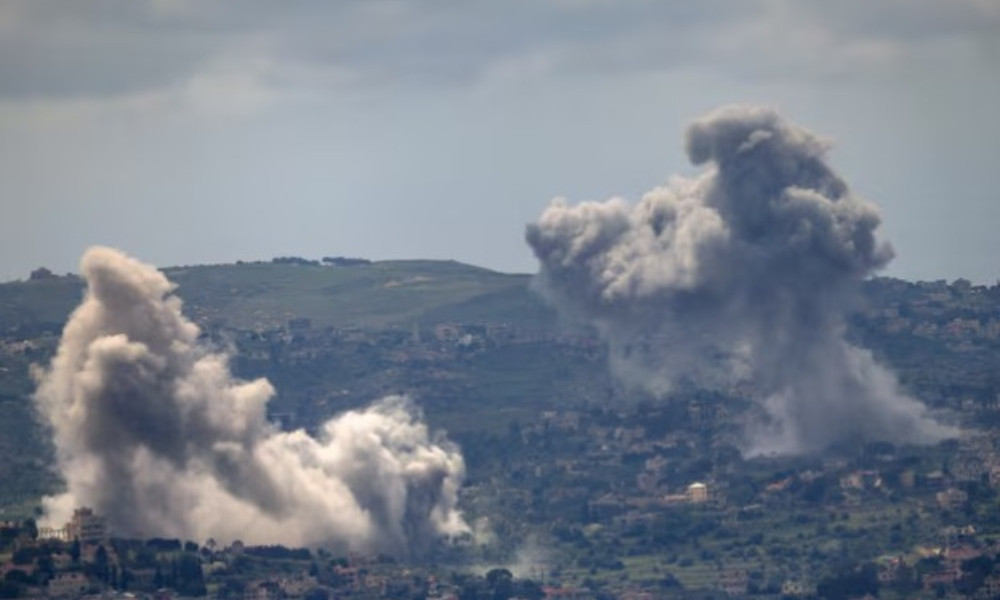
Tensions escalated along the Israel-Lebanon border today as the Israel Defence Forces (IDF) conducted air strikes on three distinct locations in Southern Lebanon. According to military reports and local sources, the aerial operations targeted the towns of Haris, Beit Yahoun, and Al-Ghandouriyah. These strikes form part of a broader pattern of kinetic exchanges that have come to define the volatile security situation in the region.
Details of the Aerial Operations
The strikes on Haris, Beit Yahoun, and Al-Ghandouriyah were executed following intelligence assessments regarding the presence of military infrastructure. While the specific damage to assets remains under assessment, these locations are situated in sectors where cross-border fire has been frequent. The IDF maintains that its operations are focused on neutralizing launch sites and tactical headquarters to mitigate threats to northern Israeli communities.
Simultaneously, the IDF reported a breach of Israeli airspace involving an unmanned aerial vehicle (UAV). A drone launched from Lebanese territory reportedly crossed the border and crashed in the Shomera area of northern Israel. Military technicians were deployed to the site to examine the wreckage and determine the drone’s origin and payload capabilities.
Summary of Recent Cross-Border Incidents
| Location | Country | Nature of Incident | Reported Outcome |
| Haris | Lebanon | Israeli Air Strike | Damage to local infrastructure |
| Beit Yahoun | Lebanon | Israeli Air Strike | Tactical targets engaged |
| Al-Ghandouriyah | Lebanon | Israeli Air Strike | Precision strikes on targets |
| Shomera | Israel | Inbound Drone Crash | UAV landed in an open area |
Context of Ongoing Hostilities
The border remains in a state of high alert as both sides engage in a cycle of attacks and counter-attacks. This morning, the “Blue Line”—the UN-recognised boundary between the two nations—witnessed continued artillery exchanges and surveillance activity. The persistent use of drones by Lebanese-based groups and the subsequent retaliatory air strikes by Israel have displaced thousands of civilians on both sides of the frontier.
The escalation in Haris and surrounding villages coincides with a broader military strategy involving the use of precision-guided munitions and sophisticated electronic warfare. In northern Israel, residents of border communities like Shomera remain under strict security protocols, with local authorities frequently issuing sirens and instructions to seek shelter.
Security and Strategic Implications
The geographical spread of today’s strikes highlights the widening scope of the conflict. By targeting Al-Ghandouriyah and Haris, the Israeli military is engaging points deeper within Southern Lebanon than the immediate border fringe. This suggests a continued effort to degrade the logistical capabilities of armed groups operating in the region.
International observers and UNIFIL (United Nations Interim Force in Lebanon) continue to monitor the situation, warning of the risks associated with miscalculation. The arrival of a drone in Shomera serves as a reminder of the persistent penetration of the border by low-altitude aerial threats, which continue to challenge regional air defence systems. As of this afternoon, military posturing on both sides suggests that the cycle of reciprocal strikes is likely to persist in the absence of a formal ceasefire or de-escalation agreement.