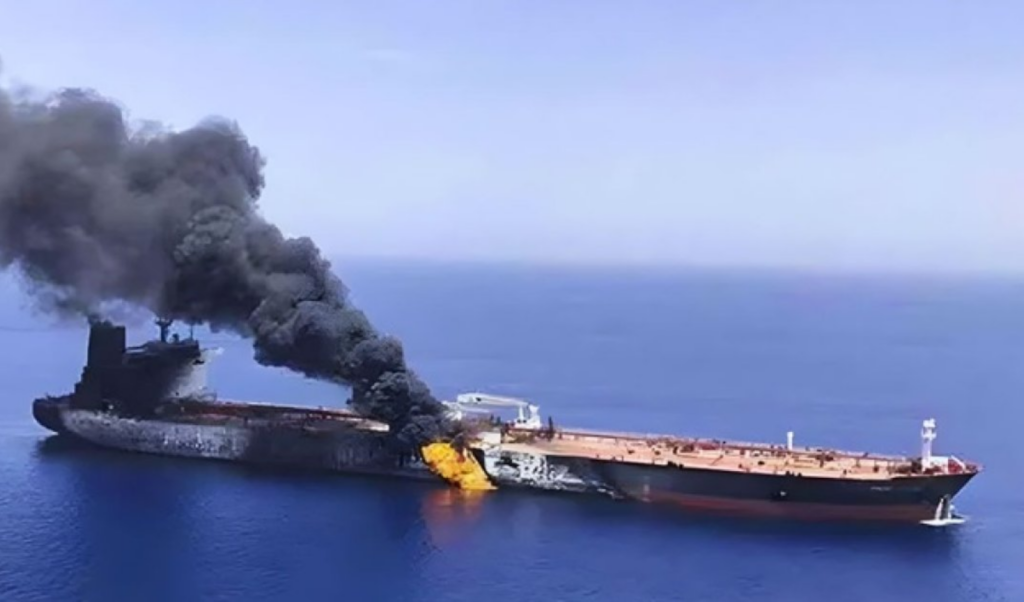
An oil tanker has been intercepted and seized by armed individuals off the coast of Yemen, escalating concerns regarding maritime security in the region. According to the Yemen Coast Guard, the vessel, identified as the M/T Eureka, was boarded by an unidentified group of gunmen while navigating waters adjacent to the Shabwa province.
Official reports indicate that the perpetrators took command of the tanker and redirected its course. Current intelligence suggests the vessel is being navigated through the Gulf of Aden toward Somalian territorial waters. As of the latest update, no specific group has claimed responsibility for the seizure, and the identities of those involved remain unconfirmed by Yemeni maritime authorities.
Details of the Maritime Incident
The United Kingdom Maritime Trade Operations (UKMTO), which monitors maritime security and provides warnings to vessels in the Middle East, had earlier issued an alert regarding suspicious activity in the vicinity. The incident occurred approximately 84 nautical miles southwest of the Port of Mukalla.
According to the UKMTO report, the crew of a vessel in that location observed a coordinated approach by two smaller craft:
-
A distinctive green-coloured small boat.
-
A larger fishing trawler.
Both vessels were reportedly approaching the tanker at a high rate of speed. This tactic is characteristic of maritime piracy and armed boarding operations frequently observed in the high-risk waters of the Gulf of Aden and the Red Sea. The rapid approach suggests a calculated effort to overwhelm the vessel’s defences before the crew could initiate evasive manoeuvres or call for immediate military intervention.
Regional Context and Strategic Implications
The seizure of the M/T Eureka takes place against a backdrop of heightened volatility in Yemeni waters. The coastline of Shabwa province and the wider Gulf of Aden are critical arteries for global energy transport. Security analysts note that the proximity of these waters to areas of political instability and the presence of various armed factions make the region particularly susceptible to piracy and ship seizures.
The redirecting of the vessel towards Somali waters is a significant development. Historically, the Somali coast served as a primary base for piracy operations that peaked between 2008 and 2012. While large-scale piracy had diminished in recent years due to international naval patrols, there has been a documented resurgence in hijacking attempts and unauthorised boardings over the past several months.
Investigation and Response
The Yemen Coast Guard has stated that they are coordinating with international maritime monitoring agencies to track the current position of the M/T Eureka. The investigation is currently focused on identifying whether the hijackers are motivated by criminal ransom demands—typical of traditional piracy—or if the act is linked to broader regional geopolitical tensions.
The Port of Mukalla and the surrounding waters of the Hadhramaut and Shabwa regions are under the nominal control of the internationally recognised Yemeni government forces; however, the ability of the coast guard to project power far offshore remains limited by ongoing internal conflict and a lack of advanced naval assets.
Safety Advisory for Commercial Vessels
In light of this incident, maritime security organisations have reiterated safety protocols for commercial shipping in the Gulf of Aden:
-
Vessels are advised to maintain a high state of vigilance and implement Best Management Practices (BMP5) for protection against piracy.
-
The use of Armed Security Teams (AST) is increasingly common for tankers transiting these high-risk areas.
-
Shipmasters are encouraged to report any suspicious sightings immediately to the UKMTO and the International Maritime Bureau (IMB).
The situation regarding the M/T Eureka remains fluid. International naval task forces operating in the region, such as those under the Combined Maritime Forces (CMF), are likely monitoring the vessel’s transit towards Somalia. Further details regarding the safety of the crew and the condition of the cargo are currently being sought by the ship’s owners and maritime authorities.