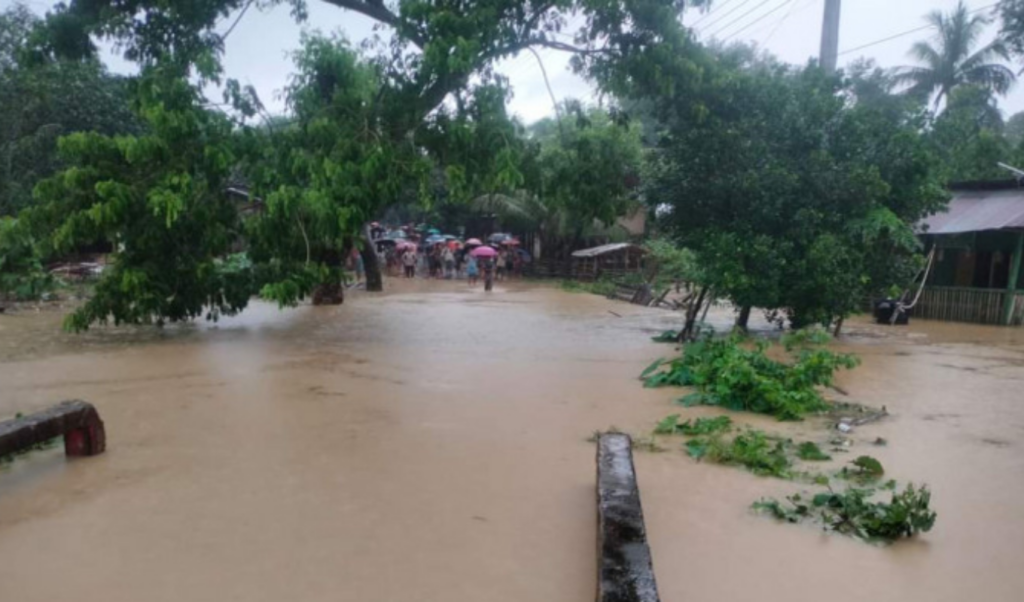
The Flood Forecasting and Warning Centre (FFWC), under the aegis of the Bangladesh Water Development Board (BWDB), has issued a forecast indicating a significant deterioration in the flood situation across the north-eastern region of the country. This warning follows a consistent rise in water levels across major river systems in the area, driven by intensified pre-monsoonal rainfall.
According to Mostafa Kamal Jihan, an Assistant Engineer at the BWDB, several rivers have already breached their respective pre-monsoon danger levels. Current hydrological data identifies the following critical points:
-
Sunamganj District: The Naljur River is flowing above the danger level at the Jagannathpur station.
-
Netrokona District: The Bhugai-Kangsha River at Jariajanjail, the Someswari River at Kalmakanda, and the Magra River at the Netrokona and Atpara points have all exceeded threshold limits.
-
Habiganj District: The Sutang River is currently flowing above the pre-monsoon danger level at the Sutang Railway Bridge station.
Hydrological Observations of the Last 24 Hours
Monitoring of the primary river systems in the north-eastern haor (wetland) basin reveals a varied hydrological pattern over the preceding 24-hour window. While the water levels of the Surma and Kushiyara rivers remained relatively stable, the Bhugai-Kangsha saw a marginal decrease. Conversely, the Dhanu-Baulai river system recorded a further increase in water levels.
Meteorological stations in the region reported heavy to very heavy internal rainfall within the haor basin, while the upstream areas in neighbouring territories experienced moderate to heavy precipitation. This influx of water from both internal rainfall and upstream runoff is the primary catalyst for the current hydrological volatility.
Three-Day Meteorological and Flood Forecast
Citing data from the Bangladesh Meteorological Department (BMD) and various global weather agencies, the FFWC predicts continued moderate to very heavy rainfall across the north-eastern region over the next 72 hours. This sustained precipitation is expected to have the following impacts:
1. Sylhet and Sunamganj Districts Water levels in the Surma and Kushiyara rivers are projected to rise steadily over the next three days. By the third day, the Kushiyara River is anticipated to cross the pre-monsoon danger mark at several locations. This development poses a direct threat to the low-lying areas adjacent to the haors in both Sylhet and Sunamganj, where localized flooding is expected to manifest.
2. Netrokona and Kishoreganj Districts In Netrokona, the Baulai River is forecast to breach its danger level at the Khaliajuri point within the next 48 hours, likely inundating nearby low-lying areas. While the Bhugai-Kangsha and Someswari rivers are expected to remain stable, the existing flood conditions in the Bhugai-Kangsha basin are predicted to persist. Meanwhile, the Dhanu-Baulai system in both Netrokona and Kishoreganj will likely see rising water levels throughout the three-day period.
3. Habiganj and Moulvibazar Districts The water levels of the Khowai, Sutang, Manu, and Juri rivers are all expected to escalate. Notably, the Khowai and Juri rivers are predicted to rise rapidly within the next 24 hours, potentially exceeding their pre-monsoon danger levels. The Manu River is expected to approach its warning limit. These combined factors are likely to induce new flood conditions in the low-lying areas of Moulvibazar and exacerbate the current situation in Habiganj.
Implications for Agriculture and Infrastructure
The timing of this hydrological surge is particularly critical for the north-eastern haor regions, which are currently in the midst of the Boro paddy harvesting season. Sudden inundation of these basins represents a significant risk to the standing crops and the livelihoods of the local agrarian community.
Authorities have advised stakeholders to monitor the situation closely, as the rapid rise of rivers like the Khowai can lead to flash floods with little lead time. The BWDB continues to coordinate with local administrations to disseminate warnings to residents in high-risk zones, ensuring that necessary precautions are taken to mitigate the impact on both lives and property.