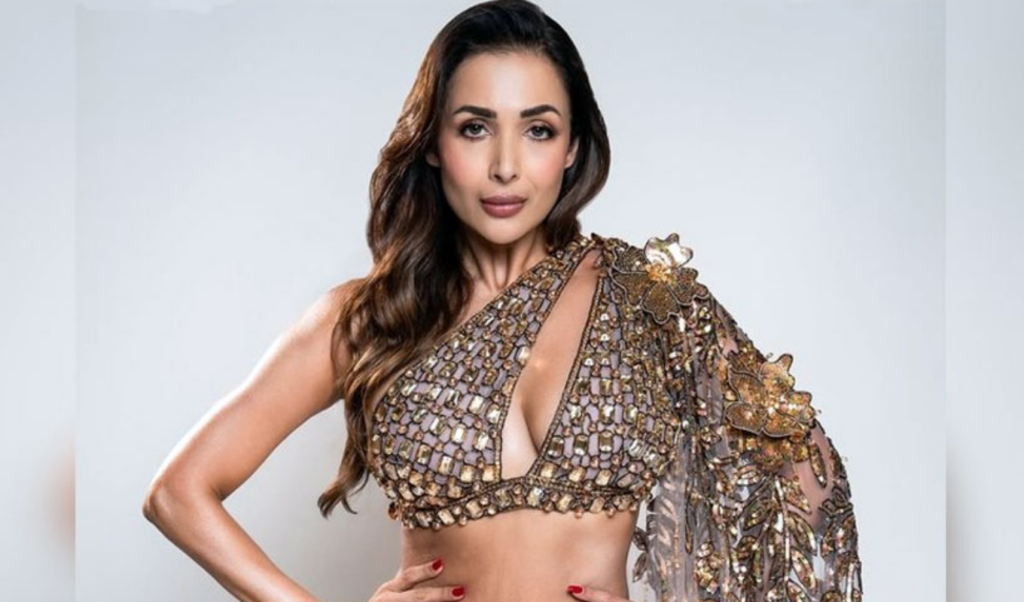
The Indian entertainment industry has been captivated by the presence of Malaika Arora for over three decades. From her iconic performances in “Chaiyya Chaiyya” to the enduring popularity of “Munni Badnaam Hui,” Arora has maintained a significant cinematic profile. Despite surpassing the age of 50, her recent appearance in the item song “Poison Baby” last year reaffirmed that her screen presence remains undiminished. Throughout her career, her commitment to fitness and aesthetic maintenance has remained a central theme of public discourse, frequently leading to inquiries regarding her regimen at the age of 52.
During a recent appearance on the talk show “The Right Angle Show,” the actress and television personality addressed the intricate relationship between age, beauty, and societal expectations. When questioned whether she prioritises the concept of ageing amidst the constant commendations for her fitness, Arora provided a nuanced perspective on her personal evolution.
Personal Evolution and Career Focus
Arora admitted that her perception of age has shifted significantly over the years. “There was a period when I was conscious of my age,” she remarked. “However, there have also been phases in my life where I did not consider the matter at all. I simply focus on enjoying my professional commitments and pursuing the activities I am passionate about.”
She further stated that she currently considers herself to be in the most fulfilling chapter of her life. Arora emphasised that her focus remains on future aspirations rather than numerical milestones. “I believe I am celebrating the happiest chapter of my life at this moment. There is still a substantial amount I wish to achieve and explore; consequently, these external factors no longer exert a particular influence over me.”
Addressing Societal Double Standards
A significant portion of the discussion focused on the disparate treatment of men and women regarding the ageing process. Arora challenged the societal inclination to link a woman’s life trajectory—whether a private citizen or a celebrity—strictly to her age, a scrutiny she noted is rarely applied to her male counterparts.
The actress expressed firm opposition to this prevailing gender bias. She argued that the candid, and often intrusive, questions directed at women regarding their age and continued relevance should, for the sake of equality, be directed at men as well.
“I believe these inquiries are perpetually reserved for women,” Arora noted. “One rarely observes a man being questioned in this manner. A woman is frequently asked, ‘You were like this during your prime; how do you feel at this current age? Do you still consider yourself beautiful or attractive?’ I have never encountered a male professional being subjected to such a line of questioning.”
Holistic Beauty and Mental Well-being
Beyond the physical aspects of ageing, Arora posited that an individual’s mindset is far more consequential than a mere number. She advocated for a broader definition of beauty that encompasses psychological and emotional health, rather than focusing solely on external aesthetics.
Arora concluded by explaining that her daily motivation is derived from internal fulfilment rather than vanity. “External beauty is not the ultimate factor. While that is what the world observes, the mental and emotional dimensions are of equal importance. How I feel upon waking, my mental state, and my desires for the day—these are the elements I truly value. I do not spend my time looking in the mirror merely assessing my appearance. My goal is to engage in work that inspires me and provides my family with a sense of pride.”
By shifting the conversation from physical fitness to professional longevity and gender parity, Arora continues to challenge the conventional narratives surrounding veteran female performers in the contemporary media landscape.