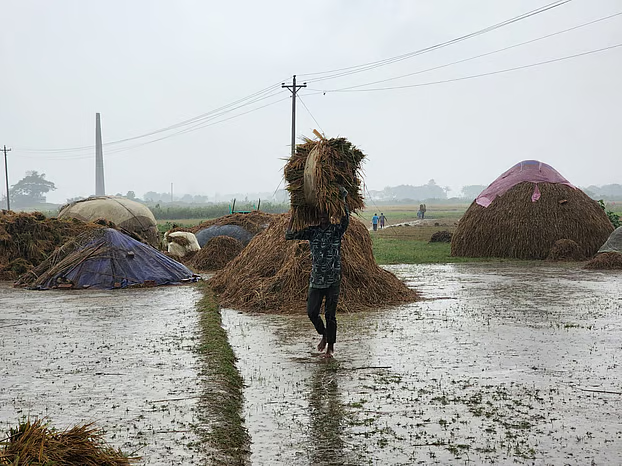
Adverse weather conditions across Bangladesh’s haor region have severely disrupted the harvesting and post-harvest handling of boro rice. Continuous rainfall, flash flooding from upstream flows, and strong winds have made field operations increasingly difficult for farmers.
According to information provided by the agricultural authorities, more than 42,000 hectares of rice fields in the haor districts of Sunamganj, Kishoreganj, and Netrokona have been inundated due to rainfall and floodwaters, resulting in significant crop damage.
Farmers report that harvesting has become extremely challenging as standing water, sometimes reaching waist level in elevated areas, remains across fields. In several locations, crops that have already been cut cannot be properly dried due to the absence of sunlight. As a result, stored and freshly harvested rice is deteriorating.
In multiple haor areas, prolonged moisture has led to germination of harvested rice grains, rendering them unsuitable for consumption. In other cases, piled rice is reported to be rotting and emitting odour due to continuous exposure to rainwater.
Summary of Affected Areas and Conditions
| Location | District | Reported Condition |
|---|---|---|
| Dekhar Haor | Sunamganj | Standing water in fields; harvesting ongoing under waterlogged conditions |
| Tanguar Haor (western char) | Sunamganj | Damage to peanut cultivation due to rain and upstream water flow |
| Boroatiya Haor | Kishoreganj | Labour shortage; family members assisting in harvesting |
| Boro Haor | Kishoreganj | Rising water levels; transport of harvested crops by boat |
| Kalnigad, Juri | Moulvibazar | Harvested rice submerged; drying not possible due to lack of sunlight |
| Faugon, Sripur | Gazipur | Submerged mature rice fields; collection of wet crops underway |
| Sonatala, Nasirnagar | Brahmanbaria | Paddy fields flooded; harvesting and transport by boat |
In Juri of Moulvibazar, farmers have been collecting rice that remained submerged for several days. Due to the absence of sunlight, drying has not been possible, and in some cases seedlings have started growing on harvested grains.
In Sunamganj’s Dekhar Haor, farmers continue harvesting paddy from areas still covered with waist-deep water. Similarly, in Kishoreganj’s Boroatiya Haor, labour shortages have added further difficulties to harvesting operations, forcing household members, including children, to assist in fieldwork.
In Boro Haor of Karimganj upazila, families are jointly cutting partially ripened paddy and transporting it back home using boats as water levels continue to rise. In Tanguar Haor, agricultural land used for peanut cultivation has also been affected by rainfall and upstream flooding, prompting farmers to accelerate harvesting.
In Brahmanbaria’s Nasirnagar upazila, submerged paddy fields have compelled farmers to harvest crops directly from flooded land, transporting them by boat to safer locations.
Across these regions, the combined effects of rainfall, flooding, and insufficient drying conditions continue to disrupt agricultural activities, with farmers facing difficulties in both harvesting and preserving their crops.