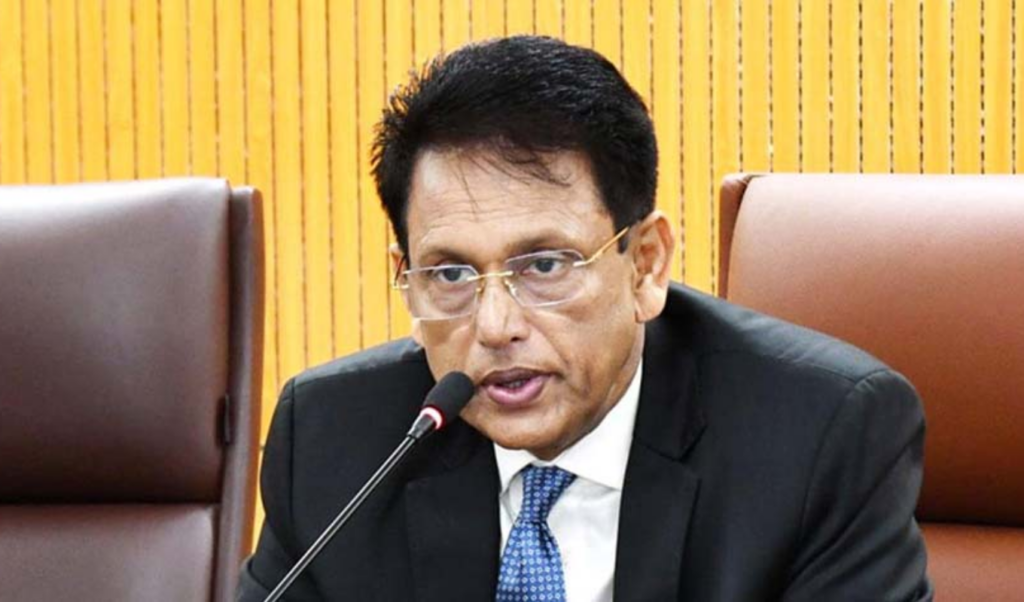
The Education Minister, A.N.M. Ehsanul Hoque Milan, has underscored the government’s commitment to granting private universities operational autonomy while simultaneously maintaining rigorous oversight to prevent them from becoming hubs for radicalisation. Speaking at an event in Banani, Dhaka, on Tuesday, 5 May 2026, the Minister articulated a delicate balance between academic freedom and national security, referencing past security lapses to justify increased regulatory vigilance.
Minister Milan stated that while the government intends to afford private universities independence, such freedom must not be absolute. He specifically cautioned against a recurrence of events similar to the Holey Artisan Bakery attack, noting that certain private institutions had historically been infiltrated by extremist elements. “We must remember this. Private universities had turned into factories for militants. The government will regulate these institutions,” he remarked, indicating that the Ministry of Education will take a more hands-on approach to monitoring campus environments.
Regulatory Oversight and Financial Transparency
A significant portion of the Minister’s address focused on the fiscal conduct of private university trustees. He pointed out a perceived discrepancy in the financial reporting of these institutions. Despite the legal requirement for private universities in Bangladesh to operate as non-profit organisations—a status frequently claimed by their owners—the Minister questioned the ultimate destination of their substantial revenues.
“The owners claim that private universities are non-profit ventures. However, we do not know where the funds derived from these institutions are going,” the Minister observed. This statement suggests that the government may implement stricter financial audits to ensure that tuition fees and other incomes are reinvested into academic infrastructure and research, rather than being diverted elsewhere.
Despite these warnings, the Minister assured the sector that the government remains a partner in their development. He relayed a message from the Prime Minister, stating that the administration is eager to listen to the specific challenges faced by private universities. The Prime Minister has reportedly pledged to take swift action to resolve administrative and structural bottlenecks once they are formally presented through the proper ministerial channels.
Benchmarking against Global Standards
In a moment of administrative reflection, Minister Milan invoked the legacy of former President Ziaur Rahman, who briefly held the education portfolio. The Minister noted that the volume of work achieved by Ziaur Rahman during his sixteen-day tenure as Education Minister remains a benchmark that he feels he could not replicate even in sixteen years, highlighting the need for rapid and decisive reform in the sector.
The Minister also looked toward international models for inspiration, specifically citing the Malaysian education system as a template for success. He questioned why Bangladesh could not replicate the rapid transformation seen in the Malaysian academic landscape, where higher education has become a significant source of national revenue.
“If Malaysia could change its education situation overnight, why can’t we? We can earn the most from the education sector if we wish,” he stated. He added that he intends to “copy” or emulate the strategies of nations that have achieved excellence in education to bolster Bangladesh’s standing as a regional academic hub.
National Context and the Law
The Minister’s directives align with the Private University Act 2010, which provides the legal framework for the University Grants Commission (UGC) and the Ministry of Education to supervise these institutions. The Act mandates that universities must be run by a Board of Trustees and sets specific requirements for permanent campuses and reserve funds.
By reiterating the need for regulation, the Minister is signalling a shift towards stricter compliance with existing laws to ensure that private higher education contributes positively to national growth without compromising social stability or financial integrity. The government’s ultimate goal, as outlined in the address, is to transform the sector into a high-earning, reputable industry that mirrors the successes of global leaders in education.