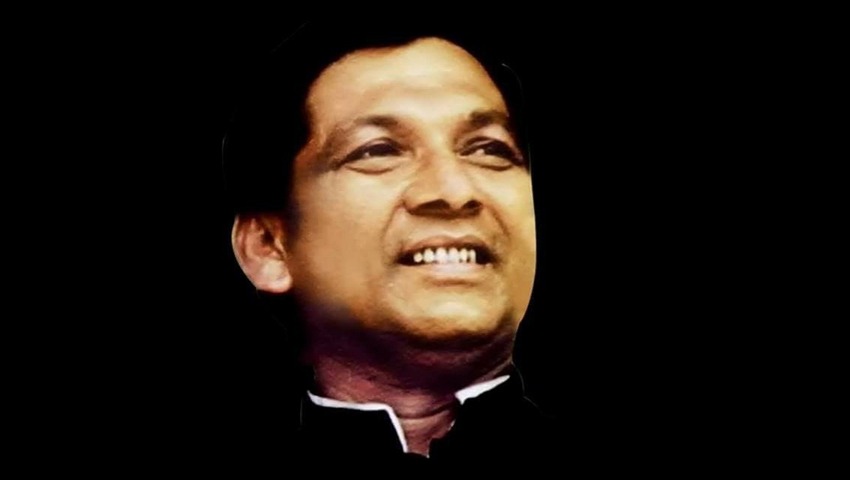
Ahsanullah Master was a dedicated freedom fighter, educator, and political leader whose life was defined by sacrifice, service, and an enduring commitment to the people. Throughout his lifetime, he consistently placed national interest and public welfare above personal gain, remaining closely associated with labourers, students, and underprivileged communities.
During the Liberation War, he took part as a frontline combatant in several armed engagements against the Pakistani occupation forces. His participation was marked by notable acts of resilience and leadership. In one incident, when his unit was surrounded from all sides, he refused to retreat. Armed with a sten gun, he crossed a nearby canal in a tactical escape and subsequently launched a counter-operation, compelling enemy forces to withdraw. On another occasion, despite sustaining severe injuries from a bayonet attack, he continued fighting after dislodging the weapon with his right hand. His involvement extended across multiple battlefields, including Durgabazar, Tongi TSC, Chaydana, and Kashimpur, where he played a leadership role. He also participated in joint operations with allied forces, including grenade attacks on enemy positions that contributed to operational success.
Following the war, Ahsanullah Master pursued a career in education alongside political and labour activism. After completing his graduation from the University of Dhaka in 1970 with distinction, he adopted teaching as a central profession and continued to engage in educational development. He was widely regarded as a mentor to teachers and students, integrating the ideals of the Liberation War, patriotism, and human values into his educational approach.
His political activities were closely aligned with labour rights and social justice. He worked extensively for the establishment of workers’ rights, trade union freedoms, workplace safety, and protections for expatriate labourers. In his roles as acting president and general secretary of the National Labour League, he was involved in organisational development and welfare initiatives, including the establishment of a fund to support legal cases for workers.
He also held several elected public offices in Gazipur, reflecting strong local support. His career in public service included leadership roles at both local and national levels.
Key Positions and Timeline
| Year |
Position / Achievement |
| 1970 |
Graduated from the University of Dhaka |
| 1983 |
Elected Chairman, Pubail Union Parishad |
| — |
Chairman, Gazipur Sadar Upazila Parishad |
| 1996 |
Elected Member of Parliament, Gazipur-2 |
| 2001 |
Re-elected Member of Parliament, Gazipur-2 |
| 2004 |
Death (7 May 2004) |
Ahsanullah Master was also known for his principled conduct. During an official visit to Japan, when labour leaders offered him gifts, he declined them and instead requested that a photograph of Bangabandhu Sheikh Mujibur Rahman be preserved in a Japanese museum. This act reflected his respect for national leadership and historical legacy.
He remained active in both the Liberation War legacy and democratic movements, consistently advocating for civic rights and social equity. His life came to an end when he was killed by assailants on 7 May 2004.
Born on 9 November 1950 and passing away on 7 May 2004, Ahsanullah Master is remembered as a freedom fighter, educator, and labour leader whose contributions to public life continue to be acknowledged in political and social discourse.


Comments