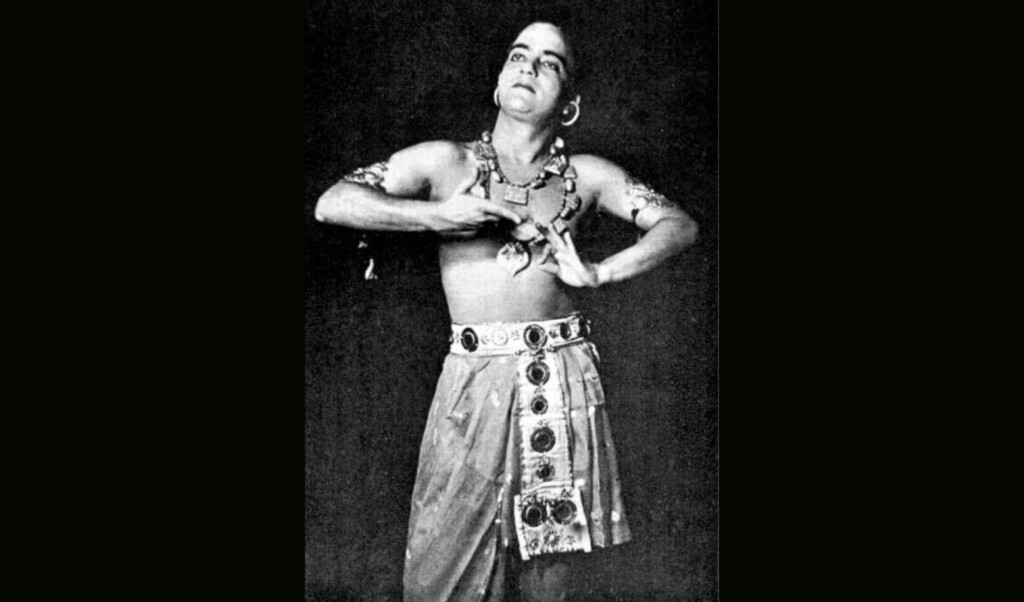
The history of South Asian dance places Bulbul Chowdhury amongst its most respected figures. Operating as a dancer, choreographer, cultural organiser, and writer, he is widely recognised as a pioneer of modern dance-drama in the subcontinent. By integrating choreographic expression with social consciousness, historical narratives, and humanitarian themes, he fundamentally altered the trajectory of the region’s performing arts.
Early Life, Education, and Creative Origins
Born on 1 January 1919 in the village of Chunati, situated within the Satkania region of Chittagong, his birth name was Rashid Ahmed Chowdhury. He later adopted the moniker “Bulbul Chowdhury” as his professional stage name. His father, Mohammed Azamullah, served as an inspector in the Bengal Police Service. Chowdhury’s early education commenced under private tutors with the study of Arabic and Persian, followed by schooling at various institutions, including Howrah Primary School. He subsequently completed his higher education at the University of Calcutta, obtaining a Master of Arts degree in 1943.
From his youth, Chowdhury demonstrated a strong affinity for music, painting, poetry, and prose. In 1934, an art exhibition held at Manikganj High School awarded him first prize for his paintings. However, dance eventually became his primary creative pursuit. His performance career began at a Manikganj High School cultural event, where he staged his self-choreographed piece, Chatak-Nritya (The Swallow Dance). During his tenure at Presidency College in Calcutta, his participation in cultural assemblies rapidly brought him to prominence. This period facilitated crucial interactions with established maestros, including sarod player Santosh Chandra, composer Timir Baran Bhattacharya, and dance pioneers Uday Shankar and Sadhana Bose.
Artistic Milestones and Cultural Legacy
A significant milestone occurred in 1936 when Chowdhury collaborated with Sadhana Bose to perform Rabindranath Tagore’s celebrated dance-drama, Kach O Devayani. By 1937, he played a central role in founding the Oriental Fine Arts Association (OFA).
Chowdhury’s choreographic philosophy rejected the notion of dance as mere entertainment; instead, he utilised the medium to articulate history, humanism, and contemporary social realities. His productions blended dance with theatrical acting, emotional expressions, and narrative depth. His thematic repertoire was secular and diverse, incorporating Hindu and Islamic mythology, folklore, historical personas, and severe contemporary crises like war and famine. His artistic journey was closely supported by his wife, Afroza Bulbul, who was an accomplished dancer in her own right.
| Period / Date | Geographic Location | Key Institutional & Professional Milestones |
| 1934 | Manikganj, Bengal | Debut performance of self-choreographed Chatak-Nritya |
| 1936 | Calcutta, Bengal | Staged Tagore’s Kach O Devayani with Sadhana Bose |
| 1937 | Calcutta, Bengal | Spearheaded the foundation of the Oriental Fine Arts Association (OFA) |
| 1940 | Dhaka, Bengal | Toured with his dance troupe, staging multiple acclaimed productions |
| 1941 (31 March) | Calcutta, Bengal | Formally established the Kolkata Krishti Kendra (Calcutta Culture Centre) |
| 1950 – 1952 | East & West Pakistan | Conducted extensive national tours across major urban centres |
| 1953 | Europe | International tour spanning Britain, Ireland, Holland, Belgium, and France |
Prolific Creations and Global Acclaim
Between 1934 and 1954, Chowdhury choreographed and staged approximately 70 dance-dramas. His notable works included Abhimanyu, Indrasabha, Sapure (The Snake Charmer), Kabi O Basanta (The Poet and Spring), Maru Sangeet (Desert Song), Fashal Utsab (Harvest Festival), Jiban O Mrityu (Life and Death), Ajanta Jagaran, Kalbaishakhi (The Nor’wester), Hafizer Swapno (The Dream of Hafiz), Kshudhita Pashan (The Hungry Stones), Mahabhubhuksha (The Great Famine), Bharat Chhar (Quit India), Anarkali, and Raasleela.
His international tours, particularly the 1953 European tour, garnered critical acclaim from global publications. His work was reviewed favourably by prominent newspapers such as India’s Amrita Bazar Patrika, The Statesman, and Star of India; Karachi’s Dawn; London’s Daily Telegraph; and France’s Le Figaro. Beyond choreography, Chowdhury authored several short stories and published a novel titled Prachi in 1942, set against the backdrop of the Second World War.
Bulbul Chowdhury passed away in Calcutta on 17 May 1954 at the age of 35. To preserve his contributions to the arts, the Bulbul Academy of Fine Arts (BAFA) was established in Dhaka on 17 May 1955, exactly one year after his demise. The institution continues to operate as a premier repository of cultural education in Bangladesh.