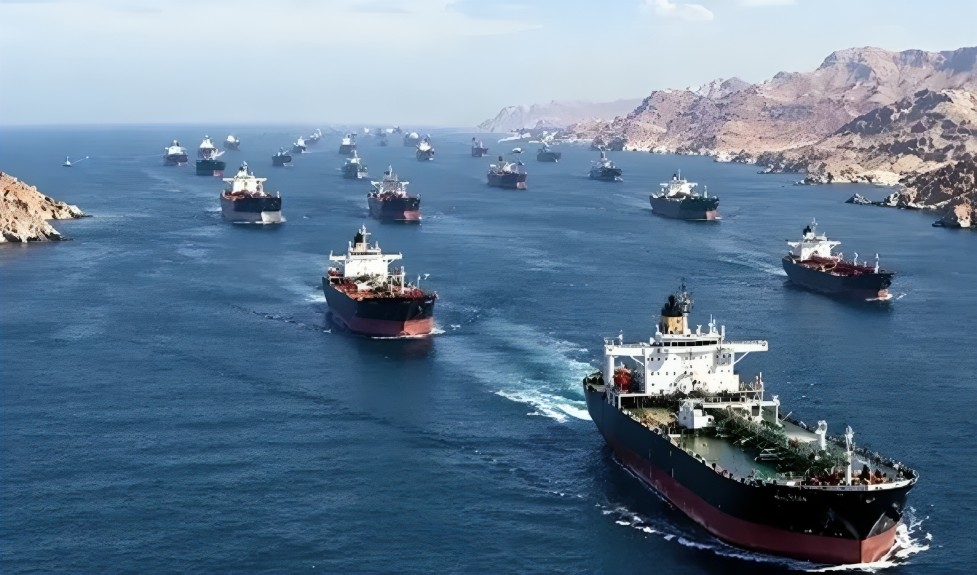
A maritime operation backed by strategic advice from the United States military has facilitated the safe passage of 29 large commercial oil tankers through the critical Strait of Hormuz. The transit marks the first significant movement of commercial vessels out of the Arabian Gulf since an escalation in regional conflict on 28 February led to a de facto closure of the choke point. The blockade left a total of 109 large merchant vessels stranded inside the Gulf waters. Following the successful departure of the 29 tankers, expectations are rising among global shipping corporations and ship owners regarding the sustained resumption of commercial navigation through the vital waterway.
Multiple vessel operators, speaking on condition of anonymity due to the delicate security environment, confirmed they are maintaining continuous communication channels with US military commanders. The American forces are actively providing critical routing advice and real-time security data to assist the crews in navigating the high-risk passage safely. However, an official spokesperson for the United States Central Command (CENTCOM) clarified that American military assets are not providing direct naval escorts or physical guarding duties alongside the commercial vessels. Instead, CENTCOM’s role remains strictly restricted to offering tactical safety advisories and guiding the vessels along secure maritime corridors.
Deterrence Actions and Operational Warnings
Eyewitness accounts from personnel on board the transiting vessels revealed that the operation faced immediate operational threats. During the passage, a formation of fast-attack speedboats, suspected to be operated by Iranian maritime units, rapidly approached a convoy of merchant ships. The escalating intercept was abruptly aborted when a US military helicopter arrived at the scene, compelling the speedboats to retreat and allowing the merchant vessels to proceed safely toward their destinations.
The ongoing danger along the route was further corroborated by Chevron Chief Executive Officer Mike Wirth, who confirmed that several vessels attempting to traverse the strait in recent days had come under direct adversarial attacks. Coinciding with these security incidents, the US administration issued a formal regulatory warning to the international shipping industry, declaring that entering into any independent security agreements with Iran or paying unofficial transit tolls to Iranian authorities to secure passage remains strictly prohibited under existing framework regulations.
Navigation Adjustments and Disruption to Tracking Data
According to a report published by the UAE-based news outlet The National, citing data from Bloomberg on Sunday, 31 May, shipping lines that had entirely abandoned the route after the outbreak of hostiles are now steadily returning to the corridor. The current traffic pattern is not merely limited to vessels evacuating the Arabian Gulf; an increasing number of commercial ships are also actively entering the watercourse to resume industrial loading operations.
To mitigate the acute risks of targeted missile or drone strikes, numerous vessel masters have chosen to deactivate their onboard satellite transponders and Automatic Identification System (AIS) tracking arrays during recent voyages. As a direct consequence of this tactical data blackout, public maritime tracking databases are displaying artificially low numbers, masking the actual volume of commercial ships operating within the geopolitical friction zone.
Economic Outlook and Global Supply Chain Impact
The sustained normalization of traffic through the Strait of Hormuz is widely expected to stabilize the global supply chains for crude oil, liquefied natural gas (LNG), and other essential consumer commodities. However, maritime economists warn that a full resolution of the logjam will not immediately lower the overhead costs of seaborne logistics.
Gerasimos Kalogiratos, the Chief Executive Officer of Capital Product Partners (Capital Tankers), noted that while a complete reopening of the strait will trigger an initial surge of maritime activity, long-term tanker charter rates are projected to remain exceptionally high. This sustained financial pressure is attributed to the urgent necessity of replenishing depleted global energy reserves, coupled with elevated insurance premiums for hulls operating in high-risk zones, ensuring that global shipping costs will remain structurally inflated for the foreseeable future.