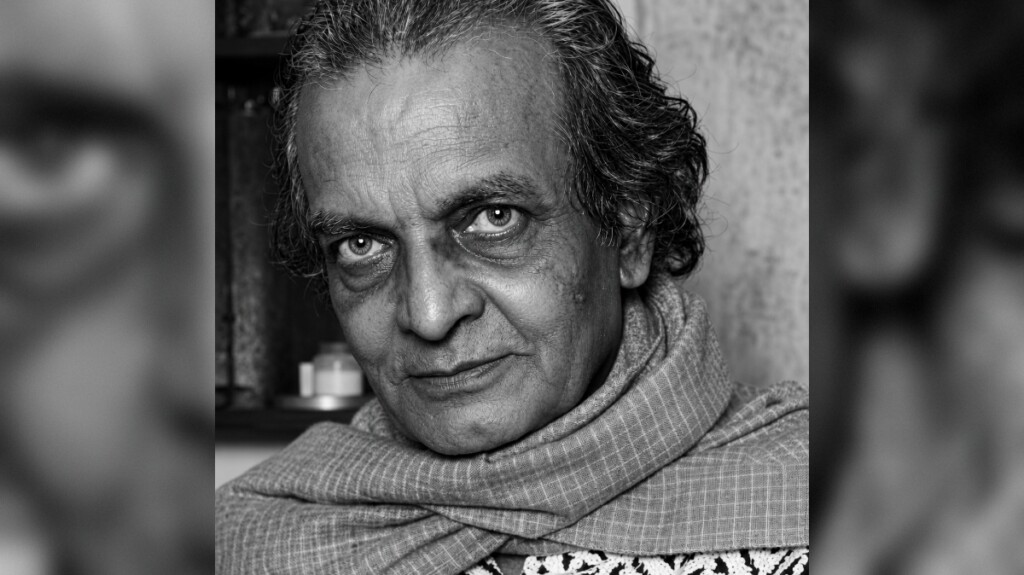
The International Crimes Tribunal-2 has sentenced Jatiya Samajtantrik Dal (JASAD) President and former Information Minister Hasanul Haq Inu to ten years’ rigorous imprisonment in a widely discussed crimes against humanity case. The verdict was delivered on Tuesday, concluding one of the tribunal’s most closely watched proceedings concerning allegations linked to the nationwide anti-discrimination student movement of 2024.
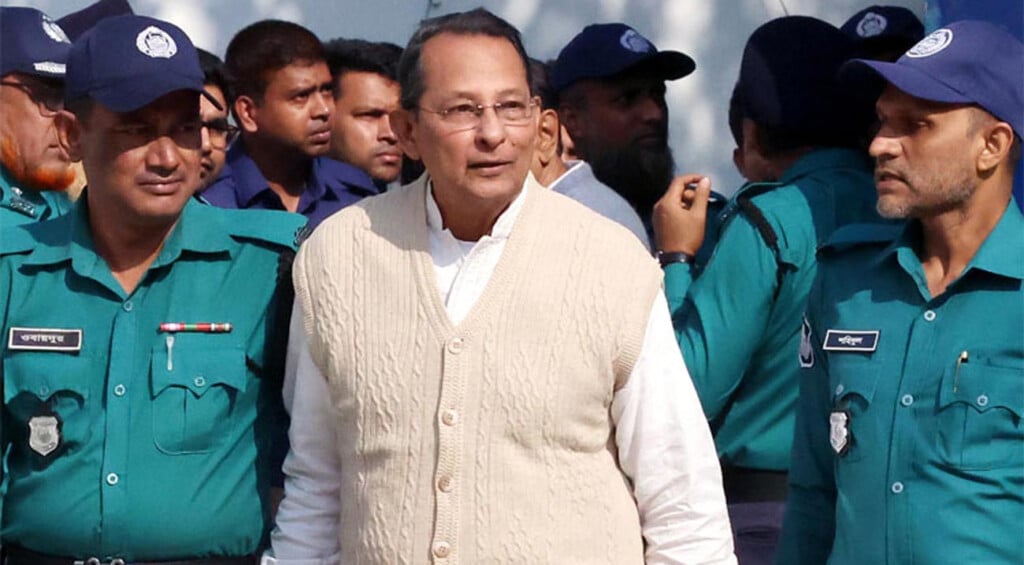
Following the announcement of the judgement, Inu, who was standing in the dock, was seen smiling, drawing the attention of those present inside the courtroom. Earlier in the day, prison authorities had brought him from the detention facility to the tribunal, where the verdict, like previous stages of the proceedings, was broadcast live.
After presenting its observations, the tribunal announced its findings on each of the eight charges brought against the former minister. The court found him guilty on three counts while acquitting him on the remaining five.
According to the judgement, Inu received ten years’ rigorous imprisonment on Charge No. 3, which related to allegations of persecution and political repression. He was also sentenced to another ten years’ rigorous imprisonment under Charge No. 6 for conspiracy, incitement and participation in criminal acts, along with a compensation order of Tk100,000. A further ten-year rigorous prison term and an additional compensation order of Tk100,000 were imposed under Charge No. 7, which concerned conspiracy.
Although the combined sentences amounted to thirty years, the tribunal ordered that all three prison terms would run concurrently. As a result, Inu will effectively serve ten years in prison unless the judgement is altered through the appellate process.
The tribunal had fixed 30 June as the date for delivering its verdict after concluding hearings on 22 June. The prosecution was led by Chief Prosecutor Md Aminul Islam, while senior advocate Monsurul Haque Chowdhury represented the defence throughout the proceedings.
The case involved an extensive judicial record assembled during the investigation. On 25 September last year, prosecutors formally submitted a 39-page charge sheet against Inu. The filing was supported by 1,679 pages of documentary evidence, along with three audio recordings and six video exhibits presented before the tribunal. Hasanul Haq Inu was the sole accused in the case.
The prosecution framed eight charges against the former minister, alleging that during the quota reform and anti-discrimination student movement in 2024 he repeatedly described demonstrators as members of the BNP, Jamaat, terrorists and communal forces. According to the prosecution, these public remarks encouraged the use of force against protesters and contributed to an atmosphere of political repression.
The charge sheet also alleged that Inu, as a senior leader of the then 14-party alliance, participated in policy discussions, issued instructions, provided encouragement and played a role in implementing decisions aimed at suppressing the movement.
Prosecutors further argued that, during an interview with an international media outlet on 18 July, Inu publicly expressed support for efforts to suppress the demonstrations. They also alleged that he attended a meeting of the 14-party alliance at Ganabhaban on 19 July, chaired by then Prime Minister Sheikh Hasina, where participants discussed measures including the deployment of the military and the imposition of a nationwide curfew. According to the prosecution, Inu supported those decisions.
Another allegation centred on events of 20 July, when prosecutors claimed Inu telephoned the Superintendent of Police in Kushtia and instructed law enforcement officials to identify and take action against protesters. The prosecution alleged that, following those instructions, security forces opened fire and carried out operations against demonstrators in different parts of Kushtia.
According to the prosecution, the resulting violence led to the deaths of labourer Ashraful Islam, Suruj Ali Babu, student Abdullah Al Mustakin, Md Usama, businessman Bablu Forazi and employee Yusuf Sheikh. The charge sheet also alleged that many others were injured, arrested and subjected to torture during the crackdown.
Prosecutors additionally claimed that Inu maintained regular communication with then Prime Minister Sheikh Hasina throughout the unrest and supported measures including the use of lethal weapons, continuation of the curfew, deployment of helicopters and other operations intended to suppress the movement. They further alleged that his public interviews repeatedly endorsed the government’s actions and contained statements that encouraged the ongoing crackdown.
After reviewing the evidence and hearing submissions from both sides, the tribunal concluded that some of the allegations had been established beyond the required legal standard, while others had not. The mixed findings resulted in convictions on three charges and acquittals on five others.
The judgement marks a significant milestone in a case that has attracted considerable legal and public attention since the investigation began. Although the tribunal has now delivered its decision, the legal process is not yet complete. Under Bangladesh’s judicial framework, both the prosecution and the defence retain the right to challenge the verdict before the higher courts through the appellate process.