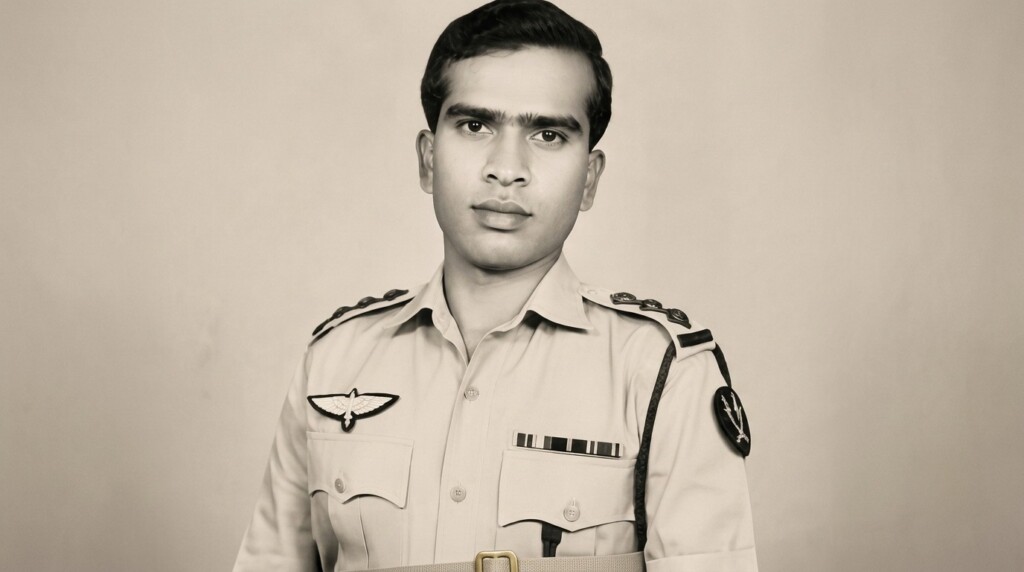
Few figures in Bangladesh’s struggle for independence evoke as much reverence as Colonel Abu Taher. A heroic freedom fighter, Sector Commander, decorated officer, and visionary socialist reformer, Colonel Taher remains an indelible symbol of selfless patriotism and unwavering resolve. His contributions both on the battlefield of the 1971 Liberation War and within the country’s early political landscape continue to mark him out as a guiding luminary in national history.
Formative Years and Academic Foundations
Abu Taher was born on 14 November 1938 in Badarpur, Assam, into a devout and principled family. His parents, Mohiuddin Ahmed and Ashrafunnesa, later re-established the family home in the Purbadhala sub-district of Netrokona. From his boyhood, Taher was distinguished by a rigorous work ethic, intellect, and a strong devotion to public service.
He completed his early schooling at Prabartak School in Chittagong and Yusuph High School in Comilla. He subsequently earned his undergraduate degree from MC College in Sylhet in 1959, before advancing his academic pursuits at the Institute of Social Welfare and Research at the University of Dhaka.
Military Distinction and Early Valor
Joining the Pakistan Army in 1961, Taher received his commission in 1962, quickly establishing himself as a tactically brilliant and courageous officer.
His military prowess was tested during the 1965 Indo-Pakistani War, where he fought gallantly on the Kashmir and Sialkot battlefields and sustained severe combat injuries. His exceptional bravery under fire earned him the coveted ‘Maroon Parachute Wing’—making him the sole Bengali officer to receive the honor.
Heroism in the 1971 War of Independence
At the onset of the 1971 Bangladesh Liberation War, Taher abandoned his career in the Pakistan Army to commit entirely to the independence movement. Assigned as the Sector Commander of Sector 11, his tactical insight and fearless leadership transformed the region into a fortress of resistance, delivering critical strategic victories against occupying forces.
During an intense frontline engagement, Taher lost a leg due to severe injuries. Rather than dampening his spirit, the amputation only reinforced his determination, and he resumed active operational command. In an extraordinary testament to patriotic dedication, several of his siblings served alongside him in Sector 11, marking an unparalleled record of familial sacrifice in the struggle for liberation.
Post-War Ideology and Political Turmoil
In the wake of independence, Colonel Taher briefly resumed service in the Bangladesh Army. However, driven by deeply held principles, he resigned his commission to pursue socialist political reforms aimed at building an egalitarian, exploitation-free society.
He emerged as a central leader of the Sepoy-Janata Revolution (Soldier-People Uprising) on 7 November 1975, a momentous event that secured the release of General Ziaur Rahman and dramatically altered Bangladesh’s political trajectory. In the volatile political maneuvering that followed, Taher was rapidly marginalized by the political establishment.
He was subsequently arrested and subjected to a secret, tribunal-style trial within Dhaka Central Jail. On 21 July 1976, at just 37 years of age, Colonel Taher was executed by hanging under circumstances that generated intense historical controversy.
Historic Vindication and Eternal Legacy
Justice was ultimately delivered decades later. On 22 March 2011, the High Court Division of the Supreme Court of Bangladesh struck down the 1976 military trial, ruling the proceedings, verdict, and execution unconstitutional and illegal.
This historic ruling officially exonerated Colonel Taher, cementing his status not merely as a military martyr, but as a defender of democratic principles and social justice. His life story continues to serve as an enduring beacon of selfless service and moral fortitude for the nation.