Police have launched a formal investigation under the Explosives Act following the recovery and neutralization of an improvised explosive device (IED) discovered beneath the Motijheel metro station in Dhaka.
Detectives from Motijheel Police Station alongside specialist officers from the Counter Terrorism and Transnational Crime (CTTC) unit of the Dhaka Metropolitan Police (DMP) are attempting to trace the origin of the bomb. Investigators are currently probing potential links between this latest discovery and a series of previous explosions and explosive recoveries in Keraniganj, Jatrabari, Sayedabad, and Cumilla.
Sub-Inspector Mirza Mohammad Mukta filed the case at Motijheel Police Station on Friday night, citing charges related to the unlawful manufacture, storage, transport, and use of explosives, as well as conspiracy to commit a crime.
Umbrella Device Found Near Generator Room
The incident unfolded on Friday evening during the annual Ulto Rath Yatra (return chariot procession). The religious rally had commenced at Dhakeshwari Temple, circled Motijheel Shapla Chattar, and was heading towards the Swamibag Ashram.
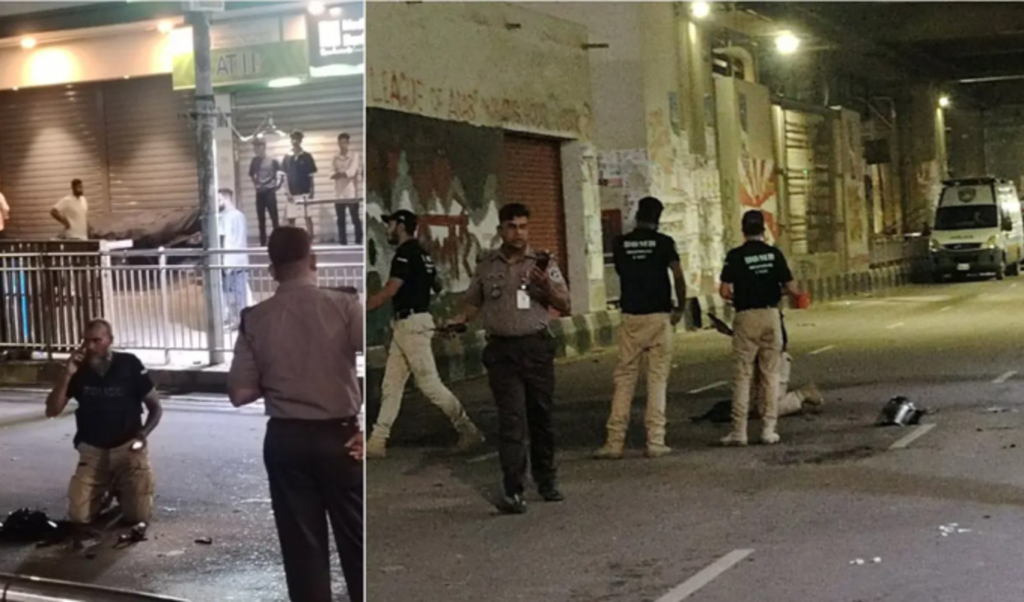
At approximately 6:00 pm, Traffic Sergeant Kawsar Hossain, who was on duty in the Motijheel area, alerted the DMP Control Room after discovering a abandoned umbrella beneath the metro station near the generator room. A small light was visibly blinking inside the folded umbrella.
Bomb disposal experts responded immediately and safely neutralized the device at the scene. The recovered item was identified as an IED built inside a galvanized iron (GI) pipe, fitted with an electronic circuit and battery. During the neutralization process, Miraj Hossain, an employee of the Ministry of Education passing nearby, sustained minor injuries when a piece of shrapnel struck his eye.
Mohammad Osman Gani, Additional Commissioner (Crime & Operations), DMP: “No suspects have been identified yet in connection with placing the bomb. Work is actively underway to determine the source of the explosive device and identify those responsible.”
Police officials believe the device was placed deliberately as the religious procession passed the metro station. However, closed-circuit television (CCTV) coverage in the area remains incomplete. Assistant Commissioner for the Motijheel Zone, Hossain Mohammad Farabi, confirmed that several cameras in the immediate vicinity were out of order, obscuring the exact moment the item was dropped.
Investigators Examine Links to Broader Extremist Network
A key line of inquiry focuses on whether the Motijheel IED is connected to a known extremist network linked to the neo-JMB, an ideology aligned with Islamic State.
On 26 December last year, a violent explosion tore through a rented building operating under the name Ummul Qura International Madrasa in Hasanabad Housing, Keraniganj. The blast collapsed outer walls and part of the roof. Police subsequently seized a vast cache of volatile chemicals from the premises, including hydrogen peroxide, acetone, nitric acid, and nearly 400 litres of liquid chemical precursors, alongside nine live bombs wrapped in black plastic. Seventeen people, including madrasa director Sheikh Al-Amin, were arrested.
Police investigations subsequently linked Al-Amin’s cell to three further security incidents across the country between February and March:
-
Jatrabari Assault (February): Attackers assaulted police officers during a routine search in Kutubkhali, Dhaka, leaving behind a bag containing live explosives that matched the chemical profile of the Keraniganj cache.
-
Sayedabad Explosion (March): An explosive device detonated during a police search operation at Jonopath Intersection in Sayedabad, Dhaka.
-
Cumilla Temple Attack (March): An explosion occurred at a Shiva temple in Cumilla city.
CCTV footage from those earlier scenes allowed detectives to identify two close associates of Sheikh Al-Amin—Nazmul Hasan Mamun and Mohammad Arif—who are believed to have played direct roles in all three incidents.
While the chemical composition of the Keraniganj explosives relied on liquid precursors and the Motijheel device was constructed using a metal GI pipe with battery circuitry, CTTC analysts are assessing whether the underlying logistics, procurement, or operational planning originate from the same operative network.