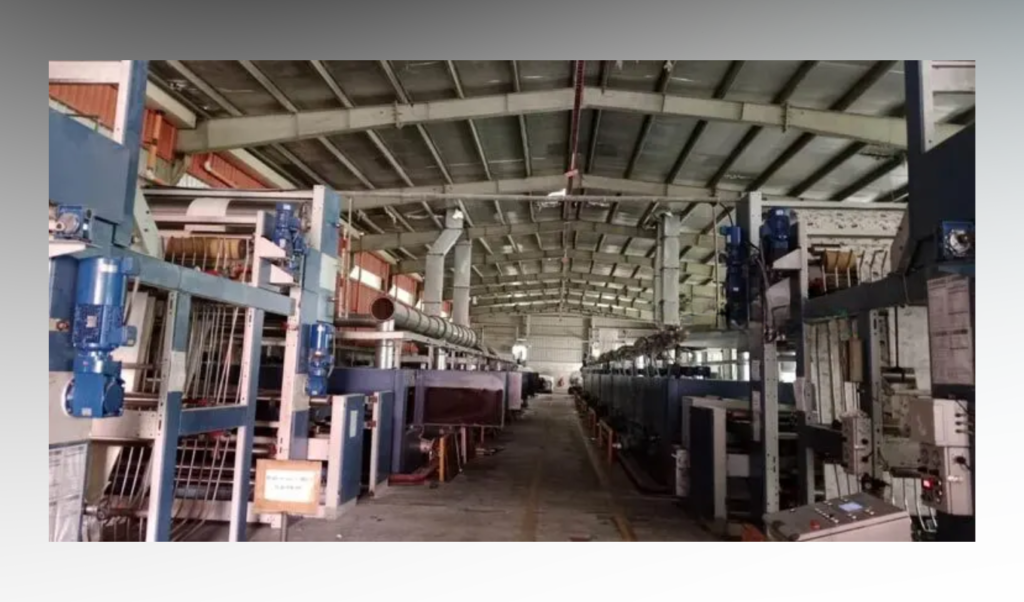
An acute energy crisis in Habiganj has escalated dramatically after authorities completely severed the natural gas supply to the district’s industrial sector, forcing all 171 factories to halt production. The sudden suspension, which took effect on Wednesday, 12 August, followed nearly three weeks of severely reduced pressure and erratic supply, leaving over 150,000 workers idle and jeopardising millions of pounds in export orders.
Industrial hubs across the district reported that gas pressure dropped to zero without prior technical clarity from distributors. For the vast majority of these manufacturing plants—particularly large-scale textile, denim, spinning, and packaging facilities—the outage has crippled captive power generation, leaving entire factory complexes in pitch darkness and bringing assembly lines to a complete standstill.
According to figures cited by factory management personnel, collective losses across the district exceed one billion taka daily. The financial toll falls heavily on foreign exchange earnings, as many affected enterprises operate as 100 per cent export-oriented units supplying global markets.
Power Prioritisation Triggers Industrial Stagnation
The sharp deficit stems from a policy decision to divert regional natural gas reserves toward national grid electricity generation. Jalalabad Gas Transmission and Distribution System Limited acknowledged that industrial feeds were curtailed to sustain output at major power stations.
“This is a national issue that began manifesting during the final week of July,” stated Md Ruhul Karim Chowdhury, Deputy General Manager at Jalalabad Gas T&D System Limited. He noted that official notices had been published in national newspapers and expressed optimism that supply conditions might stabilize within three to four days.
However, factory executives expressed deep frustration over the lack of specific explanations in recent official correspondence. While notices warned of reduced volume, management teams were left without clear timelines or operational guidance, severely hampering emergency planning.
Heavy Losses Across Key Export Hubs
The operational shutdown has reverberated through major industrial conglomerates operating in the region:
-
Sayham Group: Recorded a complete halt in utility operations from 11:30 am on Wednesday. With a daily requirement of 7 million cubic feet of gas, the group’s captive power units are entirely down, leaving 27,000 workers idle and generating daily losses estimated at 200 million taka.
-
Habiganj Industrial Park (PRAN-RFL Group): Experienced a total supply cutoff at 6:00 pm on Wednesday. The closure has halted operations across all processing units, leaving 35,000 employees without work.
-
Badsha Pioneer: Faced total supply disconnection from Wednesday afternoon after operating on a fraction of its 30-megawatt daily requirement for weeks. The disruption affects 16,000 staff members and incurs daily operational losses of 50 million taka.
-
SM Spinning: Saw supply cut at 3:45 pm on Wednesday, shutting down a daily production capacity of 38,000 metric tonnes of yarn and idling 13,500 workers. Daily direct losses are calculated at 121,600 US dollars.
-
Yamuna Industrial Park: Operations across four 100 per cent export-focused facilities—spinning, fabrics, paper, and polysilk—have ceased completely. With a daily demand of 13.6 standard million cubic feet reduced to zero, 12,000 workers remain inactive, costing the company approximately one billion taka per day.
-
Square Denim: Shut down completely at 3:00 pm on Wednesday after its 20-megawatt captive power generation demand was left unfulfilled, leaving 3,000 workers idle.
Threat to Foreign Trade and Credibility
Beyond immediate financial damages, industry leaders warned of long-term structural harm to Bangladesh’s primary export sector. Abdul Majed, General Manager at Square Denim, stressed that failing to meet strict shipment deadlines risks damaging relationships with international buyers, who may redirect contracts to competing global markets.
Most manufacturing units in the Habiganj industrial belt rely exclusively on captive power plants fuelled by natural gas rather than the national grid or rural electrification lines. Without gas, internal power generation remains impossible, raising widespread concern over potential contract cancellations and the loss of future order bookings.