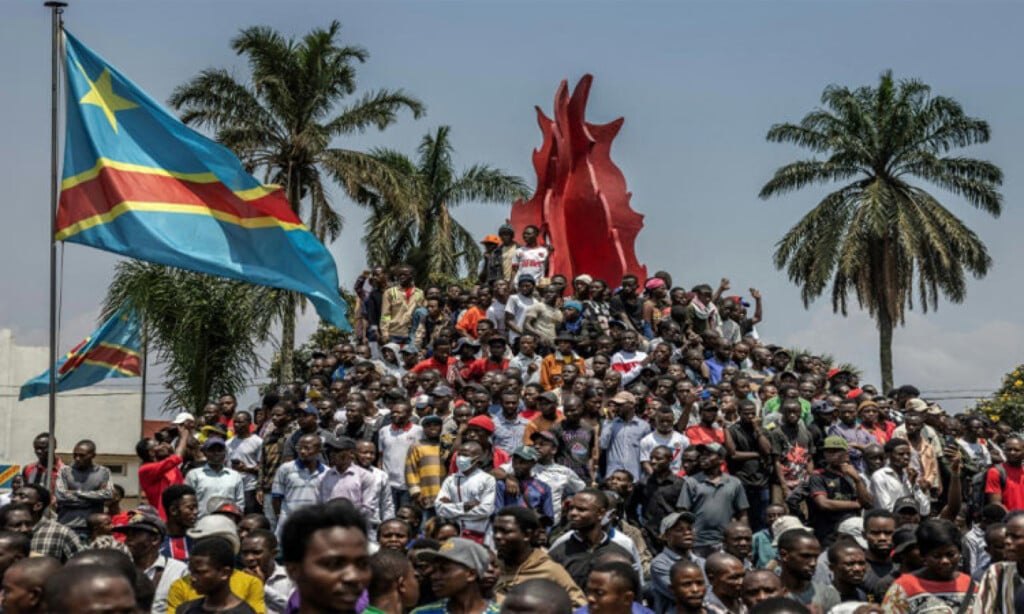
KINSHASA, Feb 25, 2025 (BSS/AFP) – The Democratic Republic of Congo’s (DRC) Prime Minister, Judith Suminwa Tuluka, revealed on Monday that over 7,000 people have been killed in the eastern region since January. This surge in violence follows the rapid territorial expansion of the Rwanda-backed M23 rebel group, which has seized control of two key cities.
Escalating Conflict in Eastern DRC
The M23 group, backed by Rwandan forces, has been advancing through the mineral-rich yet conflict-ridden eastern provinces of the DRC. After capturing Goma, the capital of North Kivu, late last month, they proceeded to seize Bukavu, the capital of South Kivu, just over a week ago. This expansion has significantly intensified the humanitarian crisis in the region.
Addressing the United Nations Human Rights Council in Geneva, Prime Minister Tuluka described the security situation as “alarming.” She confirmed that over 7,000 deaths had been recorded since January, with more than 2,500 victims buried unidentified and another 1,500 bodies still awaiting identification in morgues. However, these figures remain unverified by independent sources.
When questioned about whether the fatalities were primarily civilians or soldiers, Tuluka admitted that authorities had yet to determine the identities of many victims. However, she acknowledged that civilians accounted for a significant proportion of the casualties.
Mounting Humanitarian Crisis
The UN reported earlier this month that more than 3,000 deaths had occurred since January 26, coinciding with the M23’s offensive and the fall of Goma. According to the UN Office for the Coordination of Humanitarian Affairs (OCHA), at least 842 deaths had been recorded in hospitals in Goma and surrounding areas by mid-February.
As violence continues, the Red Cross has been collecting and burying bodies—many of them unidentified—on the streets of Goma and Bukavu. The humanitarian situation has worsened, with hospitals struggling to cope with an influx of wounded individuals and facing imminent shortages of medical supplies.
Meanwhile, security concerns persist. Following the fall of Bukavu, reports of looting and armed robberies have surged, attributed to abandoned weapons left behind by retreating Congolese forces. The rise in criminal activity has created an atmosphere of fear, with many families hesitant to resume normal activities. Schools in Bukavu officially reopened on Monday, but attendance remained low. “Many parents have not sent their children to school,” said Adolphe Mujunju, head of a private school complex. “Some classrooms are nearly empty.”
Tensions Along the Burundi Border
The conflict is now spilling over into neighboring countries, with thousands of refugees crossing into Burundi. The M23 appears to have halted its advance near Uvira, a town northwest of Lake Tanganyika, across from Bujumbura, Burundi’s economic capital.
Burundi’s President, Evariste Ndayishimiye, traveled to Kinshasa on Sunday for urgent discussions with DRC President Félix Tshisekedi regarding the deteriorating situation. The two leaders reportedly sought to “iron out differences” and address strategic concerns, particularly regarding the deployment of Burundian troops in eastern Congo.
Burundi has stationed over 10,000 soldiers in the DRC under a military cooperation agreement since October 2023. However, reports suggest that Burundian troops have begun withdrawing despite official denials, raising concerns about the Congolese army’s ability to withstand further M23 offensives.
Background: A Conflict Decades in the Making
The eastern DRC has been plagued by violence for over three decades, driven by a complex web of ethnic tensions, political rivalries, and competition for control over valuable natural resources. The resurgence of M23, originally a Congolese Tutsi-led rebel group, is widely believed to be linked to Rwanda’s strategic interests in the region—an allegation Rwanda denies.
This latest escalation comes at a time of growing regional instability, with diplomatic efforts struggling to find a lasting solution to the conflict. The humanitarian impact continues to deepen, with millions of displaced civilians facing severe food insecurity, violence, and a lack of essential services.
As the world watches, pressure mounts on the international community to intervene and prevent further bloodshed in the troubled heart of Africa.