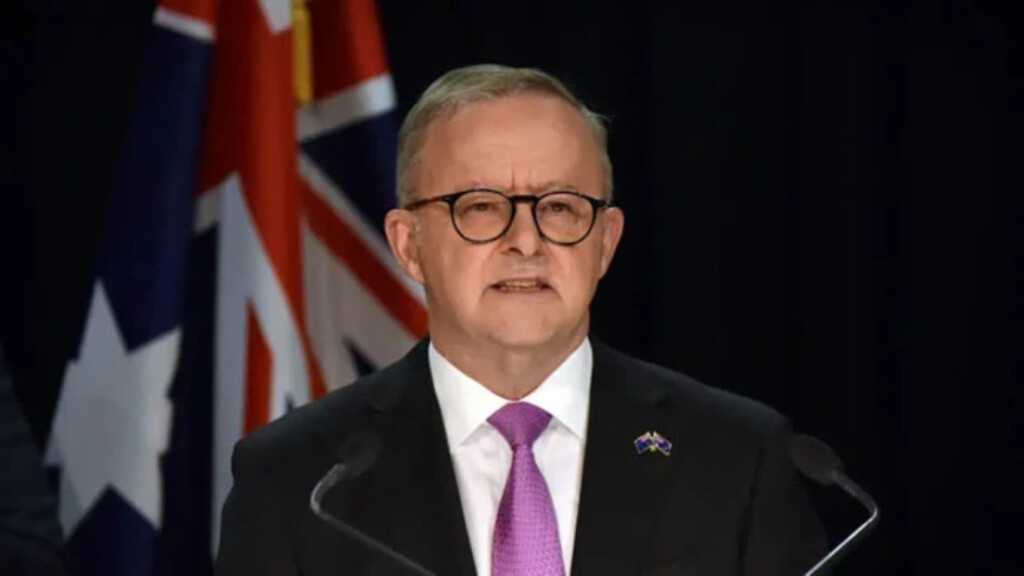
CANBERRA, March 28, 2025 – Australian Prime Minister Anthony Albanese has confirmed that the country will hold its general election on May 3, 2025. The election is set to be a decisive contest focused on issues such as climate action, nuclear energy, and the surging housing market.
Albanese’s centre-left Labor party, which assumed office in May 2022 after defeating a conservative government with deepening unpopularity, now faces a tough election battle. His initial popularity has waned in recent months as his government nears the end of its three-year term. Polls indicate a tight race, with Albanese’s approval ratings nearly neck-and-neck with his main opponent, Peter Dutton, leader of the conservative Liberal Party.
Dutton, 54, a former detective known for his hardline approach to immigration, is also advocating for a reversal of the nuclear energy ban, while Albanese has positioned himself as the candidate for progressive climate action. Albanese, 62, addressed the challenges Australia has faced in recent years, noting, “Over the last few years, the world has thrown a lot at Australia in uncertain times. But because of the strength and resilience that our people have shown, Australia is turning the corner. Now, on May 3, you choose the way forward.”
Albanese remains confident, stating he was “born ready” to tackle the pressing issues of climate change, global trade tensions, and inflation, while also warning any foreign entities from interfering in the upcoming election.
The election presents a stark contrast between two leaders with opposing views on climate policy and energy production. Albanese’s government has committed to aligning with global decarbonisation efforts, highlighting the long-term economic risks of relying on polluting industries like coal and iron ore. His agenda focuses on substantial investments in renewable energy and green manufacturing, with the slogan “building Australia’s future.”
In contrast, Dutton has proposed a controversial US$200 billion plan to build seven nuclear reactors, which he argues would reduce reliance on renewables. His other policies include a proposed 25% reduction in immigration and stricter caps on the number of foreign students permitted to study in Australia. Dutton’s slogan, “Getting Australia back on track,” underscores his focus on economic recovery.
Housing affordability is expected to be a key issue in the election. Despite a reduction in inflation under Albanese – from 7.8% in 2022 to 2.4% in December 2024 – many Australians are still grappling with rising food, fuel, and energy costs. Cities like Sydney and Melbourne now rank among the least affordable housing markets in the world, as highlighted by the Demographia affordability index.
Both major parties have promised to address the overheated housing market, but the pressure is on to deliver tangible solutions for struggling households.
Albanese, who has spent much of his life in politics, remains deeply connected to his working-class roots. Known for his affinity with indie music and his playful relationship with his dog, Toto, Albanese has positioned himself as a fighter for the people. Dutton, conversely, is viewed as a political “hardman,” with a reputation for his firm stance on immigration and national security during his tenure as the Minister for Home Affairs.
However, Dutton’s leadership style is under scrutiny, and he has faced criticism for his tough treatment of asylum seekers. His wife once defended him, stating that he was “not a monster” in an attempt to soften his public image.
In recent years, Australian politics has seen the rise of independent candidates, driven by disillusionment with the two major parties. Polls suggest that more than ten independent crossbenchers could hold the balance of power, making the prospect of a minority government a real possibility.
While both major parties agree on the need for strong defence and national security policies, they have been divided over Australia’s approach to China. Albanese has made significant strides in improving relations with Australia’s key trading partner, culminating in a landmark visit to Beijing in 2023, the first by an Australian leader in seven years. Under the previous conservative government, tensions with China had escalated, resulting in a trade war that cost Australia billions of dollars before easing in late 2024.
The May 3 election will ultimately determine the direction of Australia’s future, with voters choosing between a Labour government’s progressive policies or a Liberal government’s more conservative approach.