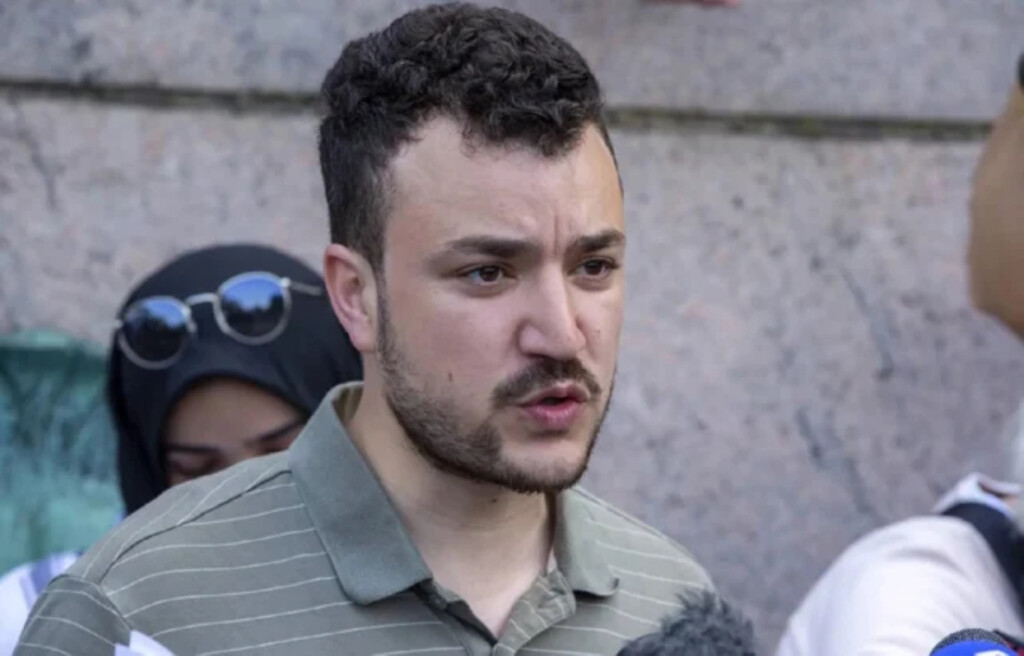
JENA, United States, 12 April 2025 (BSS/AFP) – An immigration judge in Louisiana has ruled that Mahmoud Khalil, a pro-Palestinian student protester and U.S. permanent resident, may be deported – a decision that has drawn widespread criticism from civil liberties advocates and legal scholars.
Legal Blow for Columbia Student Protester
In a controversial ruling issued Friday, Assistant Chief Immigration Judge Jamee Comans concluded that the U.S. federal government had sufficiently demonstrated grounds to deport Mahmoud Khalil, a Palestinian student born in Algeria, who has been at the forefront of pro-Palestinian demonstrations in the U.S.
“Today, we saw our worst fears play out,” said Khalil’s attorney, Marc Van Der Hout. “Mahmoud was subject to a charade of due process, a flagrant violation of his right to a fair hearing, and a weaponisation of immigration law to suppress dissent. This is not over, and our fight continues.”
Khalil’s deportation has not yet been scheduled. His legal team has been granted until 23 April to seek a waiver and continue contesting the ruling.
Profile of the Student at Centre of National Debate
| Name | Mahmoud Khalil |
|---|---|
| Nationality | Palestinian (born in Algeria) |
| Immigration Status | U.S. Permanent Resident |
| Education | Student at Columbia University |
| Marital Status | Married to a U.S. Citizen |
| Legal Status | Facing deportation pending waiver appeal |
| Reason for Detention | Participation in pro-Palestinian protests |
Khalil’s arrest and transfer to a detention centre in Louisiana sparked protests on and off-campus, with many arguing his detention was politically motivated.
Free Speech vs. National Security?
The U.S. government alleges Khalil’s activism represents a threat to national security, although no specific crimes have been cited. In an undated letter to the court, Secretary of State Marco Rubio asserted that Khalil’s involvement in pro-Palestinian demonstrations could negatively affect American foreign policy. However, the letter stopped short of directly linking Khalil to any extremist organisation.
Notably, Rubio did not pursue the unproven allegation that Khalil was aligned with Hamas – a group designated as a terrorist organisation by the United States, the European Union, and several other governments – despite earlier media reports referencing unnamed officials.
Instead, the letter cited Khalil’s “participation and roles” in protests allegedly “anti-Semitic” in nature, contributing to what the government described as a “hostile environment for Jewish students.”
“Clearly what we witnessed today violated the court’s own stated commitment to due process and fairness,” said Khalil during proceedings, as quoted by his legal team.
Reactions and Political Implications
Homeland Security Secretary Kristi Noem responded to the ruling with a strong statement on social media:
“When you advocate for violence, glorify and support terrorists, and harass Jews… you should not be in this country.”
Civil liberties groups and academics, however, have strongly opposed the ruling, warning that it could establish a dangerous precedent for suppressing political dissent among immigrants and international students.
“The Trump administration’s actions against universities, researchers, and students have no modern precedent,” said Prof. David Pozen of Columbia Law School at a university teach-in event. “American democracy is in crisis.”
Ramya Krishman, a senior staff attorney at Columbia’s Knight First Amendment Institute, added:
“This administration has unleashed a campaign of terror on immigrants in this country. And it seems no one is safe.”
Part of a Larger Pattern
Khalil’s case is not isolated. Immigration authorities have also detained:
| Student | University | Country of Origin | Status |
|---|---|---|---|
| Rumeysa Ozturk | Tufts University | Turkey | Deportation currently blocked |
| Yunseo Chung | Columbia University | South Korea (U.S. resident) | Deportation currently blocked |
Legal observers and free speech organisations say the cases reflect a broader strategy to use immigration law as a tool for political suppression.
Next Steps
Khalil’s attorneys plan to challenge the Louisiana ruling once the full written decision is issued. Simultaneously, a New Jersey court is hearing a related case contesting his continued detention.
The outcome of Khalil’s legal battle is being closely watched nationwide, with many seeing it as a test case for the boundaries of free speech, the treatment of immigrants, and the rule of law under an increasingly hard-line immigration policy.