Belgrade, 16 April 2025 (BSS/AFP) – Serbia is set to appoint a new government on Wednesday, led by a political outsider who bears a striking resemblance to the previous administration, which was toppled after months of student-led protests demanding action on corruption.
The Balkan nation has been in a state of political upheaval since January, following the resignation of former Prime Minister Milos Vucevic and several senior officials. Their departure came after mass protests were ignited by a tragic railway station disaster in Novi Sad that claimed 16 lives.
Prime Minister-designate Dr Djuro Macut, an endocrinologist with no prior political experience, sought to reassure the public as he presented his proposed cabinet in Parliament, stating: “Serbia is tired of divisions and blockades.”
Macut’s cabinet includes 20 members from the previous government, including key figures such as the finance, interior, and defence ministers. Despite these efforts, opposition figures have been quick to criticise the continuity of the new administration.
“You look more like a second-hand government than a new one,” remarked Aleksandar Jovanovic, a member of the opposition Ecological Uprising movement, during the parliamentary debate.
Criticism has also been directed at the appointment of the education minister. Education has been a contentious issue since the protests and teacher strikes that followed the railway tragedy. The nominee, a political analyst with close ties to the ruling party, has raised further suspicions that the reshuffle will only exacerbate the political crisis.
The nomination of Boris Bratina for the Ministry of Information has also sparked backlash. Bratina, known for his strong opposition to Serbia’s potential European Union membership, once infamously burned the EU flag at a public event in 2009.
“Politically and ideologically, this proposed government appears to be more of a continuation than a break from the previous one,” said political analyst Bojan Klacar, speaking to AFP.
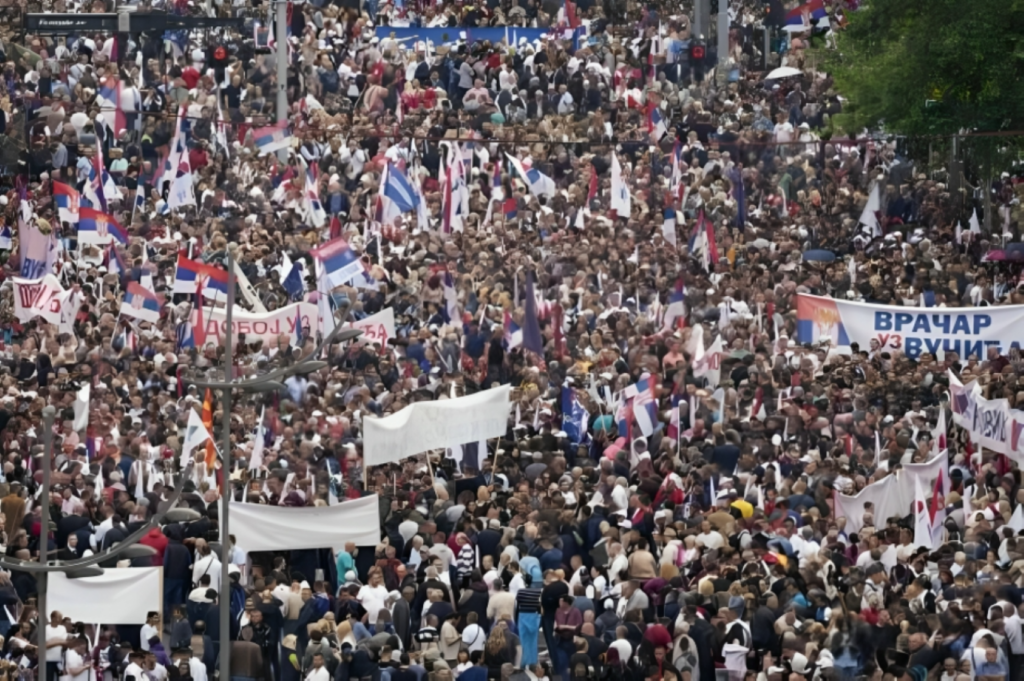
Macut’s political experience is limited to his involvement in the early stages of a new pro-government movement launched by President Aleksandar Vucic. The movement was unveiled at a rally in Belgrade this past weekend, which saw a reported 55,000 people in attendance, although Vucic claimed 145,000 attendees. Despite debate over the numbers, Klacar noted that the rally was not as energised or impactful as the president had hoped, but it nevertheless allowed Vucic’s political allies to regain some stability after a period of defensive tactics.
The protests began following the deadly train crash in Novi Sad on 1 November 2024, and the political instability that has followed continues to cast a shadow over Serbia’s future direction.