A chilling pattern of violent crime has gripped Bangladesh, highlighted by a series of horrific incidents where multiple members of the same household have been brutally targeted. The shockwaves from the gruesome killings in Machhuapara, Rangpur—where retired schoolteacher Ganapati Chakraborty was murdered alongside his wife, son, and daughter—had barely subsided when another tragedy unfolded in Raipur, Lakshmipur. On 25 June, a young man launched a deadly attack on a family, hacking to death 40-year-old Shahinur Begum and her three daughters: Saima Akter, 21, Iqra, 17, and Sipa, 10.
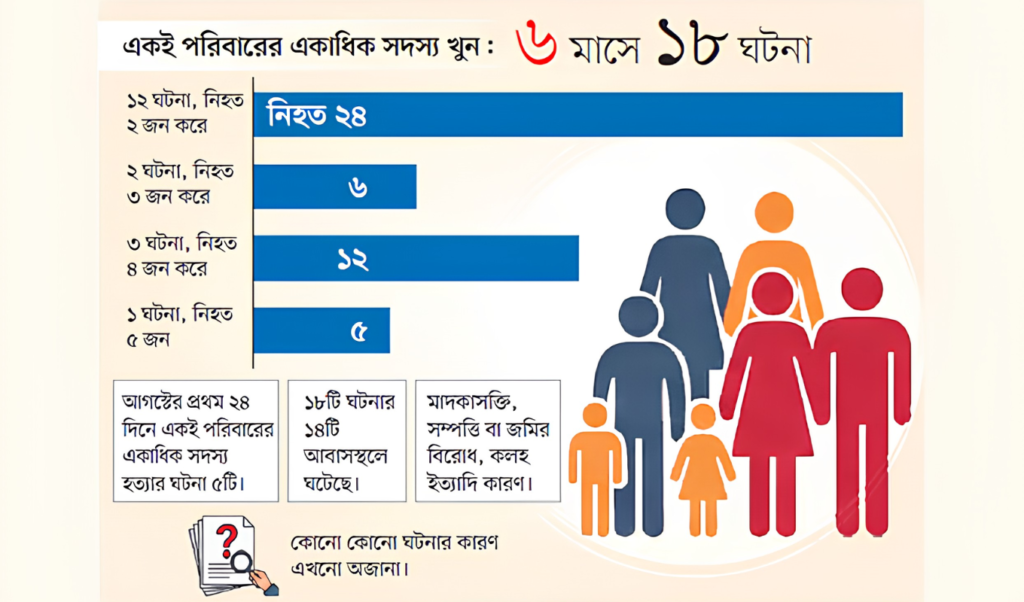
These horrific incidents in Rangpur and Lakshmipur reflect a much broader, deeply disturbing trend rather than isolated acts of violence. Between 24 February and 24 August, at least 18 separate instances of multiple homicides within single families were reported across various parts of the country. These incidents resulted in the tragic deaths of at least 47 individuals over a six-month period. The casualty figures per household vary significantly across these cases: some incidents involved two fatalities, whilst others claimed three, four, or even five lives from a single family circle.
Investigating agencies and crime analysts attribute the rise in these multi-victim homicides to complex socio-economic factors. Long-standing disputes over land ownership, intense financial conflicts, deep-seated personal enmity, and violent robbery attempts have frequently emerged as primary motives. In several cases, severe psychological distress and unchecked interpersonal hostility have led perpetrators to wipe out entire households. Crime experts point out that deteriorating social cohesion, combined with economic strain, has escalated routine disputes into extreme acts of violence.
Law enforcement agencies have intensified their investigations into these high-profile cases, apprehending suspects in connection with several of the mass homicides. Police officials maintain that special task forces are prioritizing these incidents to ensure thorough evidence collection and swift judicial proceedings. Meanwhile, civil society groups and legal experts emphasize the necessity of speedy trials and exemplary punishment to deter future crimes. The alarming frequency of these household massacres has intensified public demands for stronger community-level policing, proactive dispute resolution, and robust measures to restore public safety across the nation.