Faced with severe natural gas shortages, escalating grid tariffs, and mounting pressure from international buyers to shrink carbon footprints, major Bangladeshi conglomerates are turning heavily towards rooftop solar installations. Over the past three years, private sector investment in renewable self-generation has surged, effectively transforming empty industrial roofs into vital power-generating assets that generate over 600 megawatts (MW) across the nation.
Leading industrial groups including Abul Khair Steel, Walton, Ha-Meem Group, PRAN-RFL Group, BSRM, Youngone Group, Meghna Group of Industries (MGI), Pacific Jeans, DBL Group, Akij Bashir Group, and Apex Footwear have already established rooftop solar arrays of varying capacities.
DBL Group has installed 5.5 MW of solar capacity across seven of its ready-made garment and textile plants, with plans for an additional 16 MW across 10 new facilities. MA Rahim, Vice Chairman of DBL Group, noted that rooftop solar power costs between 6 and 6.5 taka per unit—roughly half the national grid price of 12.73 to 12.85 taka for industrial users, which spikes near 16 taka during peak nighttime hours.
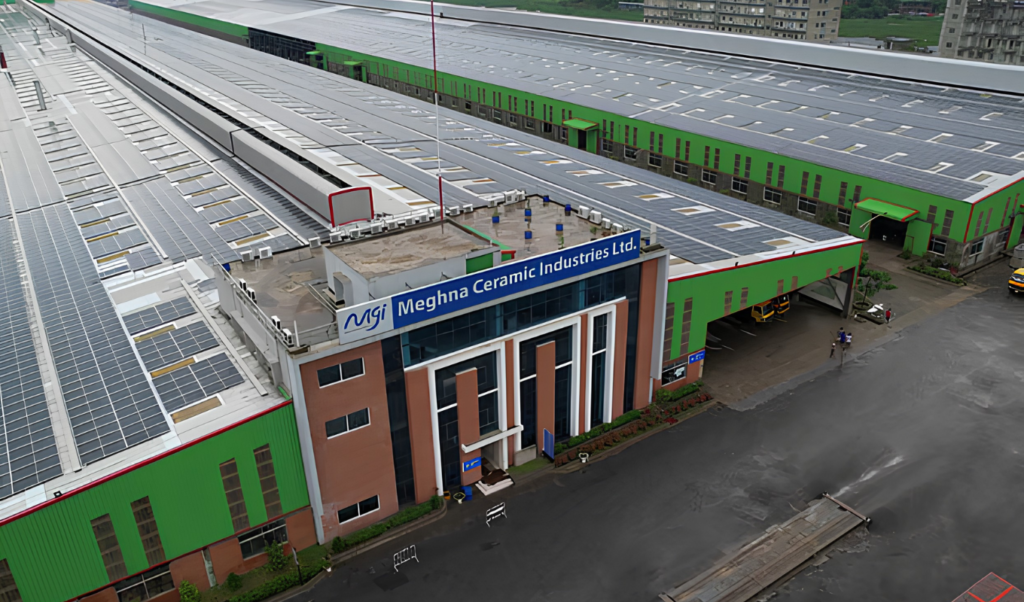
Similarly, PRAN-RFL Group plans to generate over 100 MW of solar power, with 35 MW already operational across 20 factories and another 30 MW joining the grid this year. Akij Bashir Group has scaled its rooftop solar capacity to 75 MW, with its Janata Jute Mills meeting 100% of its electricity needs directly from its 21 MW rooftop setup. Meanwhile, MGI currently operates 64.84 MW of rooftop solar and plans to expand by another 50 MW to reach nearly 115 MW.
Solar installation partners report rapid growth over the last two years. East Coast Group’s subsidiary, Omera Solar, has installed 130–140 MW of solar units across 100 factories since 2021, with 20 MW more underway. Superstar Renewable Energy has completed nearly 100 MW across 90 industrial sites.
According to a study by the US-based Institute for Energy Economics and Financial Analysis (IEEFA), official figures record rooftop solar capacity at 418 MW, but actual operational capacity across 239 large factories has reached 667 MW. If smaller commercial buildings are included, nationwide rooftop capacity approaches 1,000 MW. Furthermore, the Centre for Policy Dialogue (CPD) estimates that 3,320 garment factories alone possess a potential rooftop capacity of 1,768 MW, with 500 plants ready for immediate transition.
Despite strong interest—evidenced by a BGMEA survey of 424 garment units—financing remains a critical bottleneck for medium-sized enterprises. Industry leaders and experts have called for lower interest rates on green transformation funds, extended loan repayment periods from 7 to 9 years, green bond issuances, and state guarantees to access low-cost international funds to accelerate the clean energy transition.