Musicians and cultural figures in Bangladesh have expressed growing concern over incidents involving the disruption of musical and cultural programmes, cancellation of events and attacks at venues. They argue that interference of this nature not only restricts artists’ freedom to work, but also raises wider questions about cultural diversity, freedom of expression and citizens’ rights in a democratic society.
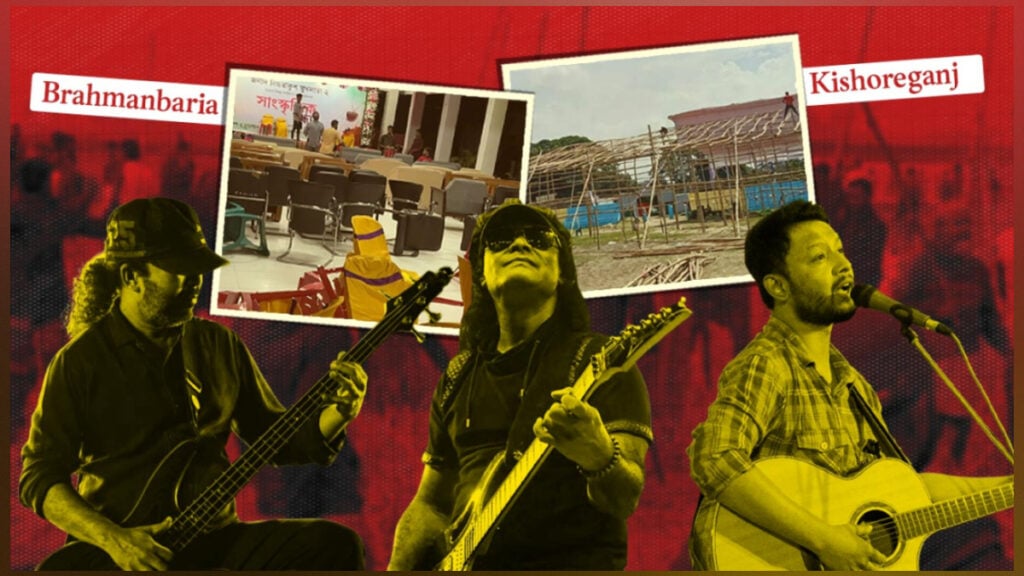
The issue has come into sharper focus following several recent incidents. On 19 August, a concert in Kishoreganj was ordered to be cancelled after the local Imam-Olama Parishad wrote to the district administration, warning that holding the event could create tension. Later that night, a cultural programme held at the Police Lines premises in Brahmanbaria came under attack.
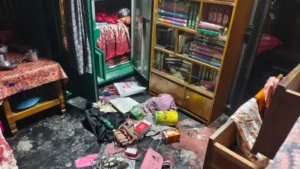
A large group of madrasa students reportedly entered the venue and vandalised chairs arranged for members of the audience. Police intervened to bring the situation under control, and at least 30 people were injured, including several police officers. Three police personnel were subsequently suspended over allegations of negligence in the handling of the incident.
The developments have prompted renewed debate within the music community over the security of cultural programmes and the responsibilities of the administration and law-enforcement agencies. Artists are particularly concerned about whether organisers and performers can carry out their professional activities without facing intimidation or disruption.
Hamin Ahmed, founding member of the popular band Miles and president of the Bangladesh Musical Bands Association, said the recent incidents should not be viewed in isolation. In his assessment, there is a growing tendency in different parts of the country to obstruct musical activities, and the government needs to address the issue seriously.
He also questioned the decision to take action against police officers following the Brahmanbaria incident. According to him, the police response to those attempting to disrupt the programme was part of their responsibility to maintain public order.
Hamin stressed that music cannot simply be treated as entertainment. It provides livelihoods for a wide range of people, including singers, musicians, sound technicians, stage workers, event organisers and others whose income is connected to the industry. When concerts are cancelled or disrupted through threats, intimidation or vandalism, the consequences can therefore extend well beyond the performers themselves.
He also pointed to the long-standing coexistence of religious values and cultural activities in Bangladeshi society. In his view, attempts to control cultural activities through intimidation are inconsistent with that social reality. He called on the government to identify the causes behind such incidents and take effective measures to prevent their recurrence.
Ziaur Rahman Zia, composer and bassist of the band Shironamhina, has also questioned the security of cultural activities. He argued that if cultural programmes cannot be conducted safely, questions naturally arise about the responsibilities of the Ministry of Cultural Affairs. At the same time, he said maintaining law and order remains a responsibility of the Home Ministry.
Ziaur Rahman emphasised that Bangladesh’s cultural identity encompasses a wide range of activities, from music to traditional events such as boat races. Cultural heritage, artistic expression and creative pursuits, he said, should not be subjected to arbitrary interference.
He also highlighted the need to balance individual freedoms with the rights of others. In a democratic country, citizens have the right to express themselves and participate in cultural activities, while those rights must also be exercised without infringing upon the legitimate rights of others. If anyone has objections to a cultural programme, those concerns should be addressed through lawful and administrative procedures rather than through force, vandalism or intimidation.
Singer and guitarist Ahmed Hasan Sunny has raised concerns from another perspective, focusing on the broader cultural environment in which younger generations are growing up. He said children need opportunities to learn music, while schools require libraries and a stronger culture of reading if society is to use cultural activities to foster unity and tolerance.
Sunny questioned the decline in reading habits and the shrinking space for activities such as reading storybooks. In his view, music, literature and other forms of cultural engagement help broaden people’s thinking and create greater tolerance towards differences.
He warned that a shrinking space for music and cultural practice could have consequences extending far beyond the cancellation of individual programmes. Over time, a weaker cultural environment could affect diversity of thought, mutual tolerance and the ability of people with different views and backgrounds to coexist peacefully.
The issue was also discussed after Home Minister Salahuddin Ahmed said on 22 August that music performances and film screenings in Brahmanbaria had for many years faced a situation in which they were, in practice, severely restricted. His remarks added to the ongoing discussion within cultural circles about the conditions under which artistic activities can take place in different parts of the country.
The recent incidents have therefore brought two closely connected questions to the forefront: the freedom to engage in cultural activities and the responsibility of the state to maintain public order while protecting lawful events.
Musicians and cultural practitioners argue that objections to a concert or cultural programme should be dealt with through established legal and administrative channels. Physical attacks, vandalism or threats cannot provide a legitimate basis for deciding whether an event should take place.
For Bangladesh’s music industry, the issue carries implications beyond individual performances. Concerts and cultural programmes create work for artists, technical crews, organisers and numerous other professionals. They also provide spaces where audiences from different backgrounds can meet and participate in shared cultural experiences.
Artists believe that a secure cultural environment requires impartial administration, effective enforcement of the law and appropriate protection for legitimate cultural activities. They also stress the importance of resolving disputes through dialogue and lawful procedures.
Unless such an environment is maintained, they fear that isolated incidents involving cancelled programmes or disruptions could gradually have a wider impact on the country’s cultural landscape, limiting opportunities for artists and reducing the space available for diverse forms of creative expression.