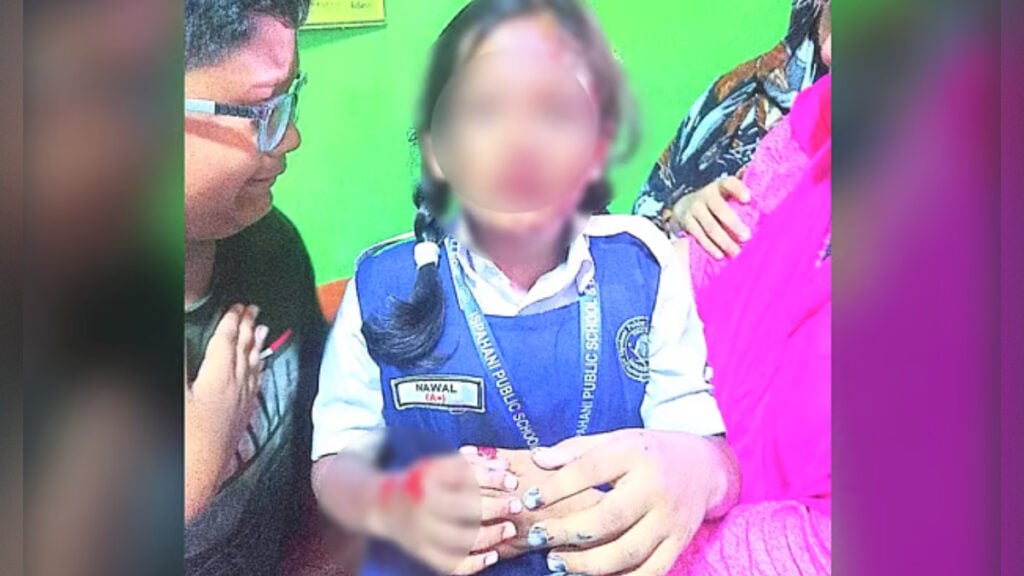
A police officer in Chattogram has questioned the effectiveness of road safety measures after his nine-year-old daughter was seriously injured by a speeding battery-powered auto-rickshaw outside their home.
The incident took place at around 1.30pm on Monday on Road No. 3 of Jalalabad Society in the city’s Khulshi area. The girl, Nawal Ansari, is a Class Three student.
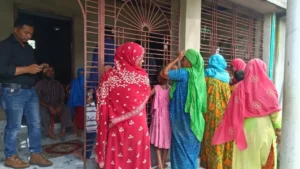
Her father, Ansarul Karim, said he had personally taken Nawal to school at around 8am that morning. After classes ended, she returned home by taxi. As she got out of the vehicle and approached the main gate of their building, a battery-powered auto-rickshaw allegedly came speeding down the road and struck her.
The impact threw the child onto the road, leaving her with serious injuries to both arms, her head, lips, forehead and face.
Local residents helped take Nawal to a private hospital in the GEC area shortly after the accident. She was later transferred to another private hospital for further treatment.
Karim, who works in the North Detective Branch of Chattogram Metropolitan Police, expressed his frustration in a Facebook post later that night. He questioned how authorities could ensure public safety when he could not protect his own child from a road accident directly outside his home.
Speaking on Tuesday morning, Karim said the auto-rickshaw involved in the incident was allegedly illegal and unregistered. He also raised concerns about the speed at which such vehicles are driven and questioned whether drivers have received proper training or hold valid driving licences.
According to Karim, the lack of effective control over battery-powered auto-rickshaws has become a persistent concern for residents. He argued that while law-enforcement agencies are able to take action against serious crimes, controlling reckless driving by such vehicles remains difficult.
He called for clear decisions on where battery-powered auto-rickshaws should be permitted to operate within Chattogram city. He also suggested that vehicles seized for operating illegally should be permanently taken off the roads rather than being allowed to return to service.
Karim has previously served as an officer-in-charge at several police stations in Khagrachhari and Rangamati. His concerns therefore extend beyond his family’s experience, focusing on the wider challenge of maintaining safety on urban roads.
Accidents involving battery-powered auto-rickshaws are not new in Chattogram. People have been injured in collisions involving these vehicles, while some incidents have also resulted in deaths. Authorities conducted drives against such vehicles in different parts of the city last year. Although their operation on highways was subsequently prohibited, their presence on city roads has continued.
Following enforcement drives, battery-powered auto-rickshaws have increasingly been seen on smaller roads and lanes across the city. Residents also report seeing them on major roads after evening, including areas around Chawkbazar, DC Road and the Bakalia Access Road.
The continued movement of these vehicles has raised questions about the effectiveness of existing restrictions and enforcement measures. The latest accident has brought particular attention to the safety of children and pedestrians near residential buildings, schools and busy roads.
For Karim, the incident has turned a personal tragedy into a broader question about public responsibility. If a child can be struck by a speeding vehicle just after getting out of a taxi at the entrance to her own home, he argues, authorities must examine whether existing measures are sufficient to protect ordinary road users.