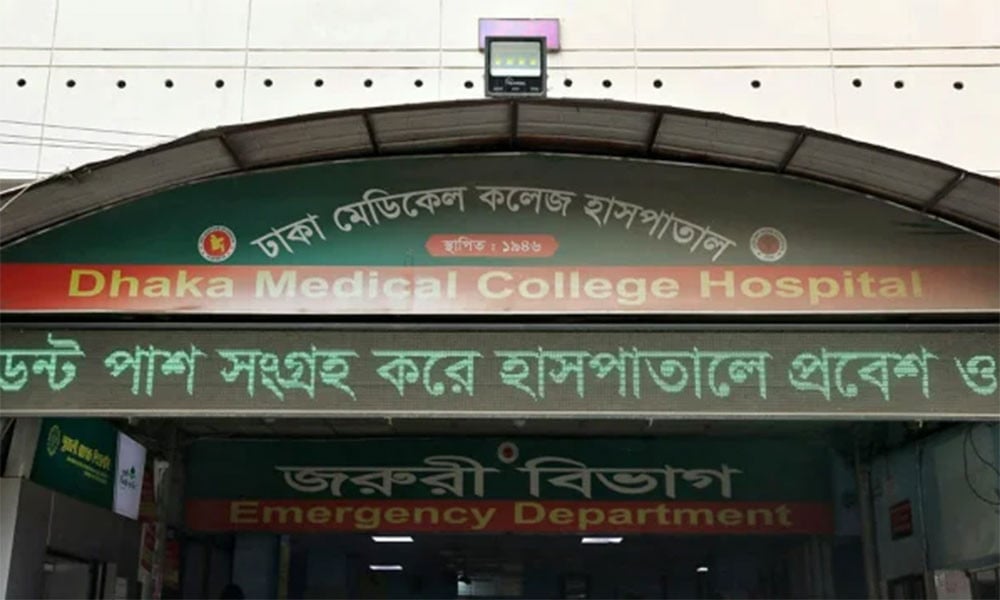
Three prison inmates have died in separate incidents while receiving medical care or upon arrival at Dhaka Medical College Hospital (DMCH) on Sunday morning. The deceased have been identified as remand prisoners Abul Bashar, 58, and Abdul Qayyum, 62, alongside convicted prisoner Shahadat Hossain Liton, 48.
Inspector Md Habibur Rahman, in-charge of the DMCH police outpost, confirmed the deaths of the three detainees. He stated that the bodies have been retained at the hospital morgue pending post-mortem examinations to ascertain the precise causes of death.
According to hospital and prison records, Abul Bashar was brought to the emergency department of DMCH from Dhaka Central Prison in Keraniganj at around 7:25 am by prison guard Shahid and accompanying officers after falling severely ill. Upon arrival, attending doctors conducted preliminary examinations and declared him dead. Bashar, son of the late Sekandar Ali from Kachua upazila in Chandpur district, was being held in custody in connection with a case filed under the Women and Children Repression Prevention Act.
In a separate incident later that morning, prisoner Abdul Qayyum was rushed to the same emergency unit at approximately 9:05 am by prison guard Hemayet Hossain and his team after his health deteriorated rapidly inside the correctional facility. Medical officers on duty evaluated his condition and pronounced him dead on arrival. Qayyum was the son of Dudu Miah, hailing from Chauddagram upazila in Comilla district.
Meanwhile, convicted prisoner Shahadat Hossain Liton breathed his last at 8:45 am while undergoing treatment in a hospital ward. Liton, son of the late Abdul Kader from Pabla village in the Daulatpur police station area of Khulna district, had been suffering from chronic health complications and was initially admitted to DMCH on 28 August for specialised medical care.
The management of health conditions among inmates across correctional facilities remains a critical operational priority for Bangladeshi prison authorities, with ill prisoners routinely transferred to tertiary care centres like DMCH for advanced medical intervention. Official procedures require detailed autopsy reports and inquests following any inmate death in custody before releasing the remains to their respective families.