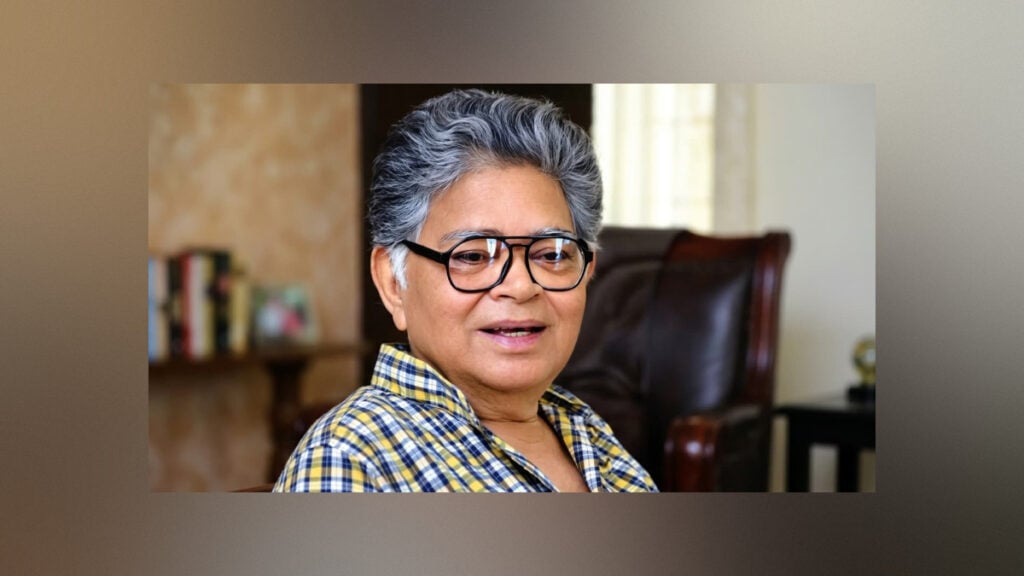
Some poems transcend their verses to become reflections of memory, loss and unfinished dreams. Sunil Gangopadhyay’s Keu Kotha Rakheni — Nobody Kept Their Promise — is one such work. What begins as a recollection of childhood gradually expands into a meditation on promises that were made but never fulfilled, dreams that remained incomplete and relationships that could not withstand the passage of time.
The poem draws much of its emotional force from ordinary memories. A childhood acquaintance promised to return on a particular day, but never did. Nader Ali, the boatman at the poet’s maternal uncle’s home, said that he would one day show the young boy the vast Three-Phases Lake. That promise, too, remained unfulfilled.
The expectations of childhood were modest. A child wanted small pleasures: a toy, a sweet, or the chance to experience the excitement of a local festival from closer quarters. Yet these seemingly insignificant disappointments acquired greater meaning with age. They became reminders of how easily promises can disappear from everyday life.
The poem reaches another emotional height through the figure of the poet’s father. His father once touched his shoulder and spoke of a future in which, despite hardship, they too would enjoy better days. The unfinished nature of that promise gives the poem much of its poignancy.
The father’s circumstances, however, did not improve as hoped. He eventually became blind, while the dreams associated with that hopeful future remained unrealised. Through this deeply personal memory, Gangopadhyay captures a broader experience familiar to many Bengali middle-class families: parents who endure hardship while imagining a more secure and fulfilling life for their children.
Love enters the poem with the memory of Baruna. She leaves behind a perfumed handkerchief and speaks of love in terms of fragrance and faith. The poet responds with extraordinary determination, willing to undertake the impossible in pursuit of that love. Yet Baruna, too, ultimately fails to keep her promise.
The pattern is therefore established across different stages of life. Childhood brings promises that are not fulfilled. Youth brings dreams that remain beyond reach. A father’s hopes fade with time. Love, despite all its intensity, does not remain as promised.
That is why the poem’s recurring sense of disappointment has resonated with generations of readers. Its central feeling is not confined to one person or one period. Almost everyone has experienced some version of waiting for somebody to return, believing that circumstances will eventually improve, or trusting that a particular promise will one day become reality.
Gangopadhyay gives these experiences a remarkably accessible literary form. His language allows personal memories to become collective memories. A reader may encounter the poem and recognise a childhood courtyard, a parent’s unfinished dream, a first love or an old promise that was never fulfilled.
A major figure in modern Bengali literature
Sunil Gangopadhyay was one of the most versatile and influential figures in modern Bengali literature. Over a career spanning several decades, he established himself as a poet, novelist, short-story writer, essayist, travel writer, children’s author and editor.
He was born on 7 September 1934 in Amgram village in what is now Madaripur district of Bangladesh. Part of his early life was spent amid the rural environment of Bengal before his family later moved to Kolkata.
In 1953, Gangopadhyay joined several young poets in founding Krittibas, a literary magazine that became closely associated with a new generation of Bengali poetry. The publication helped provide space for emerging voices and contributed to changes in poetic language, rhythm and sensibility.
Gangopadhyay also wrote under several pseudonyms, including Nil Lohit, Sanatan Pathak and Nil Upadhyay. His literary output was exceptionally broad. He moved between poetry, fiction, historical narratives, travel writing and children’s literature, developing distinctive styles for different forms.
Among his best-known works are Sei Samay, Prothom Alo, Purba-Paschim, Aranyer Din Ratri and Atmaprakash. He also became widely known among younger readers through his Kakababu series.
His historical novel Sei Samay earned him the Sahitya Akademi Award in 1985, further establishing his position in Bengali letters.
Poetry, however, remained central to his literary identity. His poems explored love, youth, loneliness, urban life, memory, desire, the body and questions of existence. The name Neera became particularly memorable within his poetic world and came to be associated with some of his most recognisable poems about love and longing.
Gangopadhyay died in Kolkata on 23 October 2012 at the age of 78.
Years after his death, his work continues to attract readers because of its intimate connection with everyday human experience. His writing does not depend solely on grand events or extraordinary characters. Instead, he often found literary significance in memories, relationships, disappointments and desires that appear familiar to ordinary people.
That quality is especially evident in Keu Kotha Rakheni. The poem turns a series of personal disappointments into a wider reflection on the fragility of human promises. Its emotional impact comes from the recognition that life does not always follow the assurances people give us.
Someone may promise to return and never come back. Someone may say that everything will be better someday, only for that day to remain distant. Someone may inspire a dream without ever being able to share its fulfilment.
Gangopadhyay’s achievement was to give such experiences a language that readers could immediately understand and feel as their own.
On his birth anniversary, remembering Sunil Gangopadhyay therefore means remembering more than a celebrated writer. It means revisiting the childhood memories, unfinished hopes, lost relationships and quiet disappointments that form part of human life.
His life ended in 2012, but the emotional world he created remains alive through his books and poems. Keu Kotha Rakheni continues to speak particularly powerfully because its central question remains timeless: what happens when the people and promises we trusted fail to remain?
For many readers, the answer is found not in a dramatic resolution but in memory itself.
That is where Gangopadhyay’s poetry continues to live — in the things people once hoped for, the promises they still remember and the parts of their lives that never quite reached completion.
Sunil Gangopadhyay
Born: 7 September 1934
Died: 23 October 2012