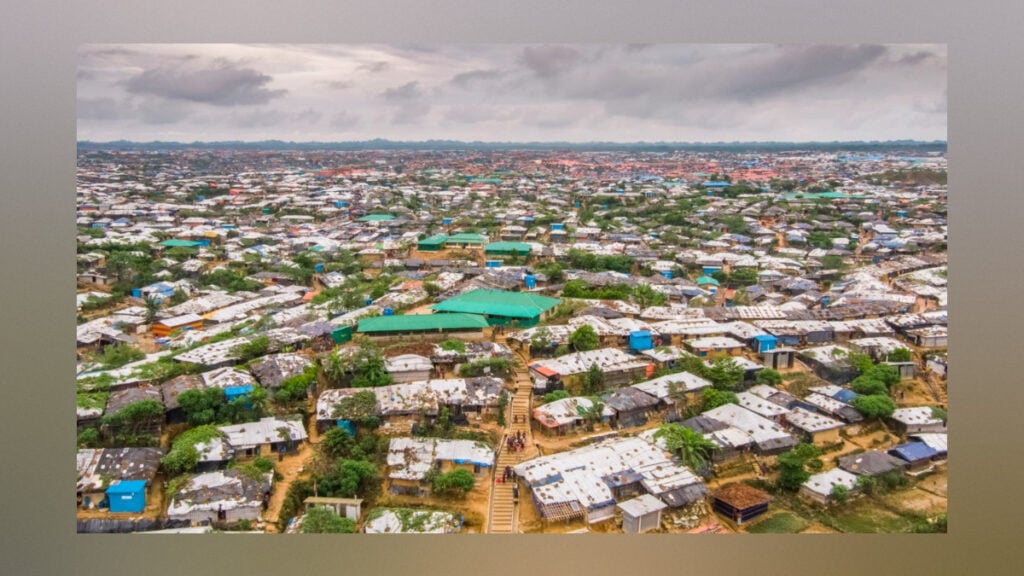
Dengue infections are continuing to rise in Cox’s Bazar, with Rohingya refugees accounting for the majority of reported cases in the district. Between 1 January and 15 September this year, 3,856 people were diagnosed with dengue in Cox’s Bazar, including 2,507 Rohingya refugees. Six people have died from the disease during the period, all of them from the Rohingya community.
Data from the Cox’s Bazar Civil Surgeon’s Office show that dengue has also spread among the local population across several upazilas. Teknaf has recorded the highest number of cases among local residents in recent months. Up to 15 September, 332 people had been diagnosed with dengue there, with 294 requiring hospital admission.
Maheshkhali reported 268 cases, of whom 267 were admitted to hospital. In Chakaria, 261 people were diagnosed and 159 were hospitalised, while Ukhia recorded 195 cases, with 193 patients admitted for treatment.
Other parts of the district have also reported infections. Cox’s Bazar Sadar recorded 95 cases, of whom 94 were admitted to hospital. Eidgaon reported 58 cases and 55 hospital admissions. There were 53 cases in Ramu, 14 in Pekua and 13 in Kutubdia. Another 17 cases were recorded within the municipal area, while 43 cases came from other parts of the district.
At present, 35 dengue patients are receiving treatment in hospitals across Cox’s Bazar. The district headquarters hospital is treating the largest number, with 22 patients. Four are being treated in Maheshkhali, three each in Teknaf and Chakaria, two in Ukhia and one in Pekua.
The health authorities’ figures show the scale of the outbreak inside the Rohingya camps. By 29 August, 2,507 dengue cases had been identified in the camps, and 2,505 of those patients had been admitted to hospital. Health officials have since reported another 135 cases in the camps during the current week, indicating that transmission remains a concern even as the monsoon season approaches its end.
Dr Abu Toha Md Rijuānul Haque Bhuiyan, chief health co-ordinator at the Office of the Refugee Relief and Repatriation Commissioner in Cox’s Bazar, said five camps had recorded the highest infection rates in proportion to their populations.
Nayapara RC Camp had the highest rate at 1.61 per cent, followed by Camp 14 at 0.81 per cent, Camp 26 at 0.34 per cent, Camp 19 at 0.31 per cent and Camp 4 Extension at 0.12 per cent.
According to Dr Bhuiyan, overcrowding, inadequate drainage and stagnant water during the rainy season are creating favourable breeding conditions for Aedes mosquitoes, which transmit dengue. The continued rise in infections towards the end of the monsoon has raised fresh concerns about disease control measures inside the camps.
The concentration of cases in the camps presents particular challenges for public health authorities. Dense settlements can make it harder to eliminate potential mosquito breeding sites, while standing water and accumulated waste can provide additional places for Aedes mosquitoes to breed. Effective dengue control therefore depends not only on treating patients but also on reducing conditions that allow the mosquito population to grow.
Sarwar Jahan Chowdhury, president of the Ukhia upazila unit of the BNP and a former upazila chairman, attributed the high number of cases in the Rohingya camps partly to a lack of awareness and poor waste management. He said the accumulation of rubbish and stagnant water in different locations was creating opportunities for Aedes mosquitoes to breed.
Ukhia Upazila Nirbahi Officer Panna Akter said dengue tends to become more prevalent during the monsoon and called for greater public awareness to help contain its spread. She also urged people not to allow fear of the disease to intensify unnecessarily, saying that greater awareness and appropriate preventive measures could help reduce both infections and deaths.
With more than 2,500 Rohingya refugees already diagnosed this year and new cases continuing to emerge, health officials are keeping a close watch on the situation in the camps. The figures from across Cox’s Bazar also show that dengue is affecting local communities in several upazilas, making mosquito control, proper drainage, waste management and timely treatment important parts of the district’s ongoing response.