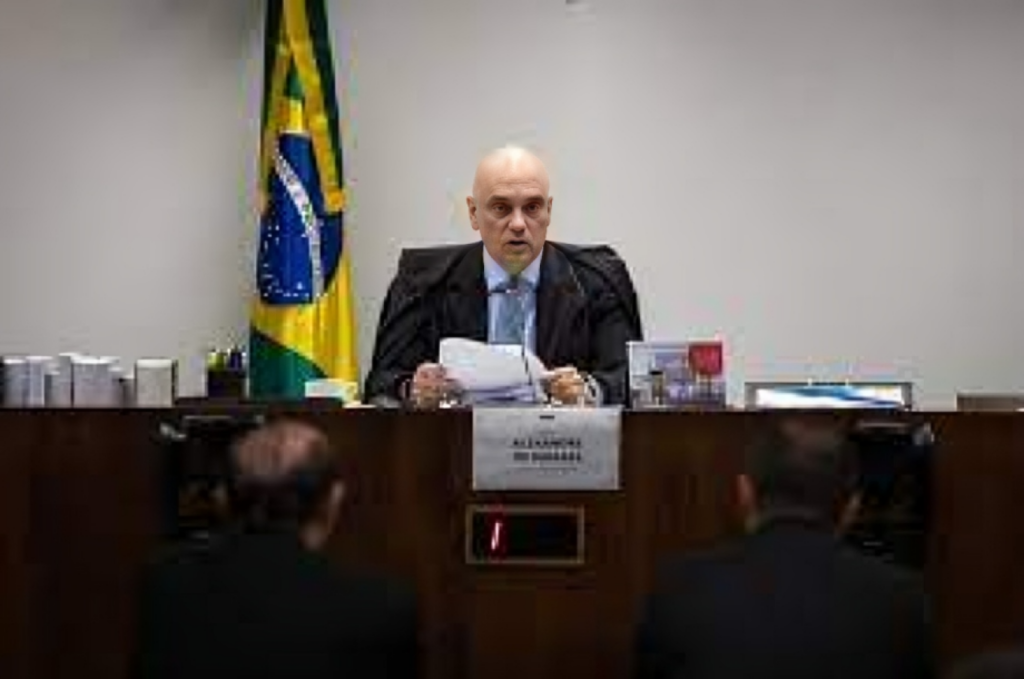
In a sweeping and politically charged move, President Donald Trump on Wednesday imposed massive tariffs on Brazilian imports and announced sanctions against Supreme Court Justice Alexandre de Moraes, the judge presiding over the trial of his far-right ally Jair Bolsonaro. Bolsonaro stands accused of plotting a coup following his 2022 election defeat.
The measures represent a significant escalation in diplomatic tensions between the United States and Brazil, particularly as they mark a departure from conventional trade policy, with Trump framing the action as a response to “politically motivated persecution” of Bolsonaro.
Overview of the Measures
| Measure | Details |
| Tariffs | 50% total tariffs on Brazilian goods (including an added 40%) |
| Sanctions | Targeted against Justice Alexandre de Moraes under the Magnitsky Act |
| Exempted Brazilian Exports | Aircraft, orange juice & pulp, Brazil nuts, select iron, steel & aluminium |
| Effective Date | Tariffs come into force after 7 days |
Official Justifications by the US
The White House released a detailed fact sheet stating the tariffs were in response to:
- “Politically motivated persecution” of Bolsonaro and his supporters
- “Harassment, censorship, and prosecution” undermining rule of law in Brazil
- Brazil’s actions harming US businesses, foreign policy, and free speech rights
- Specific allegations against Justice Alexandre de Moraes
The US Treasury and State Department have both invoked the Magnitsky Act, which targets foreign officials accused of human rights abuses or corruption. This includes:
- Freezing US-based assets
- Banning travel to the United States
Brazil’s Response
Brazilian President Luiz Inácio Lula da Silva condemned the move, vowing to defend the sovereignty of the Brazilian people. He dismissed Trump’s actions as external interference in a legitimate judicial process.
| Brazilian Officials React | Quotes & Statements |
| President Lula | “We will defend the sovereignty of the Brazilian people.” |
| Attorney General Jorge Messias | Called the sanctions “arbitrary” and “unjustifiable.” |
| Foreign Minister Mauro Vieira | Asserted that Brazil’s judiciary will “not bow to external pressure.” |
The Bolsonaro Trial
Jair Bolsonaro, the former president of Brazil and a close ideological ally of Trump, is facing up to 40 years in prison. Prosecutors allege that after his 2022 election loss to Lula, Bolsonaro:
- Conspired to overturn the election results
- Planned to arrest or assassinate President Lula, Vice President Geraldo Alckmin, and Justice Moraes
Despite US pressure, Brazil has refused to drop the charges. Interestingly, Trump’s intervention has reportedly had the unintended effect of boosting Lula’s domestic popularity.
Criticism and Defence of Justice Moraes
Justice Alexandre de Moraes, 56, has become a polarising figure in Brazil’s judiciary:
- Played a prominent role in combating disinformation during the 2022 election
- Ordered the temporary shutdown of Elon Musk’s social network X in Brazil for failing to remove election-related falsehoods
- Widely praised by some for defending democratic institutions, but condemned by Bolsonaro’s supporters as authoritarian
Eduardo Bolsonaro, Jair’s son, welcomed the sanctions, declaring:
“This is not about revenge. It’s about justice. Abuses of authority now have global consequences.”
International Human Rights Concerns
Human Rights Watch’s Americas Director, Juanita Goebertus, sharply criticised Trump’s actions, stating:
“The US tariffs and sanctions are a clear violation of judicial independence.”
Remarks from Washington
| US Officials | Statements |
| Secretary of State Marco Rubio | Accused Moraes of “serious human rights abuses” |
| Treasury Secretary Scott Bessent | Called the Bolsonaro trial an “unlawful witch hunt” |
Both officials echoed Trump’s rhetoric, asserting that the US was defending democratic principles and the rights of both US and Brazilian citizens.
This series of actions by the United States marks an unprecedented conflation of judicial process, foreign policy, and economic power. The diplomatic row continues to unfold, with significant implications for US-Brazil relations, trade, and the global perception of judicial independence and political accountability.