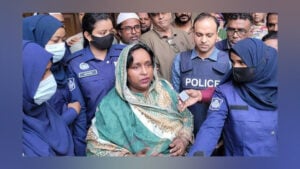
Police have arrested Mohammad Harun Or Rashid, general secretary of the Awami League’s Phulbaria upazila unit and a former upazila chairman, at his residence in Phulbaria, Mymensingh.
He was arrested at around 10am on Tuesday, 13 October, from his home near the Palli Bidyut office in Ward No. 2 of Phulbaria Municipality, according to police.
Rashedul Hasan, officer-in-charge of Phulbaria Police Station, confirmed the arrest. He said Harun Or Rashid was named in cases relating to attacks during the Anti-Discrimination Student Movement and offences involving explosives.
According to the police, this was not his first arrest. Harun had previously been taken into custody and spent several months in prison before securing bail. Following his release, he had been staying at his residence until police arrested him again on Tuesday morning.
Harun Or Rashid has held two prominent positions in local politics, serving as the general secretary of the Phulbaria upazila unit of the Awami League and as the upazila chairman. His latest arrest comes in connection with cases linked to allegations of violence during the student-led movement.
The Anti-Discrimination Student Movement was a major development in Bangladesh’s recent political history. Allegations of attacks, violence and the use of explosives during the unrest have led to criminal cases in different parts of the country. Law enforcement agencies have continued investigating these incidents and taking action against individuals named in the cases.
However, the allegations against Harun Or Rashid must be assessed through the relevant legal proceedings. The specific details of the cases against him, the current stage of the investigations and the circumstances surrounding his latest arrest have not been disclosed in the available information.
It was also not immediately clear whether he had been produced before a court following his arrest on Tuesday or whether any further legal steps had been taken.
Being named in a criminal case or arrested by police does not, by itself, establish guilt. The allegations must be examined through the judicial process, and any determination of criminal responsibility rests with the court.
Further details about the cases and the next steps in the proceedings are awaited from the relevant authorities.