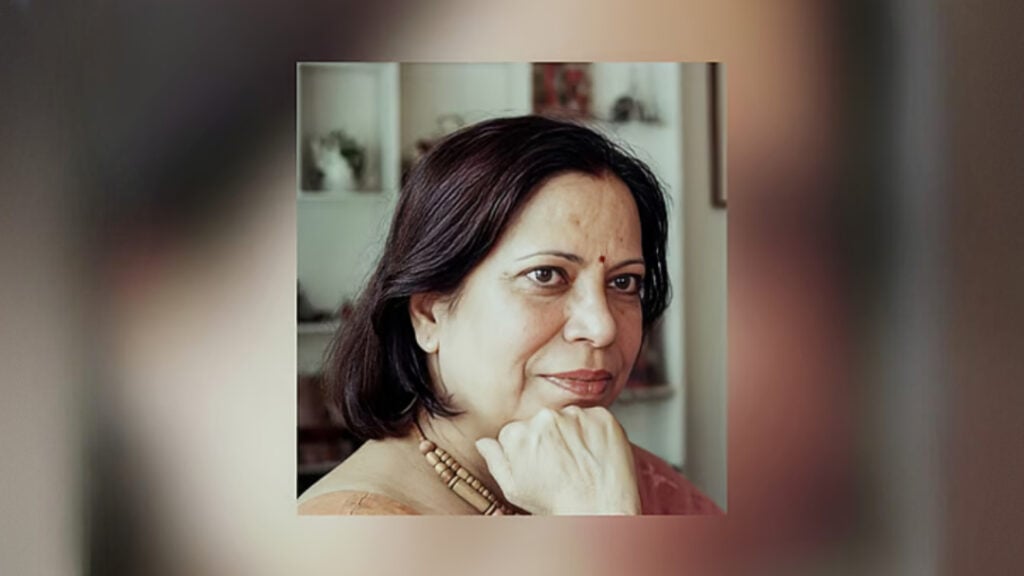
Saeeda Kamal, a distinguished Bangladeshi freedom fighter and visual artist, has died at the age of 74. She passed away at a private hospital in the capital at around 7.30am on Sunday after suffering from pneumonia and kidney-related complications.
Her death marks the loss of a woman whose life brought together artistic achievement and service during Bangladesh’s 1971 Liberation War. Alongside her contribution to the country’s visual arts, she played a role in the wartime humanitarian effort, working at Bangladesh Field Hospital during the struggle for independence.
Kamal was the daughter of celebrated poet Sufia Kamal and the younger sister of Sultana Kamal, a former adviser to Bangladesh’s caretaker government and chairperson of the non-governmental organisation Amrai Pari. Sultana Kamal confirmed her younger sister’s death and provided details of her final days.
According to Sultana Kamal, Saeeda had been receiving treatment for pneumonia and kidney-related complications. Her condition deteriorated, prompting her admission to a hospital in Dhaka on Saturday. She was placed on life support later that night but died the following morning.
Her body has been kept in the mortuary facility at BIRDEM Hospital in Dhaka. The family is expected to arrange her burial at Azimpur Cemetery in the capital on Tuesday, after her only daughter returns home from the United Kingdom.
An artistic journey shaped by education and creativity
Saeeda Kamal established her identity in Bangladesh’s visual arts through her creative work and commitment to artistic practice. She studied fine arts at the University of Dhaka before receiving specialised training in design at Kala Bhavana, the art institute of Visva-Bharati University in Santiniketan, India.
Kala Bhavana has a longstanding association with the artistic and educational ideals of Rabindranath Tagore, whose approach to creative learning helped shape its distinctive cultural environment. Kamal’s training there formed part of her artistic development, broadening her exposure to design and the visual arts.
Throughout her career, her paintings were exhibited at numerous solo and group exhibitions in Bangladesh and abroad. These exhibitions offered opportunities for her work to reach audiences beyond her immediate artistic circles and contributed to her presence in the wider art community.
Her professional life reflected a combination of formal artistic education, specialised training and sustained creative activity. Although she is also remembered for her role in the Liberation War, her contribution to the visual arts remains an important part of her legacy.
Service during the 1971 Liberation War
Kamal’s life was shaped not only by art but also by her involvement in Bangladesh’s struggle for independence. During the 1971 Liberation War, she worked alongside her elder sister, Sultana Kamal, at Bangladesh Field Hospital.
The field hospital played a role in providing medical assistance during a period marked by armed conflict, mass displacement and immense human suffering. Medical facilities supporting the liberation struggle were essential to the treatment and care of wounded people, including those affected by the fighting.
Working in such circumstances required a strong sense of responsibility and a willingness to serve amid the uncertainties of war. Kamal’s participation in the hospital’s activities placed her among those who contributed to the independence struggle through humanitarian service rather than direct combat.
In recognition of her contribution, she received the Commander-in-Chief’s Special Commendation, known as the CinC’s Special Commendation. The honour stands as an official recognition of her service during the war.
Bangladesh’s Liberation War history encompasses not only military operations and battlefield sacrifices but also the efforts of people who provided medical care, logistical assistance and other forms of support. Kamal’s wartime experience represents this wider dimension of the independence movement, in which people from different backgrounds contributed to the national cause.
A legacy spanning art and national history
Kamal’s life connected two significant strands of Bangladesh’s history: the development of its cultural landscape and the struggle that led to its independence. Her work as a visual artist reflected her creative interests, while her service during the Liberation War demonstrated her commitment to the country at a defining moment.
Her family background also placed her within a prominent cultural and social tradition. As the daughter of Sufia Kamal, one of Bangladesh’s most influential poets and a leading voice in its cultural and social movements, she grew up in a family closely associated with the country’s intellectual and cultural life. Yet her own achievements in art and her wartime service gave her a distinct place in that history.
Her death will be felt by those who knew her personally, as well as by people who value the contributions of artists and freedom fighters to Bangladesh’s national story. The two sides of her life serve as a reminder that the country’s history was shaped not only by those who fought on the front lines but also by people who served through creativity, care and dedication.
Saeeda Kamal leaves behind the memory of a life devoted to artistic expression and service during a decisive chapter in the nation’s history. Her contribution to the visual arts and her role in the Liberation War remain enduring parts of her legacy.