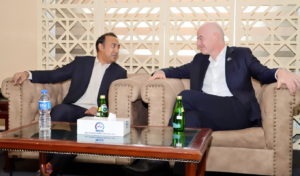
Former Chief of the Bangladesh Air Force Air Chief Marshal Sheikh Abdul Hannan has been arrested by Qatari police in connection with corruption-related cases involving allegations of acquiring assets beyond known sources of income and suspicious financial transactions.
Hannan was arrested on 15 October, according to information communicated to the Anti-Corruption Commission (ACC) of Bangladesh through an Interpol email. The development marks a significant step in the cases filed against the former military chief and his wife, Tahmida Begum, over alleged unexplained wealth and possible money laundering.
The ACC has filed two separate cases against the couple. One concerns alleged irregularities in Hannan’s personal assets and banking transactions, while the other relates to allegations against his wife, with Hannan accused of assisting her.
According to the allegations outlined in the first case, Hannan acquired assets worth Tk 32,851,506 beyond his known sources of income. Investigators also identified suspicious transactions totalling Tk 276,366,701 across six bank accounts held in his name.
The allegations have led to a case under the Anti-Corruption Commission Act, the Money Laundering Prevention Act and the Prevention of Corruption Act. The investigation is intended to establish the sources of the assets and the nature of the transactions identified in the relevant bank accounts.
The amounts cited in the case represent allegations made by the authorities and do not, by themselves, establish that the funds were obtained illegally. The origin of the money, the legitimacy of the assets and the circumstances surrounding the transactions will need to be examined through the legal process.
A separate case has been brought against Tahmida Begum over alleged assets inconsistent with her known sources of income. According to the ACC’s allegations, she acquired assets worth Tk 19,190,304 beyond her declared or known legitimate income.
The commission also identified approximately Tk 11.8 million in suspicious transactions across 32 bank accounts held in her name. Tahmida has been named the principal accused in this case, while Hannan has been accused of assisting her in the alleged offences.
The second case was filed under the Anti-Corruption Commission Act, the Money Laundering Prevention Act and Section 109 of the Penal Code, which concerns abetment. The precise circumstances of the alleged assistance and the nature of the transactions remain matters for investigation and judicial determination.
Legal implications of the arrest
Hannan’s arrest in Qatar brings an international dimension to the proceedings. When a person wanted in connection with a criminal investigation is detained abroad, any subsequent transfer to the requesting country depends on the applicable laws, international cooperation arrangements and the procedures followed by the authorities concerned.
The communication through Interpol provided confirmation of the arrest to the ACC, according to the information available. However, an arrest abroad does not automatically mean that the individual will be returned to Bangladesh. Any extradition or other transfer would require the relevant legal procedures to be followed.
The arrest should also be distinguished from a finding of guilt. Hannan and Tahmida face allegations that must be tested through the investigation and court proceedings. Neither the amounts identified in the cases nor the fact of an arrest constitutes proof of criminal liability.
Scrutiny of assets and banking transactions
The cases centre on two key questions: whether the assets attributed to the accused can be reconciled with their legitimate sources of income, and whether the financial transactions identified by investigators have lawful explanations.
In investigations of alleged unexplained wealth and money laundering, authorities may examine bank records, income declarations, asset ownership and the movement of funds. Such inquiries seek to determine whether the available financial evidence supports the allegations and whether any offence has occurred.
The figures cited in the two cases indicate the scale of the financial activity under scrutiny. Hannan’s case involves six bank accounts and alleged unexplained assets worth more than Tk 32.8 million, alongside transactions exceeding Tk 276.3 million. His wife’s case concerns 32 bank accounts, alleged unexplained assets worth more than Tk 19.1 million and approximately Tk 11.8 million in suspicious transactions.
These figures relate to separate allegations and should not be treated as established losses or proven proceeds of crime.
The proceedings are likely to remain under close public scrutiny because Hannan previously held one of the country’s highest-ranking military positions. Allegations involving former senior public officials can raise broader questions about financial accountability, asset disclosure and the enforcement of anti-corruption laws.
The next stages will depend on the progress of the investigations and the legal steps taken following the arrest in Qatar. Any decision on Hannan’s return to Bangladesh, as well as the eventual outcome of the cases against both him and his wife, will depend on the relevant authorities and the judicial process.
For now, the allegations remain subject to verification. A final determination of responsibility will rest with the courts after the evidence has been examined in accordance with the law.