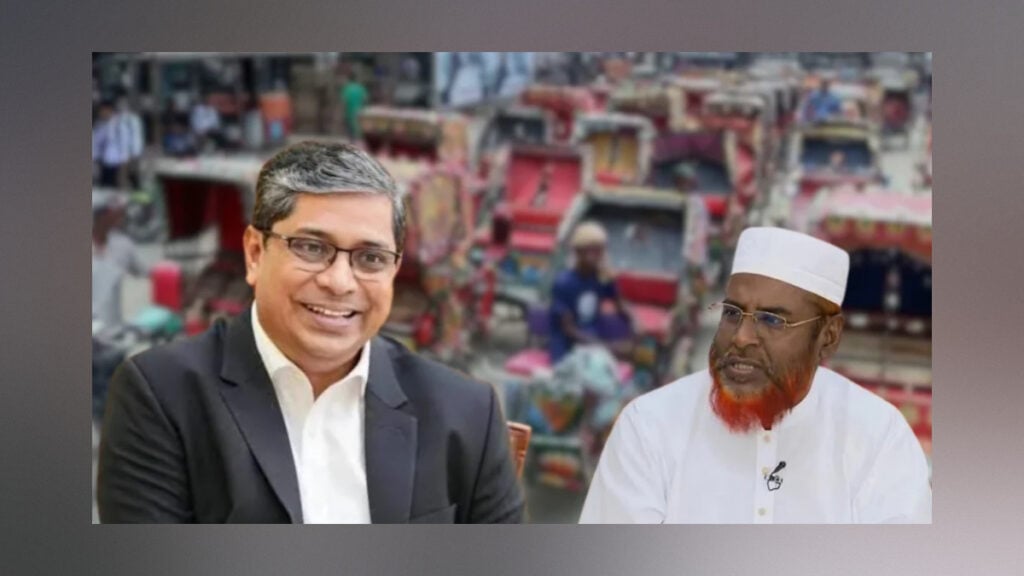
Bangladesh’s Local Government, Rural Development and Co-operatives State Minister Mir Shah Alam has said that Jamaat-e-Islami Secretary General Mia Golam Parwar will be eligible to register only five of the 700 electric rickshaws reportedly registered in his name. The remaining vehicles will have to be registered under other individuals’ names, he said.
Shah Alam made the remarks at a press conference at the Secretariat on Sunday (1 November), held to discuss regulations governing the operation of low-speed, three-wheeled battery-powered rickshaws, commonly known as e-rickshaws, in city corporation areas.
Addressing concerns among e-rickshaw drivers over the proposed registration process, the state minister urged them not to panic. He said the government would introduce registration in phases and gradually remove vehicles operating without the required authorisation.
“Those who are drivers, whether currently operating e-rickshaws legally or illegally, should not be worried. We will register them gradually and remove the unauthorised vehicles,” he said.
During the briefing, Shah Alam also referred to claims that Golam Parwar owns 700 e-rickshaws. He said an administrator of the northern city corporation had informed him about the alleged number of vehicles registered in the Jamaat-e-Islami leader’s name.
Addressing Parwar directly, the minister said he should not be concerned about the new regulations, as he would be allowed to obtain legal registration for five e-rickshaws. The remaining vehicles, however, would need to be registered in other people’s names.
“Our northern administrator has said that the Jamaat-e-Islami secretary general reportedly has 700 e-rickshaws. I would tell the Jamaat secretary general not to worry either. If he wishes, he can legally register five e-rickshaws. The rest will have to be registered under other people’s names,” Shah Alam said.
The announcement comes amid efforts to bring battery-powered three-wheelers operating in city corporation areas under a regulated framework. E-rickshaws have become a familiar feature of urban transport in Bangladesh, providing an affordable means of travel for many passengers and a source of income for thousands of drivers.
However, their growing presence has raised questions about registration, operational permissions and the management of vehicles on city roads. The government’s proposed regulations are intended to establish a formal registration process and distinguish authorised vehicles from those operating outside the prescribed framework.
The minister’s comments suggest that the registration system will impose limits on the number of vehicles that can be registered under an individual’s name. The phased approach is also intended to prevent an abrupt disruption to the livelihoods of drivers who currently depend on e-rickshaws for their income.
However, the minister did not provide further details about the registration procedure, the criteria for determining eligibility or the timetable for implementing the regulations. It also remains unclear how authorities will identify vehicles operating without authorisation and ensure that the new rules are enforced consistently across city corporation areas.
For e-rickshaw owners and drivers, the practical impact of the regulations will depend on how the registration process is implemented and how the authorities manage the transition from existing operations to the proposed system.