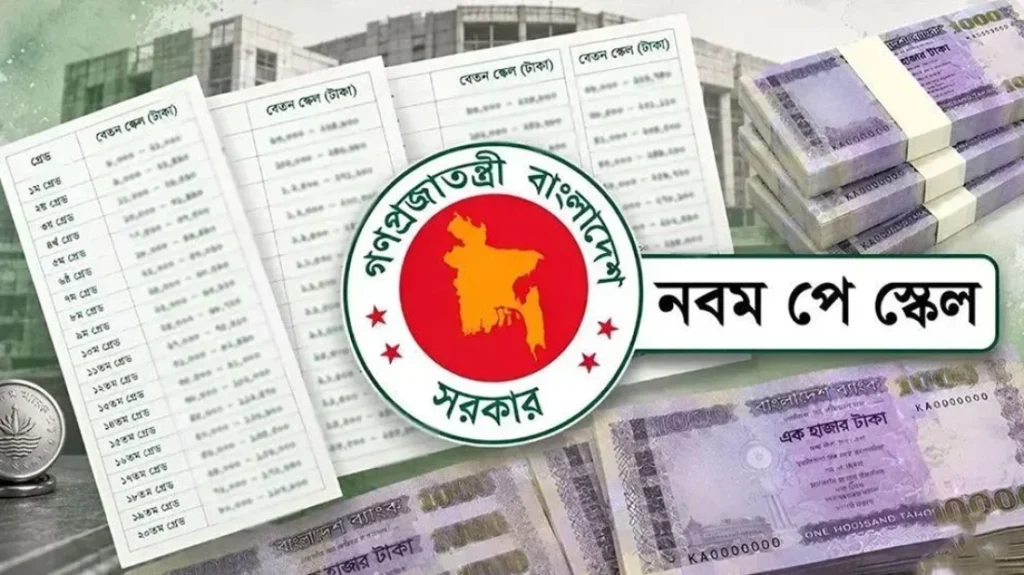
Civil servants across Bangladesh were expected to receive their long-awaited increased salaries alongside three months of arrears starting today, Sunday, 1 November. However, administrative hurdles and technical anomalies have stalled the rollout for thousands of public sector employees. As the fixation of salaries under the revised pay scale remains incomplete, many officials and workers will temporarily continue to receive their remuneration under the legacy pay structure, with arrears and back pay to be adjusted at a later date.
According to figures from the Finance Division, the policy shift affects approximately 1.4 million regular government employees, 800,000 pensioners, and around 600,000 teachers under the Monthly Pay Order (MPO) scheme. Despite government preparations to disburse the funds, the transition has hit widespread bottlenecks due to structural discrepancies in grade hierarchies, higher grade eligibility criteria, house rent allowance calculations, and financial entitlements following promotions.
The implementation process has been further complicated by technical glitches within iBAS++, the government’s integrated financial management system. Multiple ministries and department representatives have submitted formal applications to the Senior Finance Secretary, Md Khairuzzaman Mozumder, highlighting these systemic issues. Officials in the Finance Division acknowledged that a lack of practical experience among those tasked with drafting and executing the new pay scale notification largely contributed to the current administrative impasse, though measures to resolve the errors are underway.
The pay fixations have sparked considerable frustration among lower-grade employees, who point to severe wage inversion across adjacent pay scales. In several instances, the basic salary for a lower-grade worker surpasses that of a senior counterpart. For instance, under the current fixation matrix, an employee in the 11th grade receives a basic salary of 37,000 taka, whereas a worker in the 12th grade garners a higher basic salary of 37,700 taka.
A similar operational oversight plagues house rent allowance calculations, potentially reducing an employee’s total take-home pay upon promotion. Under the proposed structure, a 10th-grade officer promoted to the 9th grade, or awarded a first higher grade, sees their basic salary rise from 49,700 taka to 51,000 taka—an incremental basic gain of 1,300 taka. However, because the house rent allowance percentage drops from 50 per cent in the 10th grade (24,850 taka) to 45 per cent in the 9th grade (22,950 taka), the allowance falls by 1,900 taka. Consequently, the officer suffers a net monthly income reduction of 600 taka despite advancing in rank.
With widespread objections regarding eligibility timeframes for higher grades and automated fixation errors within the iBAS++ portal, uncertainty looms large over the complete execution of the scheme. Government authorities have yet to issue a definitive timeline detailing when the administrative corrections will conclude and when affected employees can expect their full back-pay disbursements.