The organisations have called for the removal of members of the Parbatya Chattogram Jana Samhati Samiti (JSS), led by Santu Larma, from the Sajek area, alongside demands to end terrorism, extortion and other alleged unlawful activities.
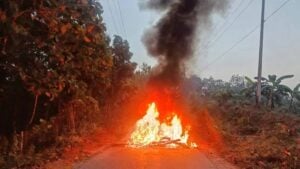
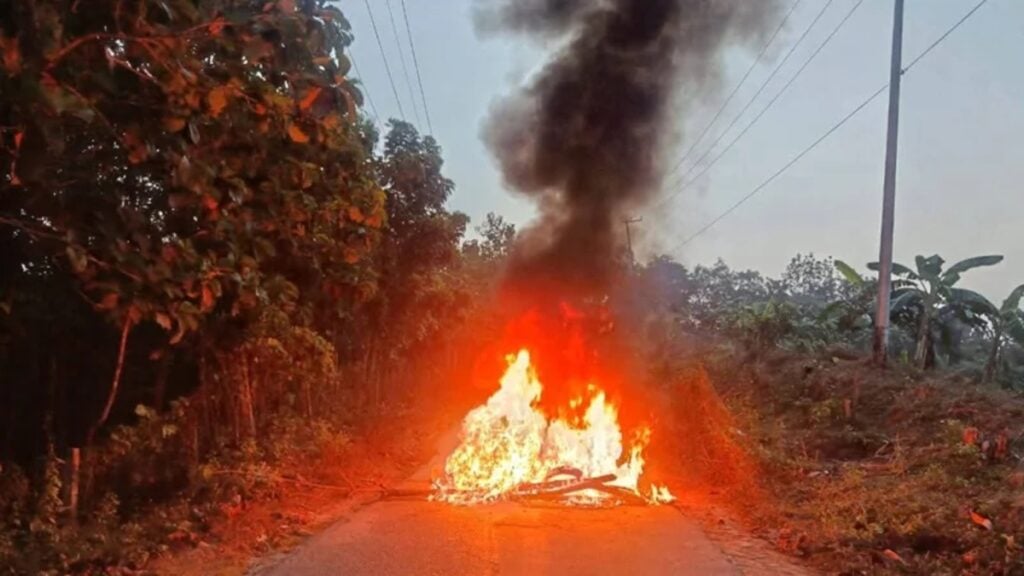
The blockade is being observed peacefully along the Sajek road. Since Monday morning, large vehicles have largely stayed off the route. Protesters have attempted to obstruct traffic by placing tree trunks at several points along the road. However, no untoward incidents or clashes have been reported so far.
The latest action marks the fourth phase of the blockade. The road had previously remained blocked for 10 consecutive days from 22 October, severely affecting the movement of people and the transportation of essential goods to the remote hill region.
The two organisations temporarily relaxed the blockade on Sunday from 6am to 6pm, taking into consideration the need to transport rice, other essential food items and supplies, as well as the basic needs of local residents. However, the temporary suspension failed to restore the movement of goods.
A separate blockade called by a workers’ organisation known as the Parbatya Chattogram Rakkha Committee on the Khagrachhari-Dighinala-Sajek-Baghaichhari road prevented goods-laden vehicles from reaching Sajek on Sunday. As a result, residents received little relief despite the temporary relaxation of the original blockade.
The prolonged disruption has increasingly affected everyday life in Sajek, where residents are facing difficulties obtaining rice, lentils and other necessities. With the main road serving as a vital transport link for bringing supplies into the area, continued restrictions have raised concerns about further shortages and the growing hardship faced by communities living in the remote region.
The blockade has also disrupted normal movement along a route that connects Sajek with other parts of the Chattogram Hill Tracts. Sajek is widely known as a popular tourist destination, attracting visitors for its hills, valleys and natural scenery. Disruptions to road transport can therefore affect not only residents but also tourism-related activities and local businesses that depend on the movement of visitors and supplies.
Officer-in-Charge of Sajek Police Station, Toffazzal Hossain, said large vehicles were not operating on the road because of the blockade. A small number of auto-rickshaws, CNG-powered three-wheelers and motorcycles were still moving along the route from time to time.
He added that no untoward incidents had been reported so far.
Efforts to resolve the dispute have yet to produce a complete settlement. On 26 October, Khagrachhari MP Wadud Bhuiyan, Rangamati MP Dipen Dewan and senior administrative officials held a meeting with the protesters at Ujobaazar to discuss the situation.
During the meeting, the two sides reportedly reached an understanding on four of the five demands raised by the protesting organisations. However, differences over the remaining demand prevented the discussions from reaching a final agreement.
Although the meeting raised hopes of a negotiated settlement, no further initiative for another round of discussions has been reported so far.
The absence of a breakthrough has left the situation uncertain. With the blockade continuing indefinitely, residents remain concerned about access to food and other essential supplies. A renewed dialogue between the protesters and the authorities is likely to be crucial in resolving the outstanding disagreement and restoring normal transport services in Sajek.