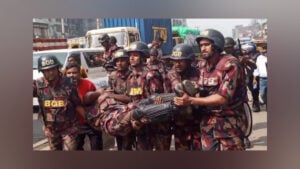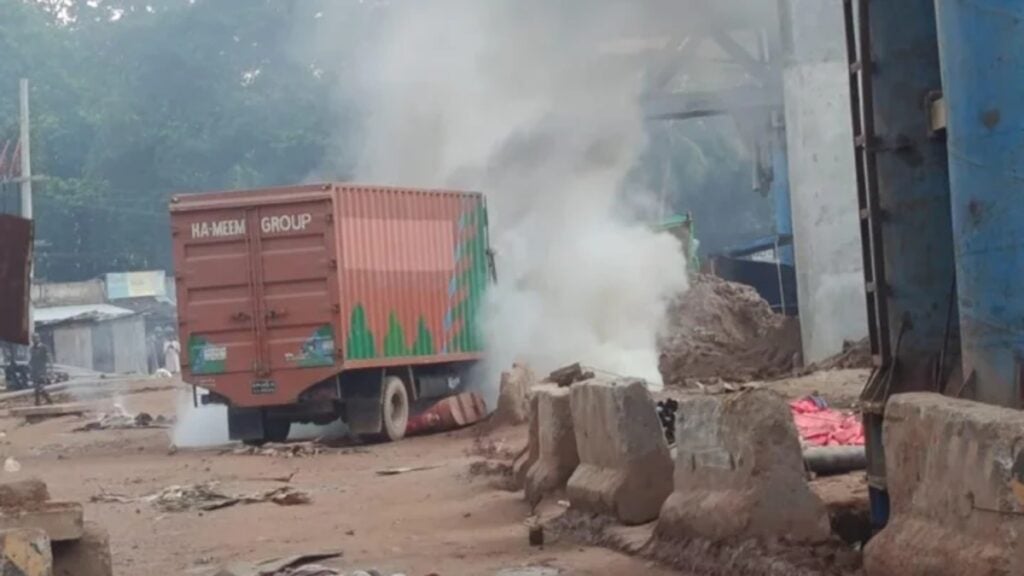
The clashes began shortly after 10am on 2 November in Narsinghpur and Nishchintapur, along the Abdullahpur–Baipail road in Savar. The situation remained tense at the latest report, with workers and law enforcement personnel facing each other in the affected areas. No major casualties had been reported immediately after the incidents.
According to eyewitnesses, workers initially gathered outside Ananta and subsequently moved towards the Ha-Meem factory premises on Monday morning. They attempted to block the road as part of their protest over various demands. The situation soon became tense when they encountered members of the law enforcement agencies.
What began as a confrontation quickly escalated into repeated chases and counter-chases, followed by clashes between the workers and police. Officers fired tear gas and sound grenades in an attempt to disperse the demonstrators and bring the situation under control.
During the unrest, at around 11.10am, a container-carrying vehicle belonging to a garment factory was set on fire in front of the Nadi Filling Station in Narsinghpur. The incident further heightened tensions across the industrial area.
As the situation deteriorated, most garment factories located along the affected road declared a general holiday for the day to prevent further unrest and protect workers and factory premises from possible damage. The decision also disrupted normal industrial activities in the area, with production operations at several factories brought to a halt.
Ashulia is one of Bangladesh’s major garment manufacturing hubs, with numerous factories employing large numbers of workers. The Abdullahpur–Baipail road is an important transport route for the industrial zone, serving both factory workers and vehicles carrying goods. Any disruption along this corridor can affect workers’ movements, factory operations and the transportation of manufactured products.
Industrial unrest in the area also raises concerns about workplace safety and the continuity of production. When demonstrations escalate into road blockades and confrontations, both workers and businesses can face significant disruption. Maintaining communication between workers, factory management and the authorities is therefore important in preventing further escalation.
Speaking about the situation, Additional Superintendent of Police Md Shoaib Ahmed of Industrial Police-1 (Operations and Intelligence) said police and other law enforcement agencies were working on the ground to bring the situation under control.
He added that additional police personnel had been deployed at the scene and in surrounding areas to maintain law and order and prevent any further untoward incidents.
Police remained on alert as tensions continued in Narsinghpur and Nishchintapur. The immediate priority was to restore normality, prevent further clashes and ensure security across the industrial area. The specific demands behind the workers’ demonstrations and the positions taken by the relevant factory authorities had not been detailed in the initial reports.