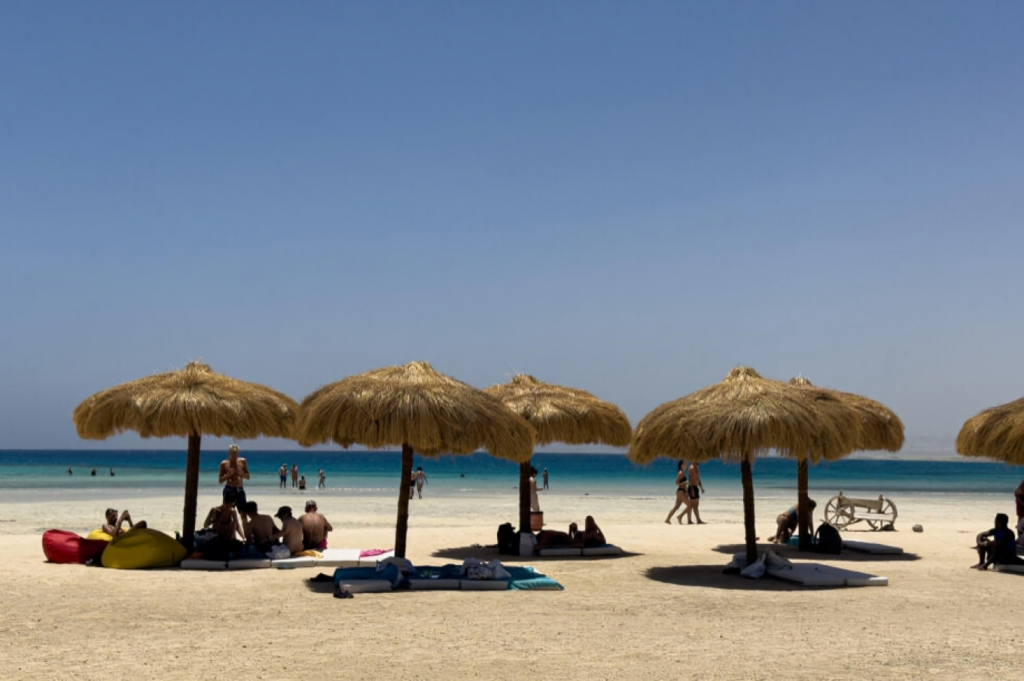
In Wadi al-Gemal, Egypt, swimmers share a pristine bay with endangered green turtles, but a shadowy tourism deal now threatens one of the Red Sea’s last wild shores.
Off Ras Hankorab, green turtles weave through coral gardens considered by marine biologists as some of the world’s most resilient to climate change. During nesting season, the turtles come ashore under the Milky Way’s glow, undisturbed by artificial lights—until excavators rolled onto the sand in March, alarming reserve staff and conservationists.
Thousands of Egyptians signed a petition to “Save Hankorab” after discovering a contract between an unnamed government entity and a private investment company to build a resort. The environment ministry, which oversees the park, protested, halting construction and quietly removing the machinery. Yet months later, parliamentary requests for details remain unanswered, and insiders say the plans are still alive.
“Only certain kinds of tourism development work for a beach like this. Noise, lights, heavy human activity—they could destroy the ecosystem,”
—Mahmoud Hanafy, marine biology professor and adviser to the Red Sea governorate
Hankorab lies within Wadi al-Gemal National Park, designated a protected area in 2003.
The UN Development Programme (UNDP) calls Hankorab home to “some of the last undisturbed natural beaches on the Southern Red Sea coast”—an area now caught between environmental protection and Egypt’s urgent push for investment.
Egypt, enduring its worst economic crisis in decades, is relying on its 3,000 kilometres of coastline to generate revenue. A $35-billion deal with the United Arab Emirates to develop Ras al-Hekma on the Mediterranean set the tone, with similar proposals emerging for the Red Sea.
In June, President Abdel Fattah al-Sisi allocated 174,400 square kilometres (67,300 square miles) of Red Sea land to the finance ministry to help reduce public debt. The Red Sea region, where tourism is the main employer, is central to Cairo’s plan to attract 30 million visitors by 2028, double the current numbers.
| Issue | Details |
| Tourism Growth | Rapid expansion since 2019, largely at the expense of the environment (UNDP) |
| Luxury Developments | Resorts and gated compounds displacing communities and damaging habitats |
| Legal Concerns | Contracts signed with entities outside the reserve management, no environmental impact reports |
Environmental lawyer Ahmed al-Seidi criticised the expansion: “The goal is to make as much money as possible from developing these reserves, which means destroying them. It also violates the legal obligations of the nature reserves law.”
According to Hanafy, the core issue at Hankorab is legal: “The company signed a contract with a government entity other than the one managing the reserve.”
If true, Seidi says the deal is “null and void”.
When construction began in March, MP Maha Abdel Nasser sought answers from the environment ministry and the prime minister but received none. Officials could not identify the company behind the project, and no environmental impact report was produced.
Construction remains halted, Abdel Nasser said, “which is reassuring, at least for now. But there are no guarantees about the future.”
The most visible change is a newly built gate marked “Ras Hankorab” in Latin letters. Entry now costs 300 Egyptian pounds ($6)—five times the previous fee—and tickets do not indicate the issuing authority.
An employee who started in March described the previous facilities as “only a few umbrellas and unusable bathrooms.” Today, visitors see new toilets, towels, and sun loungers, with a cafe and restaurant promised soon.
Despite these improvements, the legal and environmental uncertainty remains, leaving Hankorab’s future—and the fate of one of Egypt’s last undisturbed Red Sea beaches—unresolved.
| Aspect | Before Project | After Project |
| Amenities | Few umbrellas, unusable bathrooms | New toilets, towels, sun loungers, cafe & restaurant promised |
| Entry Fee | 60 EGP (~$2) | 300 EGP (~$6) |
| Management Clarity | Clear | Uncertain; issuing authority unknown |
Hankorab now stands at a critical crossroads, balancing the need for economic investment against the imperative to preserve one of the Red Sea’s most pristine coastal ecosystems.