Devapriya Bhattacharya, Special Fellow at the Centre for Policy Dialogue (CPD), has raised concerns that the recommendations of various reform committees are not being reflected before the public. He questioned, “Has the caretaker government lost its way?”
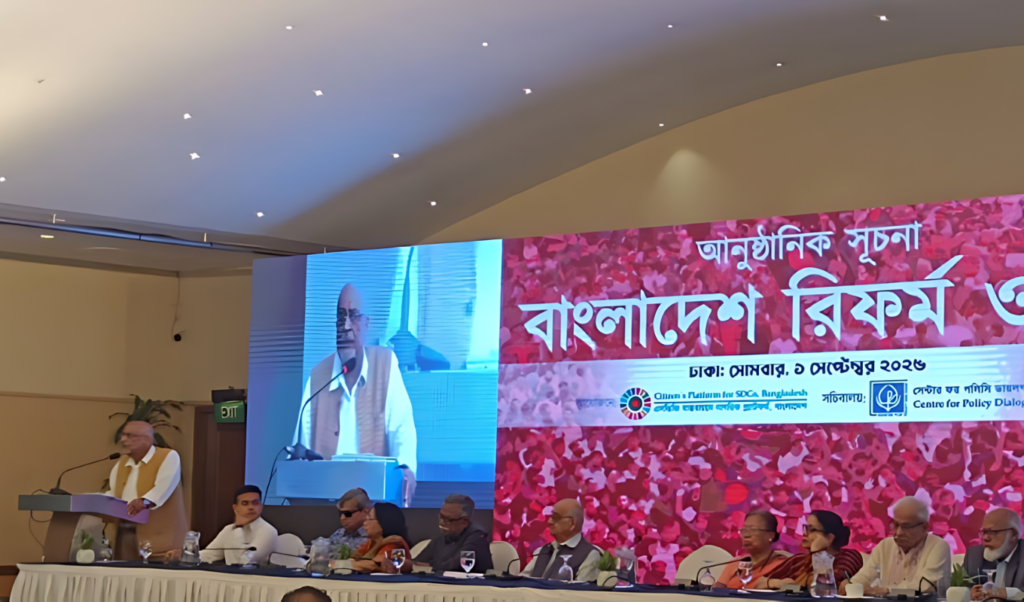
He made these remarks on Monday (1 September) at the launch event of Bangladesh Reform Watch, organised by CPD at the Lakeshore Hotel in Gulshan, Dhaka.
Observations on the Current Situation
Devapriya Bhattacharya warned: “A severe storm is sweeping across Bangladesh. The economy, politics, and society are all being battered. Maintaining the expectations of an anti-inequality ethos is becoming increasingly challenging and will be difficult to sustain in the future. After the change of government, many of us became involved in reforms, but the initiative in the reform process seems to have slowed.”
He further stated:
- The caretaker government is struggling to meet the aspirations of minorities and the wider population.
- The recommendations of various committees formed for reform are not reaching the public.
- Hidden vested interests have obstructed progress.
- Urgent action is required to protect major assets, rights, equality, education, and knowledge amidst ongoing turbulence.
Perspectives from Other Speakers
- Professor Dr Mostafizur Rahman, CPD Special Fellow and Core Member of Bangladesh Reform Watch, said: “Reform is an ongoing process. Initially, many plans are proposed, but few are effectively implemented due to a lack of accountability. Bangladesh Watch will work to hold political parties to their promises and increase public participation.”
- Professor Dr Selim Raihan, Member of Bangladesh Reform Watch and Executive Director of SANEM, noted: “The taskforces and white papers have produced many recommendations. Continuous discussion on these is necessary. Reforms have merely been sustained on paper; their implementation depends on the government’s commitment. Certain bureaucrats, business interests, and other forces try to obstruct reform, as they have before. The government must act decisively to implement political promises, with accountability mechanisms in place.”
- Toufiqul Islam Khan, Convenor of Bangladesh Reform Watch and Senior Research Fellow at CPD, emphasised: “Previously, the absence of a democratic electoral environment limited opportunities. Now, with that environment restored, implementation of political party commitments remains very low. Manifestos rarely reflect societal needs. Bangladesh Watch will prepare a framework to evaluate politicians’ pledges, identify gaps, and highlight the citizens’ rights.”
Proposed 100-Day Reform Programme
Toufiqul Islam Khan also proposed a 100-day programme for new reforms, prioritising 15 key areas including:
- Government revenue and expenditure
- Banking
- Education
- Health
- Social protection
- Agriculture
- Electricity and energy
- Gender equality
The programme will monitor citizens’ empowerment, productivity, and anti-inequality aspirations in detail and present the overall reform demands comprehensively.
Other speakers included:
- Rubaba Daula, President of the Foreign Chamber
- Kajal Debnath, President of Bangladesh Hindu Buddhist Unity Council
- Badiul Alam Majumdar, President of SUJON
Key Themes of the Event
| Theme | Observations and Recommendations |
| Reform Implementation | Many recommendations exist, but lack of accountability hinders realisation |
| Caretaker Government Performance | Struggling to address public and minority aspirations; initiative in reforms appears stalled |
| Political Accountability | Bangladesh Watch to hold parties accountable for manifesto commitments |
| 100-Day Reform Programme | Prioritises revenue, expenditure, banking, education, health, social protection, agriculture, energy, and gender equality |
| Public Participation | Increase involvement of citizens and youth in reform monitoring and awareness |
| Monitoring & Evaluation | Evaluate citizens’ empowerment, productivity, and anti-inequality goals; identify gaps in political pledges |
The event highlighted the urgency of revitalising reforms, ensuring political accountability, and aligning government action with the aspirations of citizens, minorities, and the broader society.