Seoul’s National Intelligence Service (NIS) has estimated that around 2,000 North Korean soldiers deployed to assist Russia in its conflict with Ukraine have been killed, a lawmaker reported on Tuesday.
According to Lawmaker Lee Seong-kweun, the NIS initially reported in April that at least 600 soldiers had died. However, after updated assessments, the figure has now risen to approximately 2,000.
“Based on updated assessments, it is now estimated that around 2,000 North Korean soldiers have been killed,” Lee told reporters following a briefing from the spy agency.
South Korean and Western intelligence suggest that North Korea sent more than 10,000 troops to Russia in 2024, primarily to the Kursk region, along with artillery shells, missiles, and long-range rocket systems.
| Deployment Details | Figures & Notes |
| Initial troop deployment | 10,000 soldiers to Russia in 2024 |
| Estimated deaths | Around 2,000 |
| Additional planned deployment | 6,000 soldiers and engineers |
| Already arrived troops from new plan | ~1,000 combat engineers |
| Supplies provided | Artillery shells, missiles, long-range rockets |
Lawmaker Lee added that the NIS believed Pyongyang intends to deploy another 6,000 soldiers and engineers, with 1,000 already on Russian soil.
“It is assessed that out of the recent third deployment plan of 6,000 troops, around 1,000 combat engineers have arrived in Russia,” Lee said.
Earlier this year, Russian Foreign Minister Sergei Lavrov confirmed that North Korea would send builders and deminers to the Kursk region.
North Korea officially admitted in April 2024 that it had deployed troops to support Russia in Ukraine and acknowledged that some soldiers had been killed in combat.
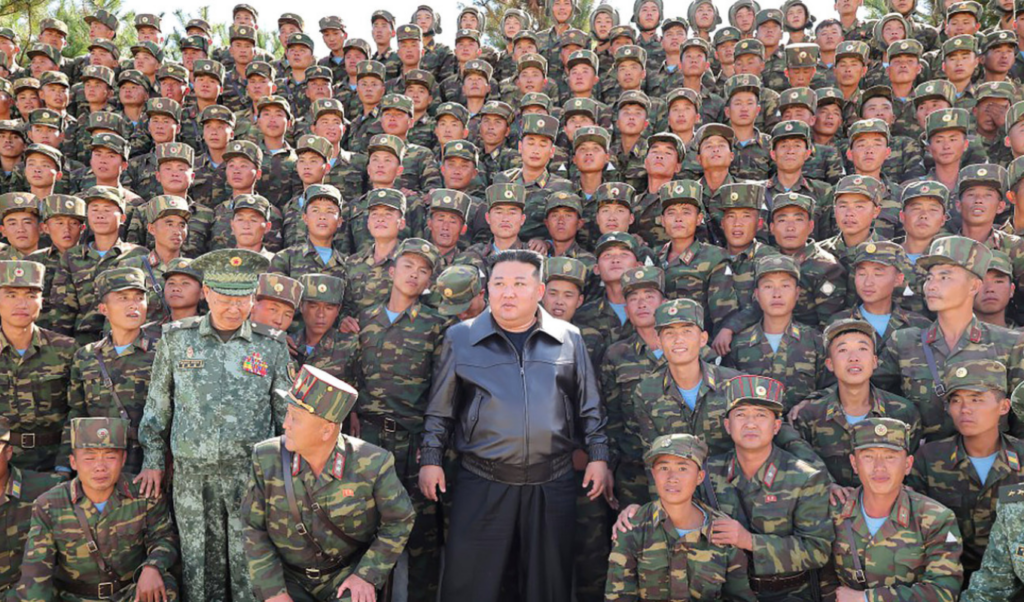
Since then, Leader Kim Jong Un has met with the families of fallen soldiers, offering condolences for their “unbearable pain”. State media documented emotional interactions, including:
- Kim embracing a returning soldier overwhelmed by grief.
- Kneeling before a portrait of a fallen soldier to pay respects.
- Placing medals and flowers beside images of the deceased.
The deployments follow a military deal signed last year between Russia and North Korea, which included a mutual defence clause, formalised during Russian President Vladimir Putin’s rare visit to Pyongyang.
The partnership underscores the growing military collaboration between the two nations, highlighting Pyongyang’s support for Moscow amid the ongoing conflict in Ukraine.