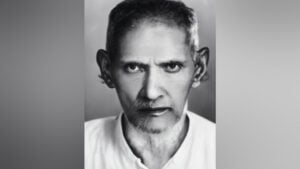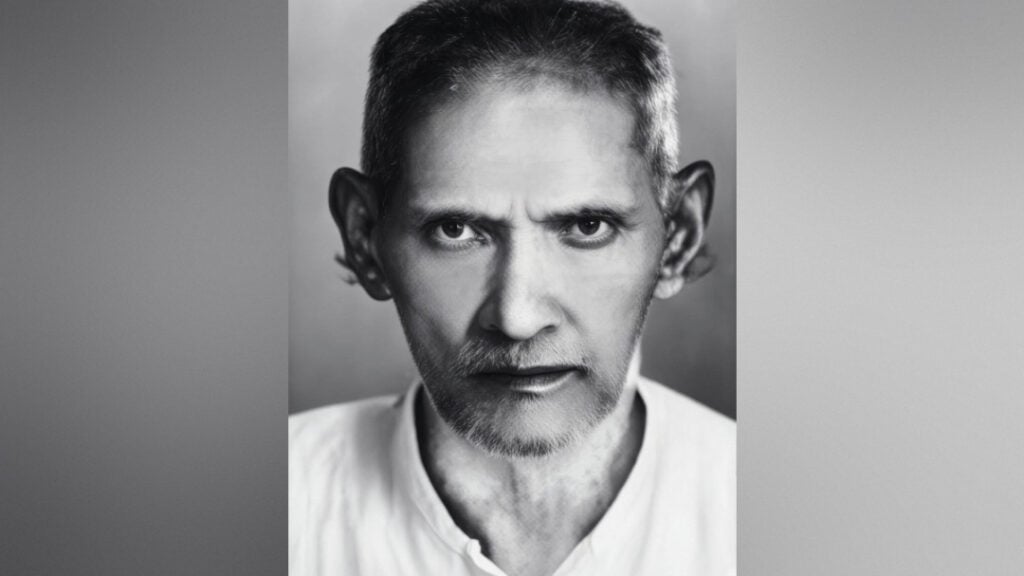
Some figures in Bengali literary history are remembered not merely for what they wrote, but for what they saved from oblivion. Abdul Karim Sahityabisharad was one such remarkable scholar. Through decades of searching, collecting, editing and studying ancient manuscripts, he helped recover fragments of Bengal’s literary past that might otherwise have disappeared without a trace.
A writer, literary historian, manuscript collector, editor and researcher, Sahityabisharad devoted much of his life to tracing the development of Bengali literature through its old manuscripts. His work was particularly significant in bringing greater attention to the contribution of Muslim poets and writers to medieval Bengali literature.
Abdul Karim was born on 11 October 1871 in Suchakradandi village of Patiya in Chattogram. His father, Munshi Nuruddin, died before his birth, and he lost his mother at a young age. He was subsequently brought up by his uncle, Ashiruddin. Despite growing up without his parents, his intellectual curiosity and determination to pursue knowledge remained undiminished.
He passed the Entrance examination from Patiya High School in 1893. He began his professional life as a teacher and later worked in several schools before joining the office of the Divisional Commissioner in Chattogram. At one stage of his career, he also served as a divisional school inspector. He retired from government service in 1934.
His employment, however, was only one part of his life. His deeper commitment was to literature and research.
His fascination with ancient Bengali manuscripts eventually developed into a lifelong mission. He travelled from place to place in search of old manuscripts, often finding them in private homes, old chests and neglected collections. Many such texts were poorly preserved and faced the risk of being damaged or lost. Sahityabisharad recognised that these manuscripts were far more than fragile old documents. Their pages contained evidence of Bengal’s language, literary traditions, social life and cultural history.
That understanding made him one of the pioneering figures in the study and preservation of Bengali manuscripts.
One of the central areas of his research was the contribution of Muslim poets to medieval Bengali literature. Manuscripts associated with poets such as Daulat Qazi, Alaol, Syed Sultan and Muhammad Khan helped broaden knowledge of literary traditions that had received comparatively limited attention in earlier accounts of Bengali literary history.
His investigations also brought the names and works of many previously little-known Muslim poets to wider attention. In this sense, his work went beyond collecting manuscripts. He was helping reconstruct parts of Bengal’s literary history that had remained largely unexplored.
In 1920-21, the Bangiya Sahitya Parishad published a two-volume catalogue of the Bengali manuscripts he had collected under the title Bangala Prachin Puthir Bibaran. The publication represented an important step in documenting the manuscript heritage of Bengali literature.
A substantial portion of his manuscript collection was later preserved in institutional repositories, including the Dhaka University Library. His manuscript legacy is also associated with collections held by Chittagong University and the Varendra Research Museum. The Department of Bengali at Dhaka University subsequently published a catalogue of preserved manuscripts under the title Puthi Parichiti.
There are differing accounts of the total size of Sahityabisharad’s collection. Some sources put the figure at around 1,700 manuscripts, while others refer to more than 2,500. The variation in these figures does not diminish the scale of his contribution. What stands out is the extraordinary breadth of his collecting and preservation efforts at a time when there were few systematic mechanisms for safeguarding such material.
Sahityabisharad was not merely a collector. He was also a dedicated editor and researcher who edited and published 11 works of ancient Bengali literature. Among his notable books was Islamabad, a work dealing with the history and culture of Chattogram.
He also jointly wrote Arakan Rajsabhay Bangla Sahitya with Dr Muhammad Enamul Haq. Published in 1935, the research work examined Bengali literary activity in the Arakan royal court and contributed to a broader understanding of the geographical and cultural settings in which Bengali literature developed.
His research extended beyond individual manuscripts and texts. He published numerous articles in newspapers and periodicals, examining different aspects of Bengali literary history. His work on Muslim poets was particularly significant because it added to the understanding of Bengali literature as a diverse literary tradition shaped by writers from different social, cultural and religious backgrounds.
His interest in Bengali language and cultural identity was also evident in his writings. He regarded language and literature as central elements of the cultural heritage of the Bengali people. His research therefore had significance beyond the recovery of individual literary works: it helped illuminate the broader cultural landscape in which those works had emerged.
His scholarship received recognition during his lifetime. The Chattal Dharmamandali conferred upon him the title ‘Sahityabisharad’, while the Nadia Sahitya Sabha awarded him the title ‘Sahityasagar’. Of the two, ‘Sahityabisharad’ became the name most closely associated with him, and he subsequently used the title with his own name.
A remark attributed to the writer Mahbub Ul Alam has often been cited as an indication of the scale of Sahityabisharad’s work. Having seen him from a distance, Mahbub Ul Alam is said to have remarked to Kshitimohan, “He is not merely an individual; he is an institution.” The observation has endured because of the extraordinary range of his collecting, research and editorial work.
Sahityabisharad worked long before the age of digital archives, modern research facilities and rapid communication. His tools were far more modest: an insatiable curiosity, painstaking effort, a deep affection for books and manuscripts, and a determination to preserve a literary heritage that was in danger of being forgotten.
For that reason, describing Abdul Karim Sahityabisharad simply as a manuscript collector would fail to capture the full scope of his contribution. He was a researcher who searched for forgotten voices, an editor who brought old texts back into circulation, and a scholar who helped expand the recorded history of Bengali literature.
Manuscripts that might once have remained forgotten in old houses or deteriorated in neglected storage were brought into the field of scholarly attention through his efforts. His work helped reveal forgotten names, literary works and chapters of Bengali cultural history.
Abdul Karim Sahityabisharad died in Chattogram on 30 September 1953. Decades after his death, his manuscript collection, research and edited works continue to form an important part of the study of Bengali literature. In recognition of his contribution, the Government of Bangladesh awarded him the Independence Award posthumously in 1995.
On his death anniversary, Abdul Karim Sahityabisharad is remembered as a scholar who devoted his life to recovering the literary inheritance of Bengal. His achievement was not simply in preserving old manuscripts, but in recognising their value before they disappeared and ensuring that the voices contained in their ageing pages could reach later generations.
In the yellowed pages of forgotten manuscripts, he searched for Bengal’s past. Through that painstaking search, he helped return a substantial part of that past to the history of Bengali literature.
His legacy therefore rests not only in the books that bear his name, but also in the manuscripts, poets and literary traditions that might have remained obscure without his lifelong dedication.