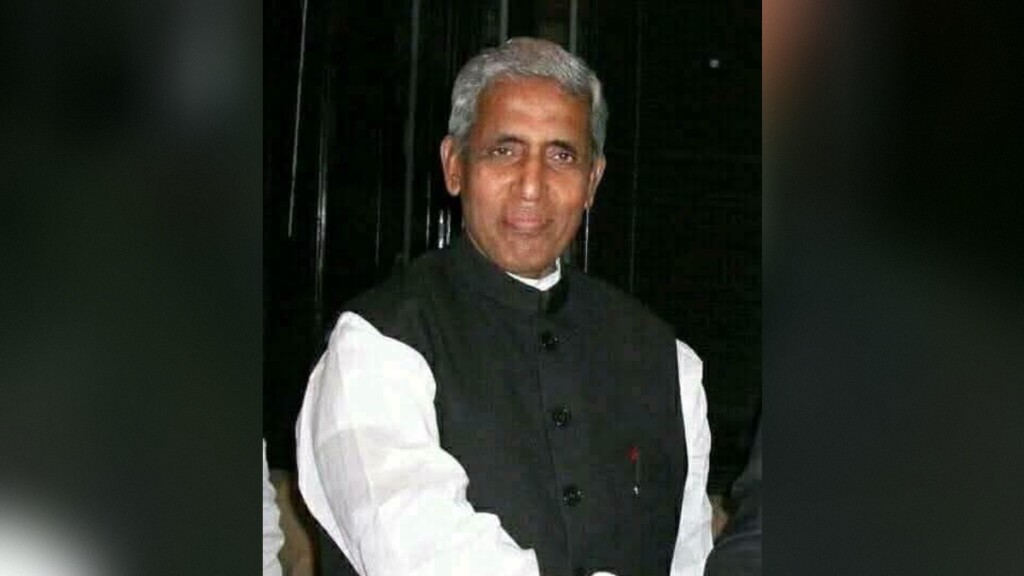
Abdur Razzaq remains one of the most influential political figures in Bangladesh’s history, remembered not only as a prominent student leader of the 1960s but also as one of the principal organisers of the Liberation War and a key architect of the country’s journey towards independence. Throughout his life, he stood at the forefront of movements that shaped modern Bangladesh, dedicating himself to democracy, secularism and social justice.
Born on 1 August 1942 in South Damudya village under Damudya Upazila of Shariatpur district, Abdur Razzaq emerged from humble beginnings to become one of the country’s most respected political organisers. His leadership, strategic thinking and unwavering commitment to the ideals of Bengali nationalism left an enduring mark on Bangladesh’s political landscape.
His political journey began during his student years. After passing the Secondary School Certificate examination from Damudya Muslim High School in 1958 and the Higher Secondary Certificate from Dhaka College in 1960, he enrolled in the Department of Political Science at the University of Dhaka. He completed both his honours and master’s degrees in Political Science in 1964 before earning an LLB degree in 1967. In 1973, he was officially enrolled as an advocate with the Bangladesh Bar Council.
Abdur Razzaq played a decisive role in several landmark political movements that paved the way for Bangladesh’s independence. He actively participated in the 1962 Education Movement, the historic Six-Point Movement of 1966, and the Mass Uprising of 1969, each of which strengthened the demand for greater autonomy for the people of what was then East Pakistan.
In 1962, he joined the Bangladesh Chhatra League and, alongside Sirajul Alam Khan and Kazi Aref Ahmed, formed the influential three-member “Nucleus” within the organisation. This secret strategic group is widely recognised for helping transform the autonomy movement into a full-fledged struggle for independence, ultimately contributing to the armed Liberation War of 1971.
Recognised as one of the Chhatra League’s most capable organisers, Abdur Razzaq served in several important leadership positions. He was elected General Secretary of the organisation for two consecutive terms between 1965 and 1967, playing a pivotal role in mobilising students across the country during a politically turbulent period.
During the Liberation War, he assumed one of the most significant responsibilities within the Mujib Bahini (Bangladesh Liberation Force), serving as the commander of one of its four operational sectors. The Mujib Bahini was formed to organise and train freedom fighters who would support Bangladesh’s armed struggle for independence under the broader leadership of the liberation movement.
Following the country’s independence, Abdur Razzaq continued to champion democratic values. He became a leading figure in movements against military dictatorship and consistently advocated constitutional governance, democratic rights and political accountability. He also spent time in prison on several occasions because of his political activities and commitment to democratic causes.
His parliamentary career reflected his enduring public support. He was first elected to Pakistan’s National Assembly in 1970 and later served multiple terms as a Member of Parliament in independent Bangladesh after winning elections in 1973, 1991, 1996 and 2009. Within the Awami League, he also held one of the party’s most senior organisational positions, serving as General Secretary in 1979 and again in 1981.
Throughout his political life, Abdur Razzaq remained a steadfast advocate of a secular Bangladesh. He firmly opposed communalism, religious extremism and reactionary politics, believing that the ideals of the Liberation War could only be realised through an inclusive and democratic state. He also played a prominent role in the nationwide movement demanding justice for collaborators and individuals accused of war crimes committed during the 1971 Liberation War. As part of that effort, he served as a member of the National Coordinating Committee dedicated to upholding the spirit of the Liberation War and seeking accountability for atrocities committed during the conflict.
Abdur Razzaq passed away on 23 December 2011, leaving behind a legacy deeply intertwined with Bangladesh’s struggle for independence and its continuing democratic evolution. His contributions as a student leader, freedom fighter, political organiser and parliamentarian continue to be remembered by many as an important chapter in the nation’s history.
On the anniversary of his birth, tributes are paid to this distinguished national leader whose lifelong dedication to democracy, secularism and the ideals of Bangladesh continues to inspire generations.