Sunday, 5th April 2026

Khabor Wala Desk
Published: 18th February 2026, 3:08 PM
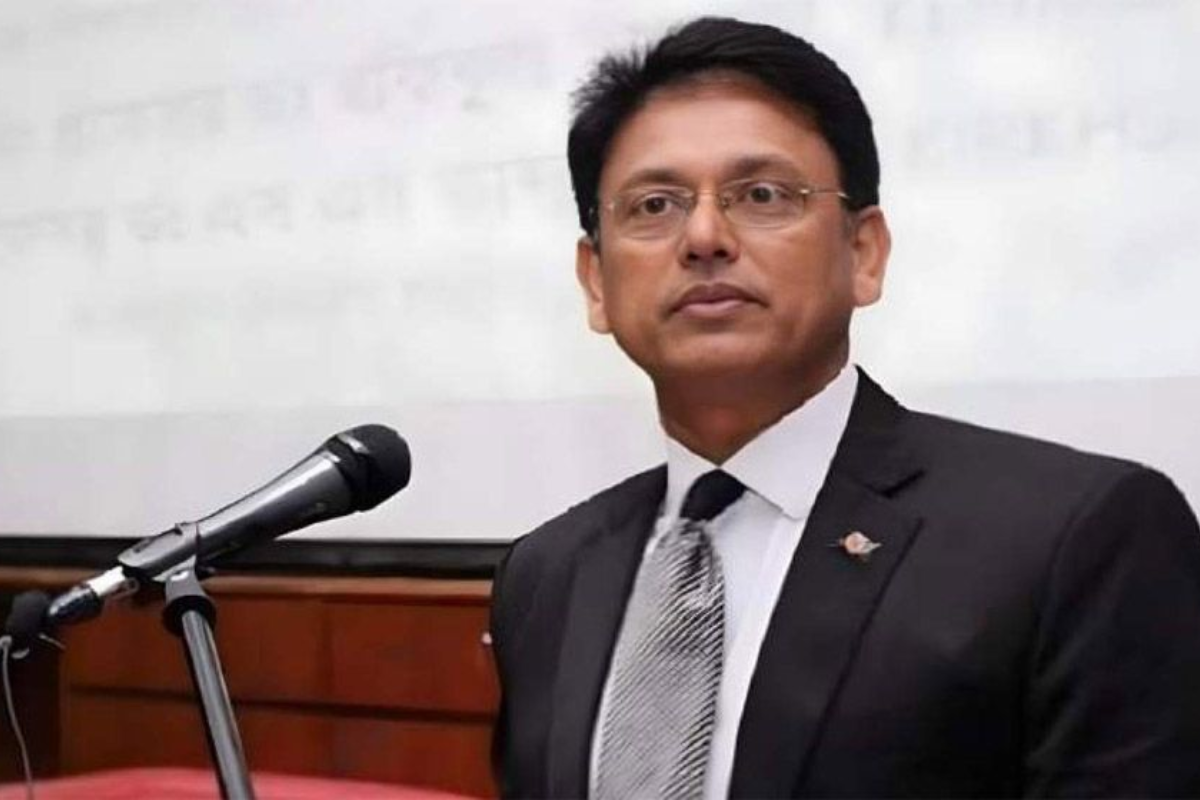
Dr A N M Ehsanul Haque Milon has once again emerged at the forefront of Bangladesh’s education landscape, assuming office as Minister for Education and Primary & Mass Education following a decisive victory in the 13th National Parliamentary Election. Elected from the Chandpur-1 (Kachua) constituency, he defeated the candidate of an eleven-party alliance by a substantial margin, reaffirming his enduring popularity in the region.
His election campaign departed from conventional political choreography. Rather than relying solely on large rallies and party machinery, Dr Milon prioritised direct engagement with constituents. Men, women and young people in Kachua turned out in notable numbers at his meetings, reflecting a personal rapport built over decades. Observers attribute his success not merely to party affiliation, but to his accessible demeanour and reputation for administrative resolve.
Yet Dr Milon’s public identity extends well beyond electoral politics. He is widely regarded as one of the principal architects of reform in Bangladesh’s examination system, particularly remembered for his uncompromising stance against academic malpractice.
Dr Milon’s academic trajectory underscores a blend of domestic grounding and international exposure. He completed his secondary education at Sher-e-Bangla Nagar Government Boys’ High School in Dhaka, followed by higher secondary studies at Government Science College (formerly Intermediate Technical College). He later graduated in Chemistry from the University of Dhaka, where he also served as Vice-President of Fazlul Huq Hall Students’ Union.
In 1982, he travelled to the United States for further study, earning an MBA from the New York Institute of Technology. During his time abroad, he taught at Brooklyn College and the Borough of Manhattan Community College, experiences that broadened his perspective on pedagogy and institutional management. In 2018, he completed a PhD in Political Science at the International Islamic University Malaysia, focusing on technical and vocational education and its role in socio-economic development in Bangladesh.
Dr Milon first entered Parliament in 1996. His most consequential tenure began in 2001, when he was re-elected and appointed State Minister for Education. Between 2001 and 2006, he introduced measures aimed at modernising the education sector, including early efforts towards digitalisation, expansion of school infrastructure, and strengthening laboratory facilities nationwide. He also championed stipends for female students and initiatives to curb drop-out rates.
The following table summarises key milestones in his public career:
| Period | Position Held | Notable Contributions |
|---|---|---|
| 1996 | Member of Parliament | Local education infrastructure development |
| 2001–2006 | State Minister for Education | Anti-cheating drive; early digital reforms |
| 2001–2006 | State Minister for Education | Expansion of stipends for girls; lab modernisation |
| 2026–Present | Minister for Education | Curriculum review; stronger exam oversight |
At a time when widespread cheating had eroded public trust in examinations, Dr Milon declared a policy of “zero tolerance”. He personally visited examination centres and empowered local authorities to enforce strict supervision. Over subsequent years, public examinations regained a measure of credibility, and merit-based assessment was restored in many quarters. For this reason, he is still described by supporters as a pioneer of the anti-cheating movement.
His return to the ministry comes amid renewed controversy over curriculum reforms, question paper leaks, and the integrity of assessment methods. Dr Milon has repeatedly argued that the pursuit of a perfect GPA-5 should not eclipse the fundamental objective of learning. He has called for stricter safeguards against misuse of so-called “creative methods” and emphasised classroom-based instruction over commercialised coaching practices.
Given his international teaching experience and research background, many believe he is uniquely positioned to harmonise global educational standards with Bangladesh’s cultural and socio-economic realities. As the country navigates a period of educational uncertainty, expectations are high that Dr Milon will once again introduce decisive reforms—restoring discipline, strengthening accountability, and placing genuine learning at the heart of the national agenda.
Comments