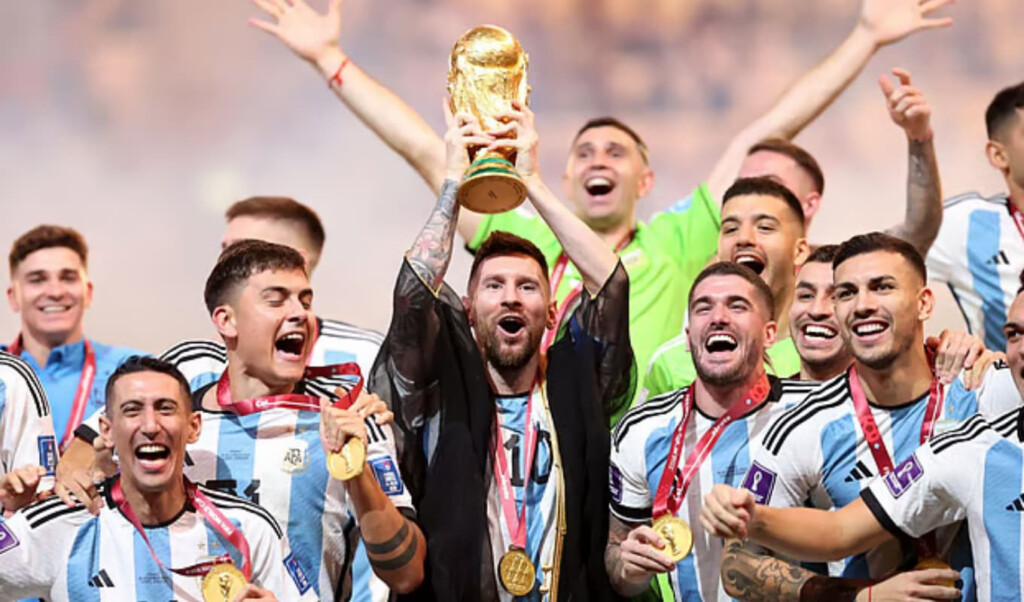
Three and a half years ago, the world watched as Lionel Messi lifted the World Cup in Lusail, capping a career of unparalleled brilliance. Seven goals in seven matches, two in the final, and three assists earned him the Golden Ball. Messi was not just Argentina’s captain; he was the team’s heartbeat, the driving force behind every triumph.
Yet, Argentina’s 2022 victory was never solely Messi’s achievement. Julián Álvarez emerged as a clinical forward, Alexis Mac Allister demonstrated tactical intelligence, and Enzo Fernández received the Best Young Player award. Nicolás Otamendi led the defence with determination, Ángel Di María produced moments of magic, and Emiliano Martínez became a formidable presence in goal, particularly during penalty shootouts.
The team’s resilience after a shocking opening defeat to Saudi Arabia remains legendary. That comeback reflected unity and mental strength few nations could replicate.
The Road to 2026
As the 2026 World Cup approaches, Argentina’s landscape has shifted. The team no longer exudes the seamless dominance of 2022. Preparations have been inconsistent, leaving much of the burden on Messi, now 37. His ability to sustain peak performance over potentially eight high-intensity World Cup matches is uncertain.
Qualifying Campaign Overview
Argentina excelled on paper in qualifiers, topping the CONMEBOL table with a nine-point lead over Ecuador. Messi led the scoring charts with eight goals. Yet, defeats to Uruguay and Paraguay, and a home draw against Colombia, highlight underlying vulnerabilities.
| Metric | Performance | Notes |
|---|---|---|
| CONMEBOL Position | 1st | Nine points ahead of Ecuador |
| Goals Scored | Highest in South America | — |
| Messi | 8 goals | First-time top scorer in qualifiers |
| Notable Losses | Uruguay, Paraguay | Early warning signs |
| Draws | Colombia (1–1) | Inconsistent home form |
Even Copa América success did not display the team at full strength—victory was secured without the fluidity that marked their 2022 campaign.
Friendly Matches
Pre-World Cup friendlies have raised further concerns. Wins over Venezuela (1–0), Puerto Rico (6–0), Angola (2–0), Mauritania (2–1), and Zambia (3–0) were overshadowed by lethargy and lack of intensity. Messi’s influence was crucial, entering later in several games to provide spark and leadership.
| Opponent | Result | Observations |
|---|---|---|
| Venezuela | 1–0 W | Lacked cohesion |
| Puerto Rico | 6–0 W | Minimal challenge |
| Angola | 2–0 W | Routine performance |
| Mauritania | 2–1 W | Team disjointed; Messi pivotal |
| Zambia | 3–0 W | Low intensity, untested |
Squad Depth and Age Concerns
Defence is ageing and fragile. Otamendi (38) is slower and prone to positional errors; Cristian Romero has struggled at club level; Lisandro Martínez and Gonzalo Montiel are injury-prone. Midfielders such as Rodrigo De Paul and Mac Allister offer experience but are inconsistent. Attackers Álvarez and Lautaro Martínez are in strong form, while young talents like Nico Paz offer promise but limited experience.
Messi’s participation remains uncertain. His presence will likely be decisive, but reliance on a 37-year-old to carry the team through a grueling schedule presents a significant risk.
In conclusion, Argentina enters the 2026 World Cup with talent, flashes of brilliance, and historic resilience—but squad depth, age, and cohesion pose serious challenges. Defending the title may ultimately depend on Messi’s enduring magic.